If You Own a Registered Rental Apartment... What Happens If You Do Not Sell It by the End of Next Year
- Input
- 2026-09-04 06:00:00
- Updated
- 2026-09-04 06:00:00
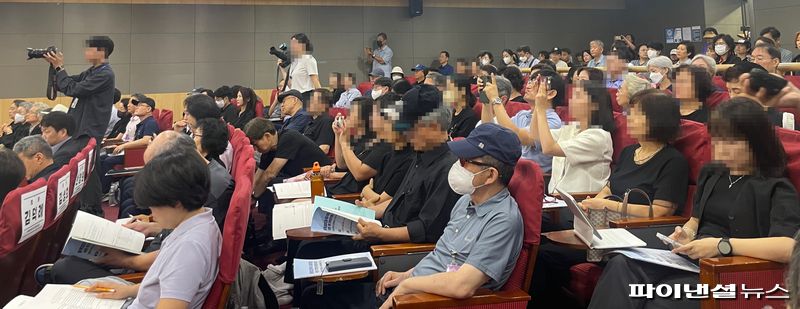
The forum lasted about two hours under the theme, "Are Tax Reforms for Registered Rental Housing Really a Solution for Housing Stability for Ordinary People?" A notable point was that it was hosted by Lee Un-ju and Kim Hyun-jung, lawmakers from the ruling Democratic Party of Korea. With the National Assembly now holding the initiative on the tax reform proposal, the event was also interpreted as leaving room for some revisions.
The repeated applause during Lee’s remarks was also analyzed as reflecting some expectations. Lee said, "Through this forum, we will gather opinions from the market and ensure that they are properly conveyed to the government," adding, "I believe preventing harm to the public is more important than pride in pushing ahead with the proposal unchanged."
In addition to Lee, the forum drew numerous experts, including Seong Chang-yeop, chairman of the Korea Association of Housing Landlords; Kim Inman, head of the Kim In-man Real Estate Research Institute; Lee Eun-hyung, a senior researcher at the Korea Research Institute for Construction Policy (RICON); Kim Deok-rye, director of the Housing Research Division at the Housing Industry Research Institute; and attorney Kim Seong-ho. They identified policy consistency, tenant protection, and an overall redesign of the system as the most urgent improvements needed in the registered rental housing industry.
Seong argued, "For long-term general purchase apartments whose mandatory rental period has been completed, the exclusion from the heavy capital gains tax surcharge and the special long-term holding deduction should apply when they are sold, regardless of the timing of disposal," adding, "At a minimum, the promises made when existing homes were registered must be honored to maintain policy consistency."
Tenant protection also emerged as a key issue. Kim said, "It would be preferable if the automatic deregistration introduced in 2020 did not apply, but if that is difficult, we must ensure that no tenants are harmed by the rule," adding, "Within this scope, a policy is needed to allow landlords to retain their status."
Some participants called for a complete overhaul of the system. Kim said, "The private rental business system should be maintained until supply becomes sufficient, but if the benefits are excessive, I propose revising the system," adding, "The solution would be to create longer-term rental business categories of 10 or 20 years and provide tax reductions according to the period."
During the forum, several agitated rental business operators shouted. Rental business operator B said, "How betrayed do you think we feel for us to shout like this?" and added, "From now on, I cannot trust anything the government says."
Meanwhile, the tax reform proposal announced last August included reducing or abolishing the 50% benefit consisting of the exclusion from the heavy capital gains tax surcharge and preferential treatment under the special long-term holding deduction for registered rental apartments in areas subject to registration deregistration. Landlords whose registrations are deregistered this year must sell their homes by the end of next year, while those whose registrations are deregistered from next year onward must sell within one year after the end of the mandatory rental period to retain the existing benefits.
[email protected] Kwon Jun-ho Reporter