Nepal Focuses Rescue Efforts on Dozens Who May Be Alive Inside Hydropower Plant Tunnels
- Input
- 2026-09-03 16:10:17
- Updated
- 2026-09-03 16:10:17
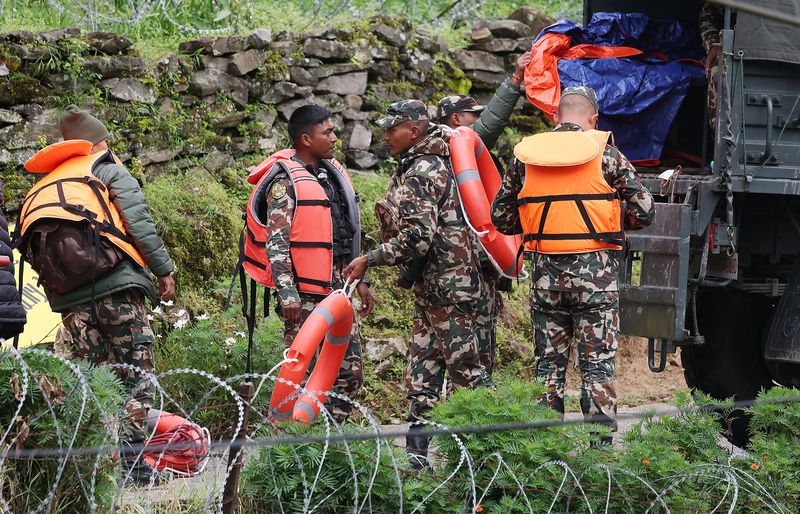
According to major foreign media outlets, Nepalese rescuers are attempting to search tunnels and other areas at four hydropower plants where hundreds of employees are believed to be stranded. They have concentrated their search efforts particularly on two tunnels, believing that about 90 employees may be trapped inside and still alive.
Amshu Kiran Shahi, a director at the Nepal Electricity Authority, stated, "There is still air inside these two tunnels, so they offer the greatest possibility of finding survivors." He added, "Food and water are available in facilities built inside the tunnels as communication and rest areas," and said, "I am very confident that there are survivors inside the tunnels." He also noted, "In the case of the Trishuli 3A Hydroelectric Project, oxygen pipes have been installed, so we expect oxygen to be flowing through the tunnels."
As of that day, the death toll from the catastrophic flooding in Nepal, compiled by the Nepal Disaster Management Authority, had risen to at least 1,204. The number of deaths in China also increased to at least 21, bringing the overall death toll to 1,225. The number of missing people rose to 4,757 in total, including 4,216 in Nepal and 541 in China. Although the number of casualties reported by China had not changed in recent days, it was reported to have risen again after Chinese rescue authorities secured a land route to the main disaster area near Gyirong Port in the Tibet Autonomous Region the previous day.
According to the Nepal Disaster Management Authority, about 1.6 million people—approximately 5% of Nepal's total population—were affected by the flooding. More than 3,700 households, or over 14,000 people, remain isolated because roads and bridges were washed away. The United Nations Population Fund (UNFPA) also warned, "With the medical system collapsing after the catastrophic flooding, about 4,430 pregnant women in affected areas, including Rasuwa and Nuwakot, are at risk of being unable to give birth safely."
Nepalese Prime Minister Balendra Shah said, "The government is working to restore transportation networks, electricity, and communications disrupted by the catastrophic flooding," adding, "About 95% of communication services in the affected areas had been restored by the previous day."
Meanwhile, the Republic of Korea Disaster Relief Team (KDRT), which was dispatched to support the search for and rescue of missing Korean nationals, is scheduled to meet with the Nepal Army commander in the Batar area, where its base camp is located. On the 3rd, an official from the Ministry of Foreign Affairs of the Republic of Korea said, "KDRT leader Lee Kyu-ho and the Nepal Army commander plan to further specify the search strategy through their meeting," adding, "The rapid response team belongs to the KDRT and will operate as one team."
The official said, "The rapid response team conducted a search on foot the previous day but found nothing unusual. The nine Korean nationals remain out of contact," adding that consultations with Nepalese authorities on analyzing mobile-phone signals related to the missing people are also under way, although no progress has reportedly been made yet.
[email protected] Hong Chae-wan Reporter