Access to Office Where Missing South Korean Workers Were Based in Nepal Hampered by Cliff 50 Meters Away
- Input
- 2026-09-03 13:05:12
- Updated
- 2026-09-03 13:05:12
Eight of the nine missing South Korean workers are believed to have been together in an office building and camp, while the remaining worker is thought to have been separated near the upper weir dam, or intake facility.
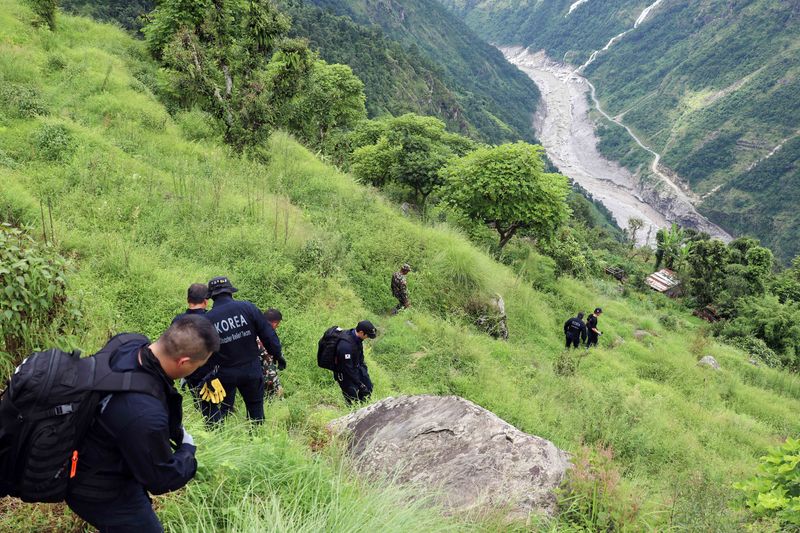
According to the Ministry of Foreign Affairs on the 3rd, six members of the National Fire Agency from the government rapid-response team and two Nepal Army personnel searched on foot the previous day along the route between Dhunche and Lamche, but found no notable signs, including survivors or fatalities.
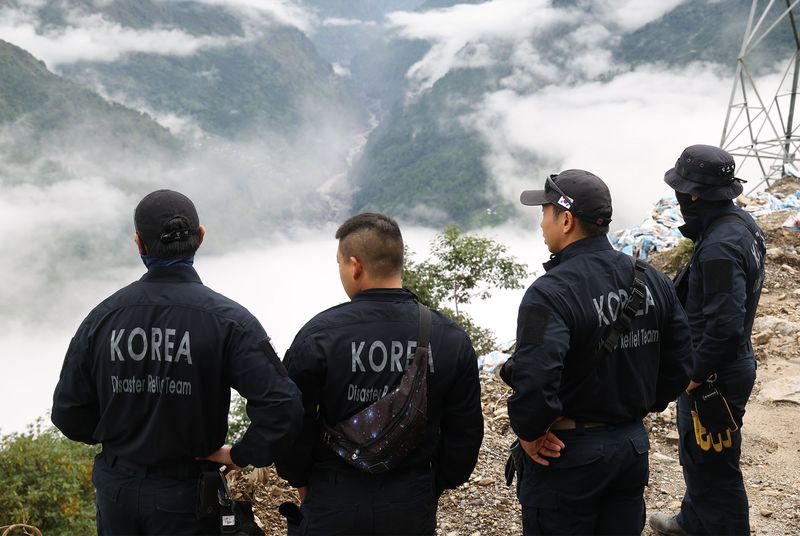
The rapid-response team cleared an access route in the Lamche area and reached a point approximately 50 meters from the office of a South Korean company. However, after confirming that the area below was a deep cliff, the team withdrew.
The National Assembly’s Foreign Affairs and Unification Committee was also informed by the Ministry of Foreign Affairs the previous day that sufficient conditions had not yet been secured to search the location where the South Koreans went missing.
The area reportedly suffered extensive flood damage, making it difficult for personnel to conduct searches on foot. The response team is currently filming the site with helicopters and drones, analyzing the footage, and seeking ways to redeploy personnel and equipment. It is expanding the search area to mountain slopes that the missing people may have used to escape the river during the flooding. Searches are also underway around the weir dam based on information provided by the companies involved.
However, plans to search the tunnel at the Upper Trishuli-1 Hydropower Project, where hundreds of people may be missing, have not yet been finalized. The tunnel was not a regular work site for the South Korean workers, and it is too far from the accident site to reach on foot, making it unlikely that the missing South Koreans are inside. A Chinese search team previously found one body in the tunnel. Whether to enter the tunnel or expand the search area downstream is expected to be decided after consultations with the Nepal Army.
A MOFA official explained, "We will conduct humanitarian search-and-rescue operations for all missing people, regardless of nationality."
The Korea Disaster Relief Team (KDRT), which arrived in Nepal the previous day, will also begin on-site searches as "one team" with the government joint rapid-response team.
The existing rapid-response team has been incorporated into the KDRT and will conduct search-and-rescue operations under an integrated command structure. Lee Gyu-ho, director-general of the Development Cooperation Bureau at MOFA and head of the KDRT, is consulting with the Nepal Army commander in the Batar area, where the team is camping, on search areas and methods. Of the 44 KDRT members, 10 first moved to Batar, where the base camp was established, and began camping there. The remaining personnel will also move to Batar that day to transport vehicles and equipment.
No clear progress has reportedly been made in analyzing mobile-phone signals from the nine missing South Koreans. A MOFA official said, "The telecommunications conditions in South Korea and Nepal are very different, so we are gathering more information," adding, "The two countries are consulting, but at this point it is difficult to say that there has been any meaningful progress."
The government said it is also regularly briefing the families of the missing people on the search. In South Korea, MOFA is meeting the families in person to share the search results and plans for the day. Locally, the Embassy of the Republic of Korea in Nepal, the rapid-response team, and the KDRT are also maintaining frequent contact with the families.
[email protected] Kim Kyung-soo Reporter