'Jung Woon-ho Scandal': Former Senior Prosecutor Who Received 100 Million Won Sentenced to Two Years in Prison
- Input
- 2026-09-03 13:18:09
- Updated
- 2026-09-03 13:18:09
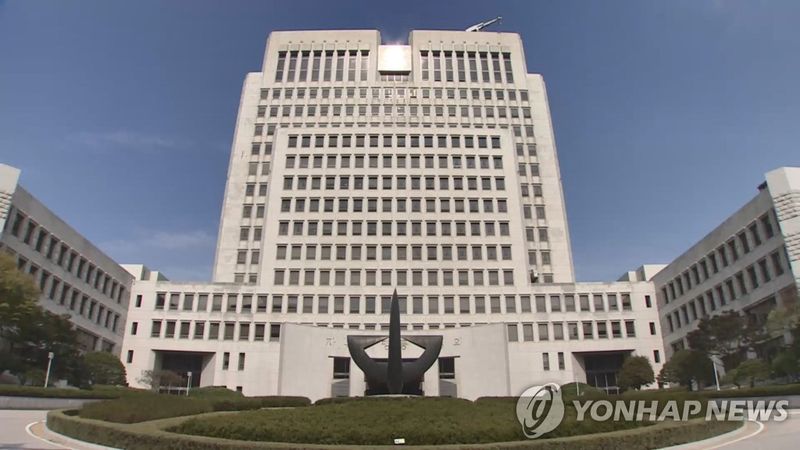
According to legal sources on the 3rd, the Supreme Court of Korea's First Division, with Justice Suh Kyeong-hwan presiding over the case, dismissed the appeal filed by former senior prosecutor Park and upheld the lower court's sentence of two years in prison and forfeiture of 92 million won.
The final appeal addressed the requirements for suspending trial proceedings under Article 306, Paragraph 1 of the Criminal Procedure Act, consent to and the admissibility of printed digital evidence, and the credibility of the donor's statements. The Supreme Court of Korea ruled, "The lower court neither violated the rules of logic and experience and exceeded the limits of the principle of free evaluation of evidence, nor erred in its interpretation of the law concerning the suspension of trial proceedings, the admissibility of printed digital evidence, or the establishment of the offense of violating Article 111, Paragraph 1 of the Attorney-at-Law Act."
The incident took place in 2014, when Nature Republic was expanding its subway-station retail business. The company signed a lease with Seoul Metro to operate a cosmetics store inside a subway station, but Seoul Metro terminated the contract following an audit by the Board of Audit and Inspection (BAI). Jung asked an acquaintance, Choi, to introduce someone who could lobby or arrange a request to the BAI to allow the contract to remain in effect. Choi introduced Park, who was then a serving prosecutor. Park was a high-school junior of a senior BAI official.
On June 12, 2014, Choi received 100 million won from Jung in exchange for agreeing to lobby or arrange a request to a senior BAI official. From that day through June 21, Park received 92 million won from Choi, while Choi kept the remaining 8 million won for his own use. Prosecutors determined that Park and Choi had conspired to receive money on the pretext of lobbying or arranging matters handled by public officials, and indicted both men in May 2017. Park, who entered the prosecution service in 1990, was dismissed that same month.
Park's first trial was suspended for approximately four years and seven months after he underwent surgery for a cerebral hemorrhage. Although Park denied receiving money through Choi, the trial court found Jung's and Choi's statements credible, convicted him, and sentenced him to two years in prison and forfeiture of 92 million won. Choi, who was indicted alongside Park, admitted to all the charges and was sentenced to 10 months in prison suspended for two years, along with forfeiture of 8 million won. He did not appeal, so the sentence became final.
In October last year, the appellate court dismissed both sides' appeals. It specifically found the digital evidence, including schedules stored on Choi's mobile phone, admissible. The court also ruled that because Park had consented at the first trial to its use as evidence and the evidentiary examination had already concluded, he could not cancel or withdraw that consent. It further determined that the subject of the lobbying or arrangement constituted a "case or matter handled by a public official" under the Attorney-at-Law Act.
The Jung Woon-ho scandal, which came to light in 2016, involved Jung's wide-ranging lobbying efforts to secure help in connection with an overseas gambling case in which he was implicated. A major investigation followed after several legal professionals, including a former chief prosecutor and a former chief judge who had become lawyers, were found to be involved, and many were punished.
[email protected] Kim Dong-gyu Reporter