Minister Yun Ho-jung: "Relocation of the Ministry of Justice and Ministry of Gender Equality to Sejong City to Begin in the First Half of 2027"
- Input
- 2026-09-03 11:24:56
- Updated
- 2026-09-03 11:24:56
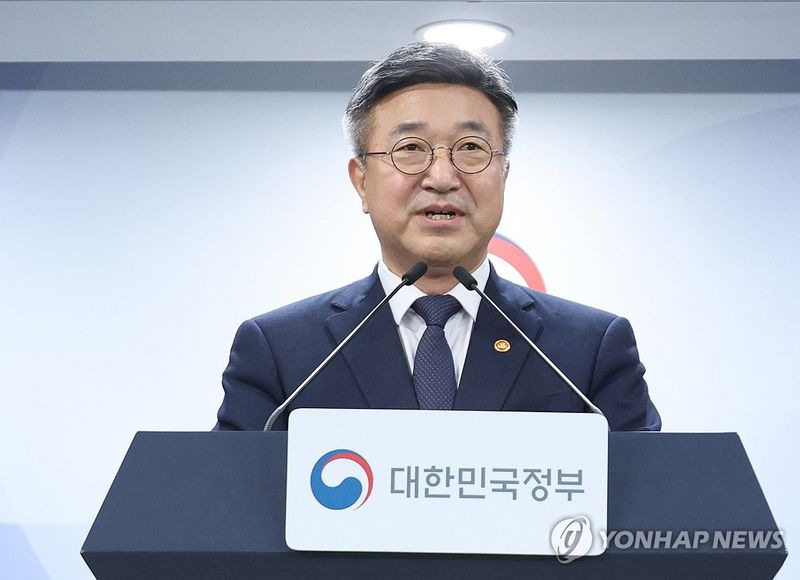
[Financial News] The government will begin relocating central administrative agencies, including the Ministry of Justice and Ministry of Gender Equality, from the Seoul metropolitan area to Sejong City in stages starting in the first half of 2027. The Ministry of Justice and Ministry of Gender Equality are currently excluded by law from relocation to Sejong City, but the government plans to amend the Special Act on the Construction of Administrative City to make their relocation possible. Agencies requiring separate buildings, including the Public Prosecution Office, Serious Crime Investigation Agency, and Korean National Police Agency, will move after new facilities are constructed.
Yun Ho-jung, Minister of the Interior and Safety, announced the plan, titled the "Direction for the Second Relocation of Central Administrative Agencies," at a press conference on the relocation of administrative and public institutions held at Government Complex Seoul.
Yun said, "We will pursue the second relocation of central administrative agencies to strengthen a Sejong City-centered system of state administration and improve the efficiency of cooperation and communication among ministries."
The government will review the relocation of central administrative agencies and affiliated institutions located in the Seoul metropolitan area. Eligible agencies will be selected after comprehensively considering their functions and characteristics, as well as the links between their work and that of other agencies.
As a first step, the government will begin amending the law to enable the Ministry of Justice and Ministry of Gender Equality to relocate to Sejong City.
The current Special Act on the Construction of Administrative City designates the two ministries and other agencies as excluded from relocation. The government therefore decided to pursue an amendment removing them from the list of excluded agencies.
The specific agencies to be relocated, along with the methods and timing, have not yet been finalized. After consulting with the relevant central administrative agencies and holding public hearings in accordance with Article 16 of the Special Act on the Construction of Administrative City, the government plans to revise and officially announce the "Relocation Plan for Central Administrative Agencies and Other Institutions" before making a final decision.
Following these procedures, the government plans to give priority, starting in the first half of 2027, to large agencies and those expected to have a significant relocation impact, including the Ministry of Justice and Ministry of Gender Equality.
Yun said, "Agencies requiring separate buildings, including the Public Prosecution Office and Serious Crime Investigation Agency, which will be launched following the reorganization of the prosecution service, as well as the Korean National Police Agency, will be relocated after new buildings are constructed."
The government decided not to relocate all agencies at once. Instead, it will move them in stages, taking into account each agency's working conditions and state of preparedness.
Measures will also be prepared to prevent administrative gaps during the relocation process. Each agency will establish a plan to ensure business continuity so that services directly affecting people's daily lives, including civil petitions, permits and licenses, and policy implementation, are not suspended or delayed.
Support will be provided to help relocating employees and their families settle in Sejong City. The government will review housing, education, childcare, transportation, and other living conditions, while also creating suitable working environments so that relocated agencies can resume normal operations at an early stage.
The government plans to include the budget required for relocating central administrative agencies in the 2027 budget and seek the National Assembly's cooperation on amendments to the Special Act on the Construction of Administrative City and related measures.
A task force involving relevant ministries will also be formed under the leadership of MOIS and the Office for Government Policy Coordination. The task force will oversee and manage, at the pan-government level, each agency's relocation plan, the status of securing office buildings, business continuity measures, and settlement support for employees and their families.
Yun said, "The relocation of central administrative agencies is not merely a matter of moving the government's offices. It is about improving the efficiency of national administration, strengthening Sejong City's role as an administrative hub, and further solidifying the foundation for balanced national growth."
Meanwhile, 43 agencies relocated to Sejong City between 2012 and 2021. Since many central administrative agencies still remain in the Seoul metropolitan area, the government plans to strengthen a Sejong City-centered system of state administration through additional relocations.
[email protected] Lee Bo-mi Reporter