Second-Phase Relocation of Public Institutions to Begin Early Without New Offices; Employees to Receive Up to KRW 700,000 More per Month
- Input
- 2026-09-03 11:19:50
- Updated
- 2026-09-03 11:19:50
[Financial News] The government plans to finalize the second phase of relocating public institutions to regional areas by the end of this year. It will hold public discussions to address the various problems that arose during the first phase. The full-scale relocation will begin next year.
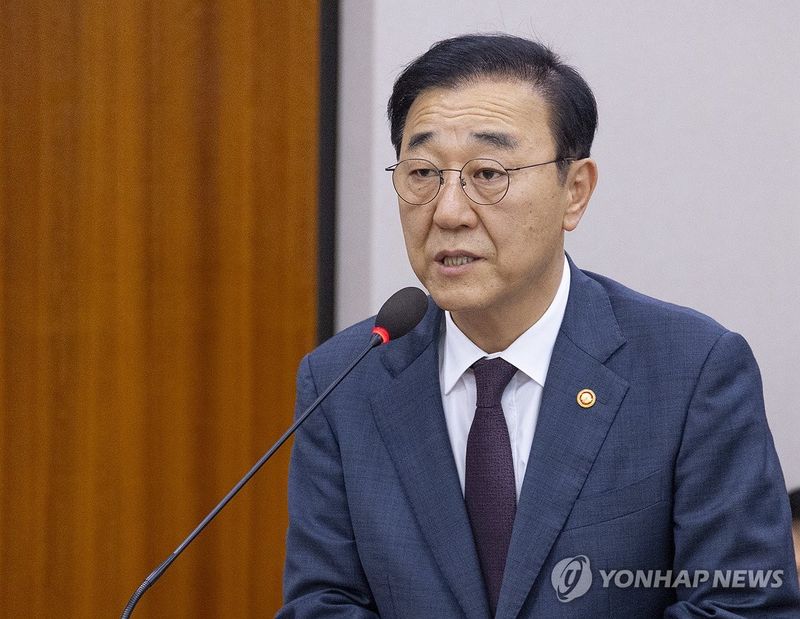
Kim Yun-duk, Minister of Land, Infrastructure and Transport of South Korea, presented the "Principles and Direction for Promoting the Second-Phase Relocation of Public Institutions to Regional Areas" at Government Complex Seoul on the 3rd.
The government plans to finalize and announce its second-phase relocation plan during the fourth quarter of this year. Since the institutions slated for relocation were not specifically identified in the announcement, a list is expected to be released later.
The government said it would pursue the second-phase relocation of public institutions based on five principles.
The central focus of the relocation is to minimize the number of institutions remaining in the Seoul metropolitan area. The government plans to reconsider from the ground up the criteria for allowing institutions to remain in the capital region, which were applied during the first phase, and move to regional areas any public institution that has no special reason—such as national defense or diplomacy—to remain there. The move is seen as reflecting criticism that the first phase had limited success in reversing the concentration of institutions in the capital region. Kim emphasized, "Unless an institution must remain in the capital region, it will in principle be included among those subject to relocation."
The institutions relocated in the second phase will be clustered mainly around existing Innovation Cities. Kim explained, "We will promote relocation around existing Innovation Cities to maximize its ripple effects," adding, "We will fully consider the five poles and three special regions growth engine and the functional groupings of existing Innovation Cities." During the first phase, institutions were dispersed across several cities, prompting criticism that coordination among them was difficult. The latest plan is understood as an effort to improve efficiency and connectivity by bringing first- and second-phase institutions closer together.
The government also plans to revitalize regional areas by linking local universities with industry. It will expand cooperation among companies, universities, and research organizations centered on the relocated institutions, hire talent from the relevant regions, and strengthen collaboration with local universities. Kim explained, "Positive changes have emerged in regional economies, including the growth of key regional industries centered on first-phase relocated institutions, increased hiring of local talent, and higher local tax revenues."
The government plans to use the population and demand increases resulting from the second phase to strengthen Innovation Cities’ self-sufficient functions. Through cooperation between central and local governments, it will build and improve settlement infrastructure, including transportation, education, healthcare, and culture, with the aim of creating more livable cities. According to MOLIT, the first phase of public-institution relocation was carried out over 14 years, from 2005 to 2019, and involved 150 institutions and more than 50,000 people. About 70% of employees at the relocated institutions settled in regional areas with their families and became key contributors to local industries. The government therefore intends to focus on the infrastructure needed to support them. Kim said, "We will develop Innovation Cities into premium cities worthy of serving as regional growth hubs."
Finally, given that the first phase took more than seven years from the announcement of the plan to the actual relocations, the government intends to move ahead with the second phase at a faster pace. It plans to lease private buildings first and begin leading relocations in earnest next year. Kim added, "Rather than waiting for new offices to be built as we did during the first phase, we will use leased private buildings and other facilities to begin leading relocations immediately next year," adding, "We will also prepare effective housing-support measures to minimize the burden on employees of relocating institutions who must move their homes within a short period."
Support measures will also be strengthened to reduce the burden on employees of relocating institutions and encourage them to move early with their families. In addition to the relocation allowance paid during the first phase—KRW 200,000 per month for two years—and moving expenses, the government plans to provide a long-distance preferential allowance based on relocation distance, worth up to KRW 200,000 per month for two years. It will also introduce an early-relocation allowance of up to KRW 500,000 per month for two years, depending on the timing of the move. Excluding existing allowances, the newly introduced allowances could provide up to KRW 700,000 per month.
Kim said, "Starting with today's announcement, we will launch a full-scale public discussion process involving local governments, labor groups, and others," adding, "We will listen carefully to a wide range of views from the field and prepare and announce a reasonable relocation plan that everyone can support by the end of this year."
MOLIT has allocated approximately KRW 181 billion in next year's budget for the second-phase relocation of public institutions. The funds will be provided to institutions that cannot finance the relocation themselves.
[email protected] Jung Kyung-soo and Choi Ga-young Reporter