Mega Special Zone Act Set to Be Unveiled, Serving as a 'Test Bed' for Labor Flexibility
- Input
- 2026-09-03 14:55:56
- Updated
- 2026-09-03 14:55:56
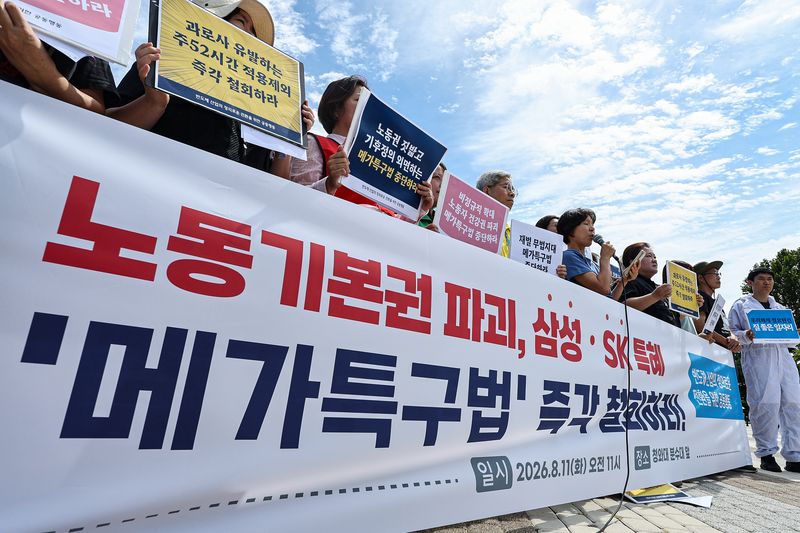
According to Financial News reporting on the 3rd, the ruling party and the government will finalize the draft Mega Special Zone Act after consultations on the 4th. The finalized draft is expected to be introduced immediately after the ruling party-government meeting at the earliest, or by early next week at the latest, under the names of lawmakers belonging to the party's Special Committee on Mega Projects and Regional Growth Support, known as the Mega Special Committee. Analysts say the government's labor-flexibility policy, promoted under a "moderate and pragmatic expansion" platform, is moving into full swing, particularly because the draft was reportedly coordinated by the Office for Government Policy Coordination under the prime minister.
The key issue is opposition from the labor movement. When the Special Act on Semiconductor Support was prepared earlier this year, the Democratic Party of Korea processed the bill without an exemption from the 52-hour maximum workweek regulation, taking labor opposition into account. Labor groups are also opposing the Mega Special Zone Act, warning that, as with the Special Act on Semiconductor Support, exemptions from labor regulations for certain occupational groups could spread to workers as a whole.
Political circles are nevertheless raising the possibility that the ruling party and the government revived the exemption from the 52-hour maximum workweek regulation to secure corporate cooperation in implementing government policies, including the three major mega projects. Within the ruling camp, there is also growing recognition that labor-flexibility measures for research and development (R&D) positions are unavoidable to consolidate South Korea's global standing in semiconductors and secure technologies that maintain a commanding lead.
The Democratic Party of Korea plans to leave room to revise the Mega Special Zone Act while seeking to persuade labor groups through extensive public consultation. It is also expected to emphasize that the act is essentially a procedural law. In other words, various financial and tax benefits, including the exemption from the 52-hour maximum workweek regulation, would be available only after an area is designated as a mega special zone. The Democratic Party of Korea believes that the designation process can adequately reflect the labor movement's position.
A Democratic Party of Korea official said, "The Mega Special Zone Act is a kind of procedural law that allows local governments and companies to ask the central government to designate mega special zones. They can enjoy various special benefits only after the government approves their requests." The official added, "There are various possible solutions, such as requiring the government to receive labor-management agreements or workers' consent during the designation process."
The official continued, "There is no reason to oppose the exemption from the 52-hour maximum workweek regulation based on something that has not actually happened yet." The official also stated, "The Mega Special Zone Act is merely a law concerning procedures and standards, and it establishes only broad principles. Ultimately, we need to wait and see how each situation unfolds in practice."
[email protected] Kim Hyung-gu Reporter