"Paying for a second round out of my own pocket every week?" Should I keep working at a company that makes employees pay for team dinners? [What do you think?]
- Input
- 2026-09-04 06:47:51
- Updated
- 2026-09-04 06:47:51
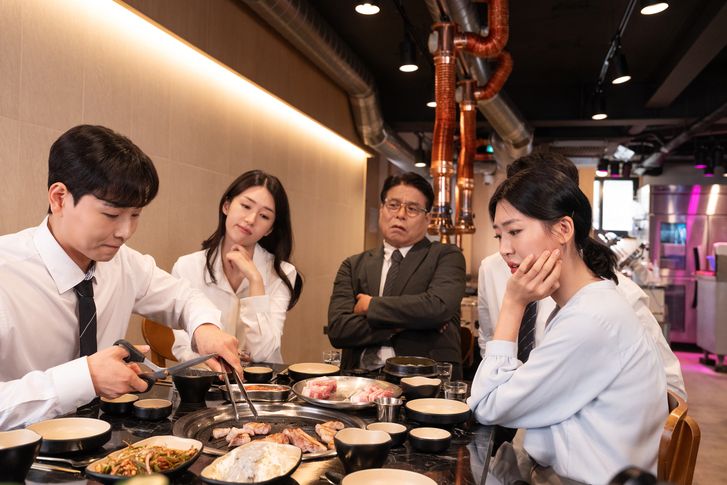
[Financial News] "The company doesn't require it, but our team goes out for a second round every week using our own money. When I try to skip it, they say, 'We'll work around your schedule,' and I feel suffocated."
An unusually close-knit team holds voluntary weekly dinners, leaving one employee worried about being left out if they do not attend
A post titled "Should I keep working at a company that has a team dinner once a week?" recently appeared on an online workplace community. It has resonated deeply with young workers in their 20s and 30s, fueling a debate over pressure to attend work gatherings disguised as voluntary socializing.
The author, identified only as Employee A, said that although the company is large, the nine-member team they belong to works separately on another floor. Because the team works in an isolated area, its members have developed an unusually strong bond. That closeness has solidified into a routine of "voluntary weekly dinners followed by a second round of drinks." Since these are not official company dinners, the team members have to cover all the costs themselves.
The problem is that these gatherings are unbearable for some people. Employee A lamented, "Every week, I feel like I'm wasting money and I'm so physically exhausted, but with the department head and team leader attending, it's hard to say, 'I'll be the only one who skips it.'" When the employee casually used other appointments as an excuse, coworkers offered what was meant to be consideration, saying, "We'll change the day to fit your schedule." As a result, the employee said there was no longer even an escape route.
Because the team frequently collaborates, conversations during work hours often revolve around the previous night's gathering. Employee A confessed to considering resigning, fearing that they might feel isolated or face disadvantages within the organization.
"Making employees pay out of their own pockets is abuse of power," "Just skip it occasionally" ... Others offer different opinions
People who read the story expressed deep frustration while offering mixed advice. Criticism poured in, including comments such as, "Making people spend their own money to meet every week is clearly gaslighting and abuse of power," "It's group pressure disguised as consideration," and "An organization that holds its employees' after-work hours hostage won't last long." Some also offered practical advice, suggesting that the employee gradually reduce attendance by citing a fixed-schedule hobby, such as exercise classes or an academy course.
Experts warn that informal gatherings outside the legal and institutional framework of company dinners can become a new blind spot for workplace harassment. Although they appear to be cloaked in "voluntary socializing," the gatherings can feel like an extension of work to junior employees as long as managers such as department heads and team leaders attend and hierarchical relationships remain in place, with potential effects on personnel and collaboration evaluations.
A labor-sector official noted, "Although awareness of work-life balance and control over one's time has risen significantly since the COVID-19 pandemic, there are still many practices that intrude on employees' lives after work in the name of maintaining close-knit relationships." The official added, "Leaders must recognize that the justification of maintaining a 'good atmosphere' within an organization can become shackles that force some members into silence."
[email protected] Moon Young-jin Reporter