“18 Million Barrels of Crude Oil Pass Through Strait of Hormuz in One Day Under U.S. Military Escort—Largest Since the War”
- Input
- 2026-09-03 10:09:38
- Updated
- 2026-09-03 10:09:38
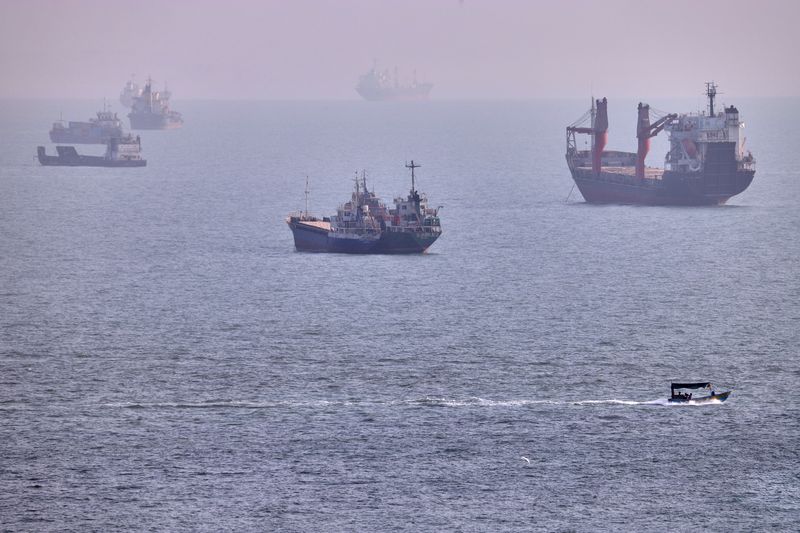
[Financial News] Forty merchant vessels carrying 18 million barrels of crude oil passed through the Strait of Hormuz under U.S. military escort on the first, local time, CNN reported on the second, citing U.S. military sources.
CNN assessed that the volume nearly reached the prewar average of 20 million barrels of crude oil transported through the Strait of Hormuz per day. It was also the largest daily volume to pass through the strait since the war began.
Gulf oil-producing states are operating “shuttle vessels” that risk Iranian attacks to load crude oil in Gulf waters—the Persian Gulf—and covertly leave through the Strait of Hormuz, transferring the oil to tankers outside the strait.
All 40 vessels that passed through the Strait of Hormuz on the first also sailed with their location-tracking devices turned off.
These shuttle vessels have provided a vital lifeline for crude oil exports from the oil-producing states, which had been suspended for months after the war led to the blockade of the Strait of Hormuz.
U.S. military sources explained that, to protect the shuttle vessels, the U.S. military deployed air, maritime, and space assets to defend against Iranian drones and cruise missiles. They also said the military struck Iranian air bases, radar installations, maritime assets, mine-laying capabilities, and communications facilities around the strait.
The sources said the U.S. military also neutralized an anti-ship cruise missile launched by Iran during the escort operation on the first.
When the United States went to war with Iran in February this year, the stated justification was to eliminate Iran’s nuclear program. As the war dragged on, however, the focus shifted to reopening the Strait of Hormuz and enforcing a maritime blockade against Iran.
CNN pointed out that, as Iran firmly maintains control of the strait, the United States’ most realistic option is to neutralize Iran’s ability to attack merchant vessels as much as possible.
U.S. President Donald Trump also claimed on the second that recent U.S. airstrikes were intended to eliminate Iran’s ability to track ships passing through the Strait of Hormuz, and that the United States held control of the strait.
CNN noted, however, that despite the United States’ intensive efforts to seize control of the Strait of Hormuz, “full control” had not been demonstrated and strong skepticism among industry officials and analysts remained.
An industry official told CNN, “It would be fair to say that the U.S. government has failed to secure confidence,” adding, “Even if it is true that the daily volume of crude oil transported surged, no one believes that the average volume is actually that high.”
[email protected] International Affairs Specialist Lee Seok-woo Reporter