Korea Customs Service Launches Series of Joint Drug Crackdowns with U.S., Netherlands and Others to Block Drugs at the Border
- Input
- 2026-09-03 09:38:46
- Updated
- 2026-09-03 09:38:46
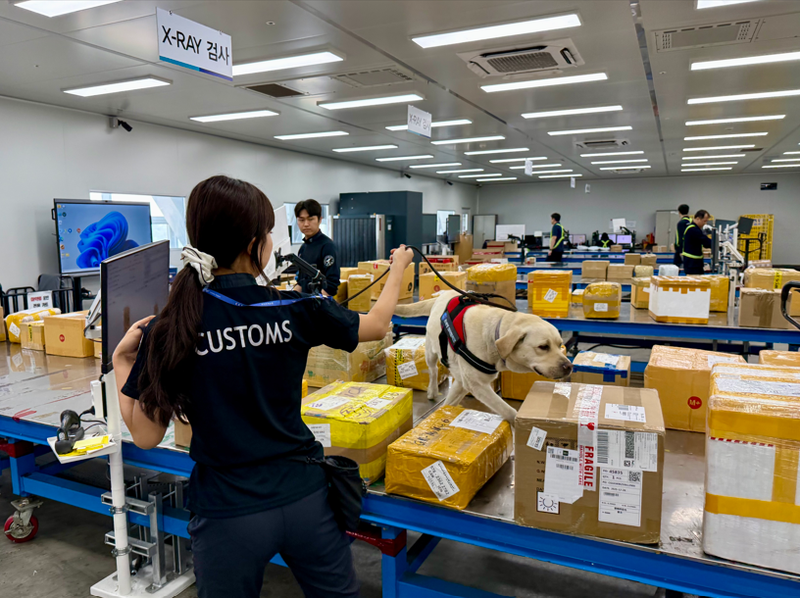
The Korea Customs Service said on the 3rd that it had conducted Operation Silent Sweeper III, a joint Korea-U.S. crackdown on drug smuggling, with the U.S. Customs and Border Protection (CBP), Homeland Security Investigations (HSI), and Drug Enforcement Administration (DEA) throughout June, seizing 39 cases involving a total of 7.1 kg of drugs.
The third operation this year targeted cargo and travelers bound for South Korea from the United States, tracking the entire process from departure to arrival. The two countries established operation control units (OCUs) at the Incheon International Airport express cargo center and Los Angeles International Airport (LAX), respectively. They conducted intensive inspections of express cargo, international mail, and air travelers by mutually dispatching enforcement officers and sharing information in real time.
The drugs seized during the third operation included 4.2 kg of illegal pharmaceuticals, 1.8 kg of methamphetamine, and 1.1 kg of cannabis. In particular, seizures of illegal pharmaceuticals containing drug ingredients, such as dextromethorphan and methylphenidate, which are misused through overseas direct purchases and other channels, surged 300% from the previous operation. A new inhaled drug known as Rush was also seized for the first time. The cumulative seizures from the first through third operations totaled 74 cases and 40.9 kg. This is enough for approximately 1.36 million people to take methamphetamine simultaneously.
The Korea Customs Service is also actively expanding its cooperation network into Europe and Southeast Asia. Over two months beginning in May, it conducted Operation Worm Hole IV, a joint Korea-Netherlands crackdown on drug smuggling, with Dutch customs authorities, seizing six cases totaling 1.9 kg. It also completed interdiction operations in the first half of the year with major Southeast Asian countries, including Cambodia, Thailand, and Laos.
Drug-trafficking organizations have recently adopted increasingly sophisticated methods to evade enforcement by using advanced information and communications technology (ICT). It has become common to arrange transactions through encrypted channels such as the dark web and Telegram, while using virtual assets as a means of payment to conceal the flow of funds. As a result, securing advanced, intelligence-led investigative capabilities—including digital evidence analysis and virtual-asset tracing—has emerged as a key challenge in border enforcement, beyond simple customs inspections.
Lee Jong-wook, Commissioner of the Korea Customs Service, said, "Close cooperation among countries is essential to block drug smuggling, a transnational crime. We are pursuing the establishment of a dedicated drug intelligence unit at the Korea Customs Service headquarters to build a precise interdiction network at the border and track overseas supply organizations."
[email protected] Kim Won-jun Reporter