Visitors Came to Jeju for Games and Tourism, Spending 1.17 Million Won Per Person
- Input
- 2026-09-03 06:58:07
- Updated
- 2026-09-03 06:58:07
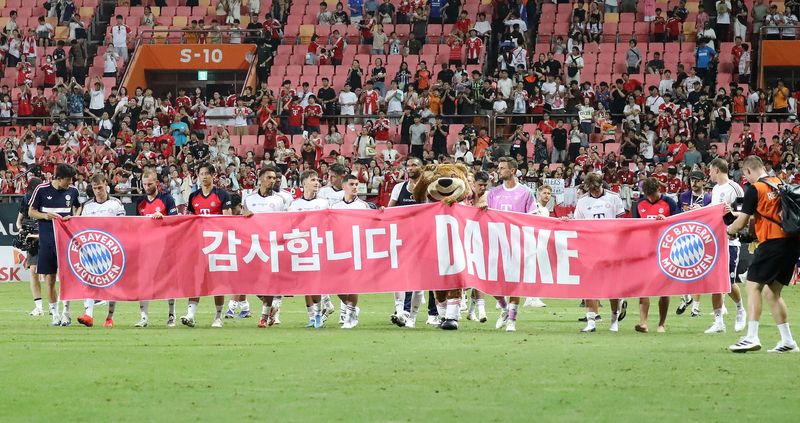
【Financial News Jeju=Reporter Jeong Yong-bok】 A survey found that about seven in 10 visitors from outside Jeju who traveled to the island to watch world-class soccer and volleyball matches stayed for at least four days. Eight in 10 visited for both the games and tourism.
On the 3rd, the Jeju Special Self-Governing Provincial Council said its Legislative Support Office and the Chosun University Institute of Sports Science had published Policy Issue Analysis No. 13, examining the length of stay and spending patterns of visitors from outside Jeju at the 2026 Korea-China-Japan Women’s Volleyball Top Club Super Match Jeju Tournament and the Audi Football Summit 2026.
The survey was conducted at the two tournaments among 106 spectators from outside the region. Because it used convenience sampling, a non-probability sampling method, the results cannot be considered fully representative of all spectators’ spending patterns. Nevertheless, the study is significant because it confirmed on site that major sporting events can lead to visits to Jeju, longer stays, tourism and consumer spending.
Some 67.9% of respondents said they would stay in Jeju for at least four days. Those staying five days and those staying seven days or more each accounted for 21.7%, while four-day stays represented 19.8%.
Regarding the purpose of their visit, the largest group, 79.2%, cited both watching the games and tourism. Another 16% said they came solely to watch the games, while 2.8% visited solely for tourism. This indicates that sporting events are becoming part of broader travel itineraries.
Asked who they traveled with, respondents most commonly cited family members at 34%, followed by friends at 29.2%, traveling alone at 17.9% and romantic partners at 12.3%. Groups of two accounted for the largest share of travel parties, at 43.4%. The researchers proposed developing packages combining games, accommodation, tourism and experiences for groups of two to four people, including families and friends.
Average spending by each visitor from outside Jeju was 1,169,200 won. Accommodation accounted for the largest amount at 329,500 won, followed by transportation at 303,500 won, food and beverages at 281,000 won, tourism and shopping at 112,400 won, other expenses such as experiences and admission fees at 90,000 won, and entertainment and recreation at 53,000 won.
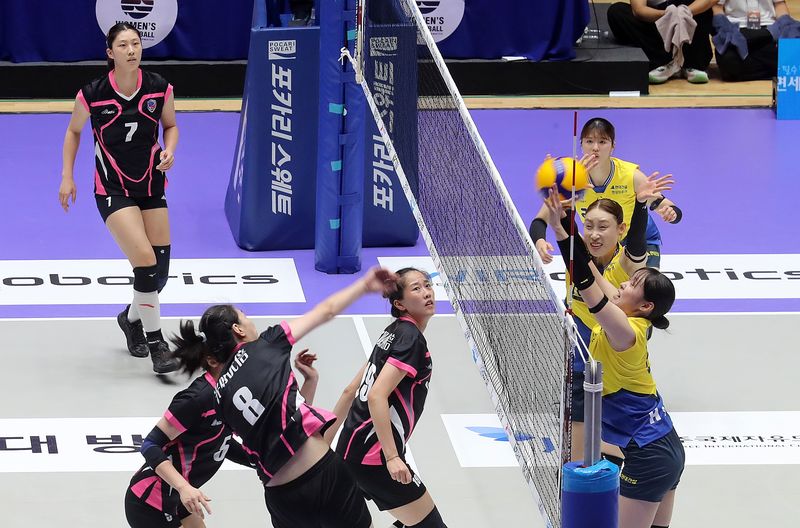
Spending on accommodation, transportation and food during visitors’ stays in Jeju was greater than spending inside the stadium.
The economic ripple effects were estimated by applying the number of spectators and the assumed proportion of visitors from outside Jeju for each tournament. For the Korea-China-Japan Women’s Volleyball Top Club Super Match, visitors from outside Jeju were estimated at 17% of the 7,000 spectators, or 1,190 people. Their direct spending was calculated at approximately 1.39159 billion won.
Adding an induced production effect of approximately 1.76607 billion won and an induced value-added effect of approximately 797.6 million won brought the total estimated economic impact to approximately 3.95525 billion won.
For the Audi Football Summit, 13,962 people, or 62% of the 22,519 spectators, were counted as visitors from outside Jeju. Their direct spending was estimated at approximately 16.32716 billion won. Including an induced production effect of approximately 20.7209 billion won and an induced value-added effect of approximately 9.35801 billion won, the total economic impact was estimated at approximately 46.4607 billion won.
The combined impact of the two tournaments was approximately 50.36132 billion won. Most of the economic effect was estimated to have come from the Audi Football Summit, which featured a match between Jeju SK FC and German Bundesliga club FC Bayern Munich. This suggests that the drawing power of content featuring famous overseas clubs and top-level players could significantly influence regional economic benefits.
By industry, induced production effects were particularly large in accommodation, restaurants and transportation services. Induced value-added effects were also concentrated in transportation, accommodation and restaurants.
However, the 50.36 billion won figure is an estimate of the economic ripple effect, calculated by applying the per-person spending derived from a survey of 106 people to the estimated number of visitors from outside Jeju and using industry input-output multipliers.
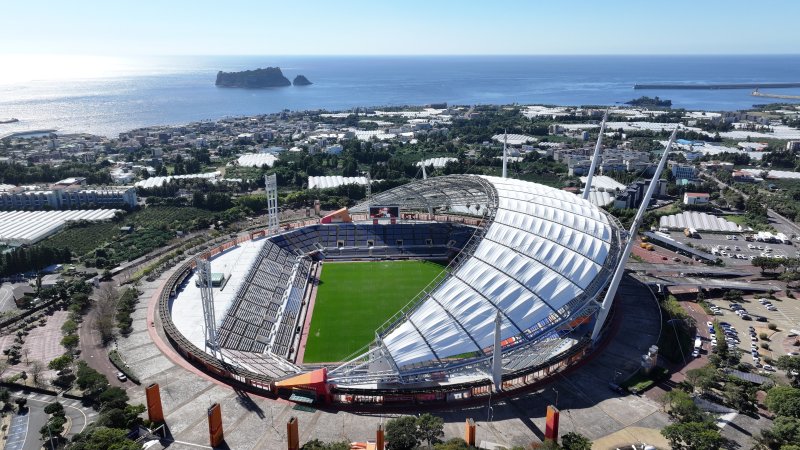
The 17% share of visitors from outside Jeju for the women’s volleyball tournament and the 62% share for the soccer tournament were also estimates applied during the analysis. To compare the economic value of sporting events in the future, it will be necessary to verify the actual number of visitors from outside Jeju, direct spending data such as card sales, and the public finances invested in attracting and operating the tournaments.
Even so, the findings that 79.2% of respondents visited for both games and tourism and that 67.9% stayed for at least four days suggest that Jeju could expand its sports-tourism sector beyond training camps and participatory tournaments into “sports tourism that people travel to watch.”
Because Jeju is an island, visitors from outside the region must use air or sea transportation, and many need accommodation. If top-level games become a direct reason to visit Jeju, spending is more likely to extend to lodging, transportation, dining and shopping than in other regions.
Jeju Special Self-Governing Province previously projected that 27 sporting events held on the island last August would generate approximately 92.966 billion won in regional economic ripple effects. International events accounted for approximately 90.114 billion won, or 97% of the total projected impact.
The survey shows that rather than simply hosting more tournaments, it is important to secure high-quality sports content capable of attracting visitors from outside Jeju and connect it with tourism focused on longer stays.
Kim Min-cheol, director of the Chosun University Institute of Sports Science, said, “As high-quality spectator sports can effectively attract tourists and revitalize the regional economy, Jeju should strategically attract sporting events with significant economic ripple effects. It also needs to expand competitive sports facilities and establish a Jeju-style sports-tourism model.”
Song Young-houn, chair of the Jeju Special Self-Governing Provincial Council, said, “Given the significant economic ripple effects of sporting events, I will support the expansion of sports facilities to attract events strategically and the implementation of sports-tourism policies.”
[email protected] Reporter Jeong Yong-bok Reporter