Chemical Industry Valuation Criteria Shift from Production Volume to Yield—LG Chem and SKC to Undergo Business Structure Changes: IBK Securities
- Input
- 2026-09-03 05:59:00
- Updated
- 2026-09-03 05:59:00
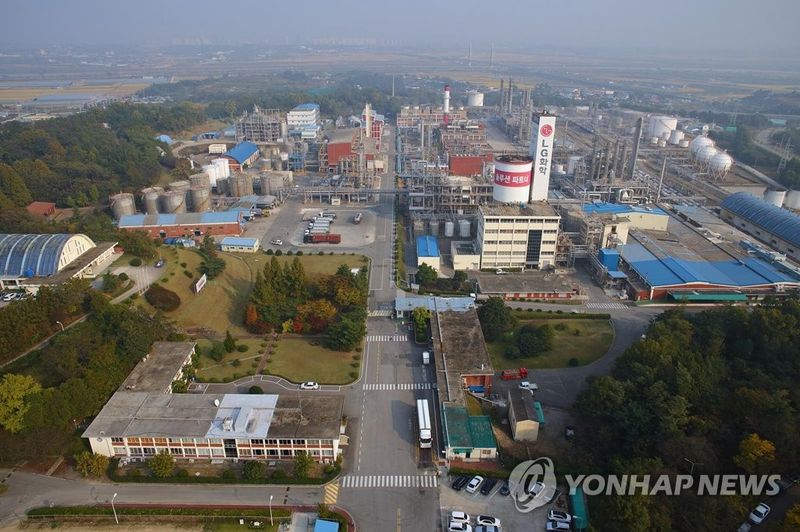
[Financial News] Chemical companies are expected to expand their semiconductor materials businesses, shifting corporate valuation criteria from production volume and product spreads to customer certification and yield. OCI and Lotte Group chemical affiliates are expected to offer relatively greater short-term earnings visibility, while LG Chem and SKC are likely to see more substantial changes in their business structures over the medium to long term.
On the 3rd, IBK Securities analyzed that chemical companies’ expansion into semiconductor materials represents a portfolio transition that will reshape their overall earnings structures, rather than simply adding new businesses. In particular, semiconductor materials have quality and customer certification as entry barriers, making long-term supply relationships more likely.
The earnings structures of Japanese chemical companies were presented as a benchmark. Resonac’s semiconductor and electronic materials sales totaled ¥506.3 billion last year, accounting for 37.6% of its overall revenue. However, the segment’s core operating profit was ¥108.4 billion, nearly matching the company-wide core operating profit of ¥109.1 billion. Shin-Etsu Chemical’s operating margin in its electronic materials segment also reached 33.9% in fiscal 2025.
The expansion of artificial intelligence (AI) semiconductors and advanced packaging was cited as a factor driving demand for materials. While demand for conventional front-end process materials was mainly linked to wafer input volumes and the number of process steps, advanced packaging requires material usage to be determined by package area, chip count, wiring layers, and the number of stacked layers. Even if growth in AI semiconductor shipments is limited going forward, the amount and variety of materials used per package could increase, the report explained.
By company, OCI and Lotte Group chemical affiliates were assessed as having relatively strong short-term earnings visibility. OCI has front-end process materials that are repeatedly used in production, including high-purity phosphoric acid and hydrogen peroxide, electronic-grade polysilicon, and HCDS, a semiconductor precursor. Its semiconductor-grade phosphoric acid production capacity has also been expanded by 20%, from 25,000 tons to 30,000 tons, in line with volumes from existing customers and efforts to secure new customers.
Lotte Group chemical affiliates have established vertical integration extending from LOTTE Fine Chemical’s “TMAC” to Handok Chemical’s “TMAH.” In June, the group began construction of a TMAH plant in Pyeongtaek, with an investment of 130 billion won. The companies are expected to secure a long-term source of earnings by supplying high-purity materials that are consumed repeatedly near customers’ production lines.
Over the medium to long term, LG Chem and SKC are expected to undergo the most significant changes in their business structures. LG Chem has expanded its business into photosensitive insulating materials, chip bonding films, low-dielectric materials, thermal management materials, and glass substrate materials, and aims to achieve electronic materials sales of 2 trillion won by 2030. SKC is focusing its capabilities on back-end process businesses centered on ISC’s test sockets and Absolics’ glass substrates. However, Absolics is currently prioritizing customer certification and the stabilization of mass-production yield over expanding production capacity.
Lee Dong-wook, a researcher at IBK Securities, analyzed, “What Japanese companies demonstrated first was not that semiconductor materials replace conventional chemicals. Rather, by building high-margin electronic materials earnings on top of the earnings volatility of commodity chemicals, they showed that the market can shift its criteria for evaluating chemical companies from industry conditions and spreads to business structure and earnings sustainability.”
[email protected] Kim Mi-hee Reporter