“How about trading on my way home?” Stock market to remain open until 8 p.m.
- Input
- 2026-09-03 05:40:00
- Updated
- 2026-09-03 05:40:00
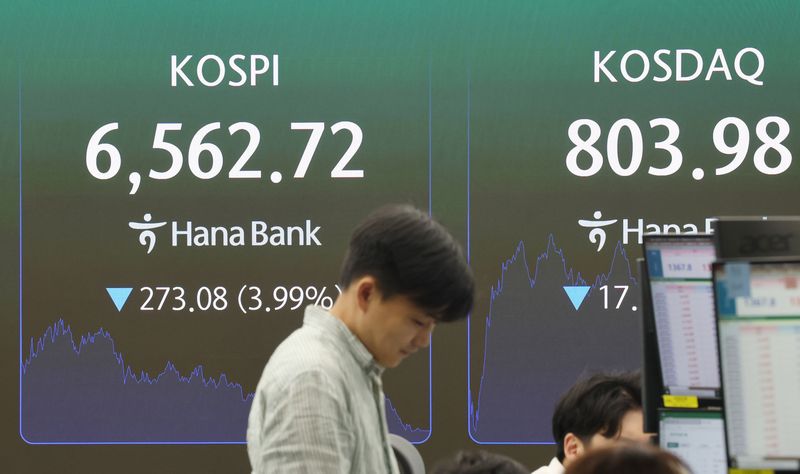
[Financial News] Real-time stock trading during afternoon hours will expand as Korea Exchange (KRX) opens an after-market on the 14th. Following alternative trading venue NextTrade (NXT), KRX is also moving to extend trading hours. However, investors should be mindful of execution delays and price volatility because trading activity is lower during these hours than in the regular session.
According to the financial investment industry on the 3rd, KRX recently prepared a partial amendment to the detailed implementation rules for the securities and KOSDAQ markets. The existing after-hours single-price trading session, which operated from 4 p.m. to 6 p.m., will be eliminated. An after-market will instead operate during that period and continue until 8 p.m.
The biggest change for investors concerns how orders are executed. Under the current after-hours single-price trading system, orders are collected and trades are executed every 10 minutes. In the after-market, orders will be executed in real time, as they are during the regular session.
The price limit will also be expanded to the level used in the regular session. Existing after-hours single-price trading allowed transactions within ±10% of the day’s closing price, while the after-market will apply a limit of ±30% based on the previous day’s closing price.
The types of orders available will be more limited than during the regular session. The after-market will accept only limit orders, best-bid-and-offer limit orders, and marketable limit orders. Market orders and conditional limit orders will not be allowed. However, IOC and FOK conditions may be attached. IOC means that only the executable quantity is traded and the remainder is canceled, while FOK cancels the entire order if it cannot be filled in full.
The handling of unexecuted orders will also differ between the exchanges. On KRX, unexecuted orders are canceled when the regular session ends. Investors who wish to trade in the after-market must therefore check their order history and place new orders. On the other hand, NXT carries pre-market orders over through the regular and after-market sessions.
ETFs and ETNs will not be eligible for trading in the KRX after-market. Issues that were not traded during the regular session on the same day also cannot be bought or sold in the after-market. Issues under administrative designation, investment-warning and investment-risk issues, issues showing abnormal surges, and extremely low-liquidity issues will also be excluded.
Short selling will also be permitted in the after-market. The uptick rule, which prevents orders from being quoted at or below the immediately preceding price, and its exceptions will apply in the same manner as during the regular session. When there is no immediately preceding price, the regular-session closing price will serve as the reference.
NextTrade (NXT) will also strengthen measures to reduce market volatility starting on the 14th. In addition to its regular session, NXT currently operates a pre-market from 8 a.m. to 8:50 a.m. and an after-market from 3:40 p.m. to 8 p.m.
NXT plans to introduce a static volatility interruption (VI). It will also implement an amendment to its operating rules that changes the execution method to a single-price auction when either a dynamic or static VI is triggered.
Until now, NXT had only a dynamic VI, which is triggered when a price moves sharply because of a particular quote. Without a static VI, there have been cases in which the initial pre-market price reached the upper or lower price limit based on only a small number of orders. NXT said it would also pursue a plan to determine the initial pre-market price through a single-price auction.
[email protected] Han Seung-gon Reporter