35 Years from Permanent Rental Housing to Public Redevelopment... What Is Needed Is Not 'More' but 'Doing It Right' [Which 'Public' for Whom 4·Final]
- Input
- 2026-09-04 08:00:00
- Updated
- 2026-09-04 08:00:00
[Financial News] When permanent rental housing was introduced in 1989, the role that 'public housing' had to play was clear. It was to provide affordable rental housing to low-income people who found it difficult to secure a home.
Over the past 35 years, the role of public housing has steadily expanded. National rental housing was introduced, followed by Happy Housing for young people and newlyweds, while local governments, including Seoul, created and provided long-term jeonse housing.
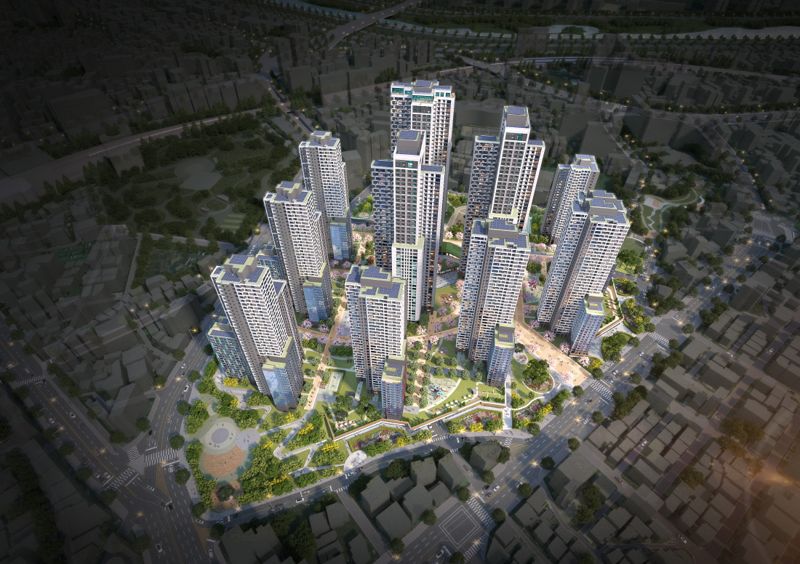
Public housing has diversified beyond rental housing into various forms. These range from land-lease housing, in which the public sector retains ownership of the land and sells only the buildings, to equity-accumulation and profit-sharing public housing. In underdeveloped areas where projects are difficult to carry out solely through the private sector, public redevelopment and urban public housing complex projects have been introduced.
'Public housing' has evolved from rental housing for vulnerable groups into a massive policy instrument covering housing welfare, homeownership, urban renewal, and housing supply. As its role expanded, it performed functions suited to each purpose, but differing policy objectives began to clash under the single word 'public.'
1.43 million public rental housing units... As the sector has grown, its role has become more complex.
The achievements are clear. According to an analysis of Ministry of Land, Infrastructure and Transport (MOLIT) statistics by the Korea Center for City and Environment Research (KOCER), the stock of long-term public rental housing—housing with terms of 20 years or more—reached 1,433,000 units in 2024, accounting for 6.2% of all housing. In Seoul, the figure was 301,000 units, accounting for 7.7%.
Public rental housing has also served as a genuine housing safety net. According to the 'Survey on the Status of Public Rental Housing Residency' released by the LH Land and Housing Research Institute in 2023, rents were 30–70% lower than those of comparable private rentals, while permanent rentals were about 15% of surrounding market rates.
The public sector’s role has extended beyond rental housing. Public redevelopment involves the Korea Land and Housing Corporation (LH), the Seoul Housing & Urban Development Corporation (SH Corporation), and others participating in areas where private redevelopment has been stalled for a long time, improving project feasibility and securing public rental housing.
Lee Yong-ju, deputy head of LH’s Special Headquarters for Metropolitan Area Redevelopment Projects, explained, "The key is to rapidly supply high-quality housing through regulatory easing."
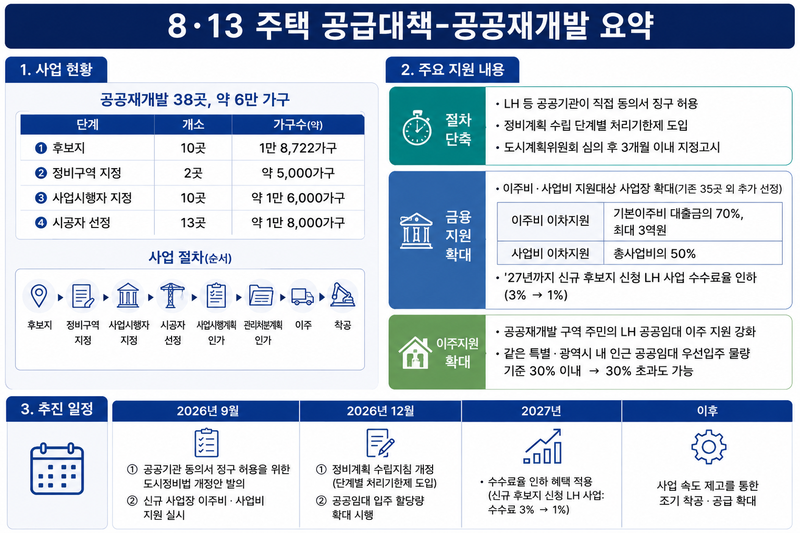
This year, too, the Lee Jae Myung administration set a target of supplying 372,000 units through public housing sites in the metropolitan area from 2026 to 2030 under its August 13 housing supply measures, and planned to begin construction on 62,000 public housing units this year.
Shin Bo-yeon, a professor in the Department of Real Estate AI Convergence at Sejong University, said, "Public rental housing is the most direct means of housing welfare because it lowers housing costs and guarantees long-term residence. Land-lease housing, however, requires consideration of the trade-offs, including the burden of land rent and restrictions on capital gains, in exchange for lower initial sale prices." She added, "Public development is well suited to increasing total supply through site acquisition, infrastructure development, and density adjustments."
More than 30 years after the introduction of permanent rental housing, diverse voices are being raised over who should receive the benefits created by the public sector and under what conditions, depending on individual circumstances.
There is no single housing ladder for everyone.
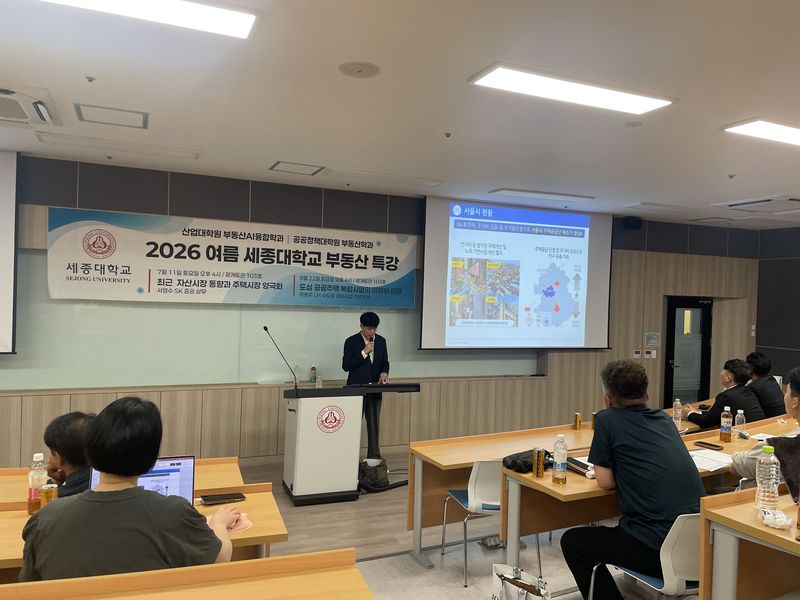
So where should public housing go from here? I asked Professor Shin, who gave a special lecture at Sejong University on the 22nd of last month on 'The Current Status and Future of Urban Public Housing Complex Projects.'
Professor Shin said, "For public housing to be justified, there must be clear target demand, reasonable pricing, and fiscal sustainability. Public housing should not be a policy of 'building a lot,' but a policy of 'providing housing suited to those who need it.'" She proposed more precise segmentation of potential residents.
Indeed, according to a survey by the LH Land and Housing Research Institute, even among public rental households, income levels and future aspirations varied by household type. The average income of public rental households was 58.5% of that of all households, but the figures differed sharply when divided into permanent rental housing and Happy Housing: 44.6% and 82.5%, respectively.
Moreover, while 85.8% of permanent rental housing residents hoped to remain in public rental housing, many Happy Housing residents wanted to own a home.
The need to change the types of housing supplied has also been raised. For example, rather than supplying non-apartment public housing mainly as studio units, experts say it should offer quality housing that reflects actual demand, such as two- or three-room homes where families can live for an extended period.
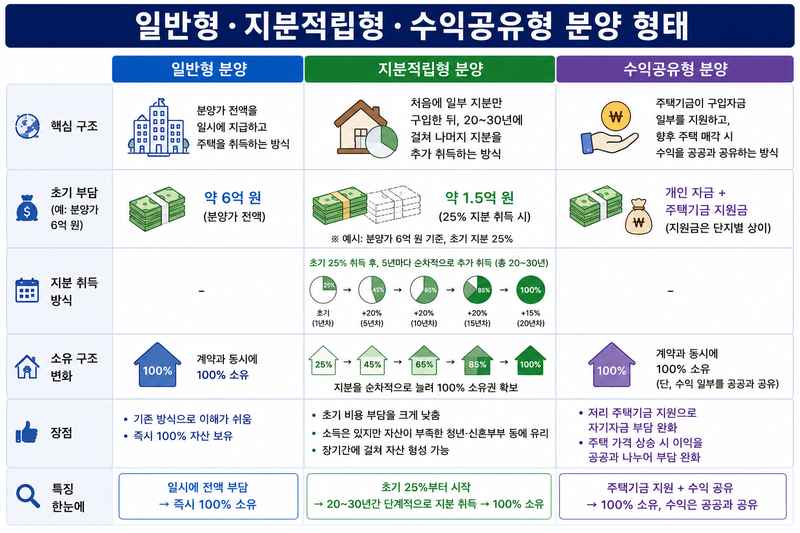
It is also necessary to create a step between 'renting and buying.' In other words, an intermediate stage is needed between renting and full ownership. The government also introduced equity-accumulation public housing under its August 13 measures.
Under this model, a buyer initially purchases only a 25% stake in a home and acquires the remaining stake over 20 to 30 years. The government’s example involves purchasing an additional 20%, 20%, 20%, and 15% every five years. There is also a profit-sharing model, in which buyers use low-interest loans from the Housing and Urban Development Fund and share part of the future profit from selling the home with the public sector.
Professor Shin said, "We need to establish various stages between renting and full ownership. Depending on income, assets, and household size, rental housing, deposit assistance, housing vouchers, and public housing sales should be differentiated and supplied near workplaces, schools, and public transportation."
Experts also advised that the performance of public development should not be evaluated solely by the number of units supplied or the length of the project. Rather than asking "how quickly was it built," it should be assessed by the social benefits that public intervention created in private development.
It was also suggested that an exit strategy should be established for all public housing from the outset. Residents of Seoul’s long-term jeonse housing, SHIFT, whose 20-year terms are approaching expiration, are in conflict with the Seoul Metropolitan Government as they demand contract renewals and phased conversion to ownership.
The universal public rental housing being introduced by the government also allows a basic residency period of six years, extendable to as long as 20 years depending on circumstances such as childbirth. The problem is what happens afterward. Residents may accumulate assets and purchase a home, but they may also continue to need public support because of old age or unemployment.
Therefore, pathways should be presented from the outset for residents to move to other public rental housing as their income and assets change, or to become self-reliant in the private market through equity-accumulation or public housing purchase programs.
Conversely, when a home has been acquired with public support, measures such as owner-occupancy requirements, resale restrictions, and profit sharing should prevent that support from turning into short-term capital gains.
Professor Shin emphasized, "To prevent affordable acquisition from leading to short-term capital gains, we must put minimum public-interest safeguards in place so that 'housing support' does not degenerate into a 'channel for speculation.'"
[email protected] Seo Yoon-kyung Reporter