For Cardiovascular Emergencies, 'Time' Is Life: A Regional Hub for Patients in South Gyeonggi and Chungcheongnam-do
- Input
- 2026-09-03 10:49:17
- Updated
- 2026-09-03 10:49:17
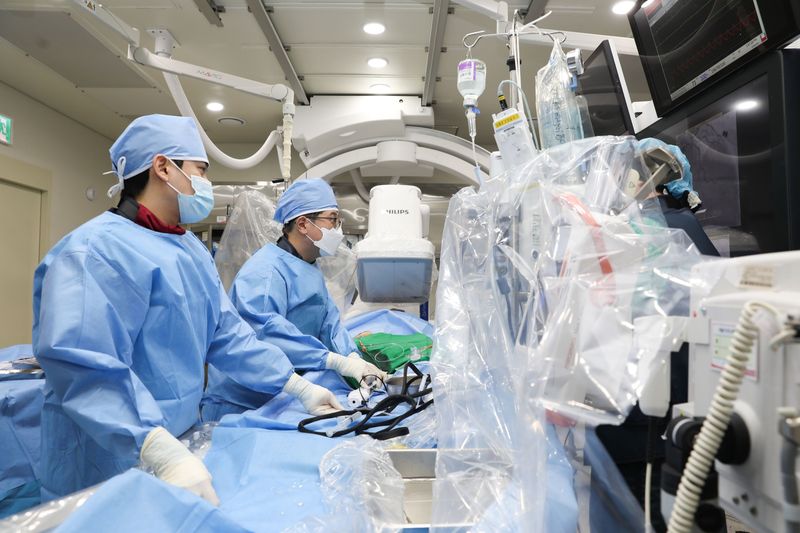
[Financial News] "Severe cardiovascular diseases such as myocardial infarction and cardiac arrest do not give patients enough time to consider which hospital to visit."
Ko Dong-hee, deputy director of medical services at Hallym University Dongtan Sacred Heart Hospital, emphasized at the hospital in Hwaseong, Gyeonggi Province, on the 3rd, "The Hallym University Dongtan Sacred Heart Hospital Cardiovascular Center has established a 'regionally self-contained cardiovascular care system' that takes the characteristics of cardiovascular patients into account. It provides everything from emergency treatment and advanced procedures to long-term management for patients with cardiovascular disease in South Gyeonggi."
Myocardial infarction and cardiac arrest are representative emergency conditions that do not allow patients enough time to choose and travel to a distant hospital. For myocardial infarction, treatment guidelines call for opening the blocked vessel within 90 minutes of arrival at the emergency room. The risk of death from acute type A aortic dissection rises by about 1% for every hour that surgery is delayed. In emergency cardiac conditions, 'time' is directly linked to life.
The Cardiovascular Center performed approximately 700 percutaneous coronary interventions (PCI) last year. For complex coronary artery diseases, including left main coronary artery lesions, severely calcified lesions, and chronic total occlusions (CTO), treatment plans are determined after comprehensively assessing each patient's clinical condition and anatomical characteristics. In particular, rotational atherectomy is used to remove hard calcified lesions, facilitating balloon dilation and stent placement. The center also plans to introduce new technologies, such as intravascular lithotripsy (IVL), in the future.
The center's strength lies in its multidisciplinary care system, in which the divisions of cardiology and cardiovascular surgery work together. Regular Heart Team meetings bring together about 20 people, including professors from both departments, residents, dedicated nurses, and perfusionists. Rather than simply deciding between surgery and an intervention, they determine the approach best suited to each patient.
Hallym University Dongtan Sacred Heart Hospital also performs transcatheter aortic valve implantation (TAVI), left ventricular assist device (LVAD) implantation, and heart transplantation for patients with severe valvular disease and end-stage heart failure. Since introducing TAVI in 2023, the hospital has performed more than 50 procedures. It was also the first hospital in South Gyeonggi to successfully perform a heart transplant in 2017 and the first in Gyeonggi Province to successfully perform LVAD surgery in 2018.
Choi Jae-hyuk, a professor of cardiology, said, "It is important that treatment initiated in an emergency can continue seamlessly through intensive care and mechanical circulatory support and, when necessary, proceed to LVAD implantation or heart transplantation." For patients with cardiogenic shock or cardiac arrest, extracorporeal membrane oxygenation (ECMO) is used as bridge therapy to sustain life. The center applies ECMO promptly through its 24-hour response system.
The hospital has continued operating its emergency room and treating critically ill emergency patients even during the healthcare service gap since 2024. It also collaborates with regional medical institutions that face difficulties securing cardiology staff. In cooperation with Seosan Medical Center in Chungcheongnam-do and Gyeonggi-do Medical Center Icheon and Anseong Hospitals, cardiology specialists from university hospitals provide regular consultations, while patients requiring advanced treatment are rapidly transferred. Since 2020, the hospital has also developed a collaborative model through a teleconsultation program, sharing test results with regional medical institutions and quickly deciding whether patients should be transferred.
The Cardiovascular Center is focusing not only on treatment but also on prevention and early diagnosis. Hypertension, diabetes, dyslipidemia, smoking, and obesity are major risk factors for cardiovascular and cerebrovascular disease. Because atherosclerosis can progress for a long time without symptoms, routine management is important. Accordingly, the center continues to offer health lectures for local residents, training programs for community physicians, and collaborative echocardiography consultations.
Cardiovascular tests should be selected based on age and individual risk factors, including hypertension, diabetes, smoking history, and family history. The extent of atherosclerosis can be assessed through carotid ultrasonography, the ankle-brachial index (ABI) test, and coronary artery calcium CT. The results are evaluated together with the patient's overall cardiovascular risk and used to determine the intensity of preventive treatment.
Han Seong-woo, president of Hallym University Dongtan Sacred Heart Hospital, said, "It is important to establish a system in which rapid emergency treatment is available within the region and can then continue without interruption, depending on the patient's condition, through interventional procedures and surgery, intensive care, mechanical circulatory support, and heart transplantation." He added, "We will do our part so that residents of South Gyeonggi can receive cardiovascular care nearby with confidence."
Daily Guidelines for Preventing Cardiovascular Disease
*Quit smoking and avoid excessive alcohol consumption.
*Check blood pressure, blood sugar, and cholesterol regularly and manage them appropriately.
*Engage in regular aerobic exercise and maintain a healthy weight.
*Eat a balanced diet that includes vegetables, whole grains, and fish, and reduce salt and saturated fat intake.
*If sudden chest pain or pressure, cold sweats, shortness of breath, or pain spreading to the arm or jaw occurs, do not delay. Seek emergency care through the 119 emergency number.
[email protected] Reporter Jeong Myeong-jin Reporter