German Companies Mull Return to 40-Hour Workweek to Restore Manufacturing Competitiveness
- Input
- 2026-09-02 16:35:16
- Updated
- 2026-09-02 16:35:16
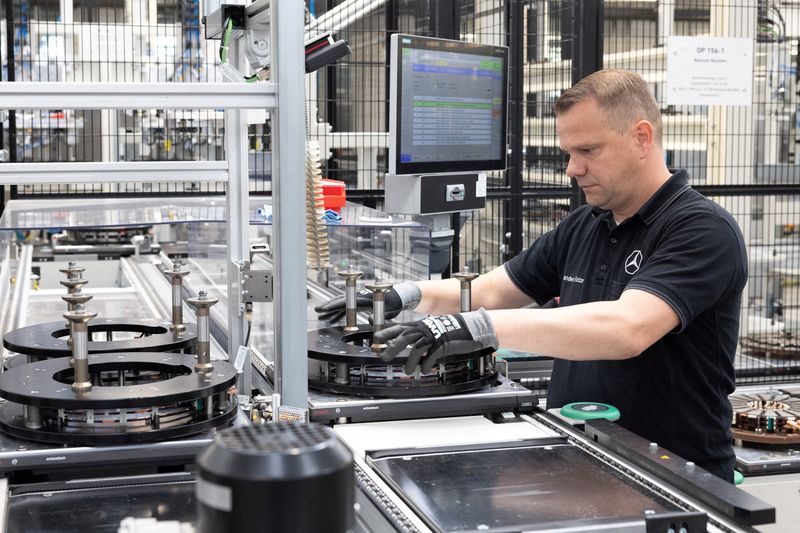
[Financial News] Major German companies are considering returning to a 40-hour workweek from the current 35-hour schedule, sparking controversy.
On the first (local time), the Financial Times (FT) reported that debate continues in Germany over abolishing the 35-hour workweek won by labor unions after large-scale strikes 40 years ago and returning to a 40-hour workweek without wage increases.
As Germany’s manufacturing sector faces threats from the energy crisis, intensifying competition from China, and high labor costs, the management of companies including Mercedes-Benz is presenting longer working hours as the key to restoring competitiveness.
German manufacturing output has plunged by more than 15% since reaching a peak in 2017. Germany’s manufacturing labor cost per hour is €49.50 (approximately 74,000 won), 47% above the European Union (EU) average of €33.70 and three times Hungary’s €15.60.
According to Germany’s Macroeconomic Policy Institute (IMK), German workers are more productive than workers in Eastern European countries, but labor costs have been rising rapidly since 2023.
Germany’s average weekly working hours are 37.8, and about 20% of workers in key industries such as automobiles, machinery, and steel are covered by the 35-hour workweek. With sectoral wage negotiations approaching in October, the struggle for leverage between employers and labor unions over working hours is expected to intensify.
Martin Werding of the German Council of Economic Experts emphasized that extending working hours is not merely political rhetoric but a matter of survival, saying, "It is difficult to overcome the current crisis through flexibility measures such as the use of temporary workers alone."
However, German labor unions are protesting, arguing that extending working hours to 40 per week would reduce the number of workers needed and undermine job security.
Germany’s average weekly working hours are 37.8, and about 20% of workers in key industries such as automobiles, machinery, and steel are covered by the 35-hour workweek. With sectoral wage negotiations approaching in October, the struggle for leverage between employers and labor unions over working hours is expected to intensify.
Martin Werding of the German Council of Economic Experts emphasized that extending working hours is not merely political rhetoric but a matter of survival, saying, "It is difficult to overcome the current crisis through flexibility measures such as the use of temporary workers alone."
[email protected] Yoon Jae-jun Reporter