Ruling DPK Pledges to Pass Special Act on Administrative Capital by Year-End
- Input
- 2026-09-02 16:32:11
- Updated
- 2026-09-02 16:32:11
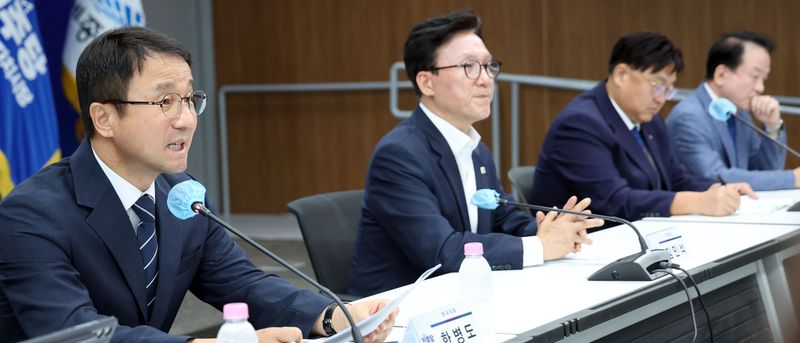
At the DPK’s Supreme Council meeting in Sejong that day, DPK leader Kim Min-seok said, "Completing Sejong as the administrative capital is the 50th national policy task of Lee Jae-myung’s government of national sovereignty, and the top task in the transformation of the nation’s territorial structure. The National Assembly will complete the legal foundation for Sejong as the administrative capital."
Kim said, "This year alone, the construction budget for the presidential office in Sejong has increased more than eightfold, while 119.1 billion won has been allocated for the Sejong National Assembly Building." He stressed that the party would maintain its focus on relocating the administrative capital to Sejong not only through the special act but also during the budget review process.
DPK floor leader Han Byung-do said, "Last Monday, our Sejong citizens filled the steps in front of the National Assembly and, standing in the rain, called for the Special Act on the Administrative Capital to be enacted by the end of the year. The DPK will faithfully honor their earnest wishes. We will do our utmost to ensure that this regular session of the National Assembly serves as an opportunity to establish the institutional foundation for completing the administrative capital."
Cho Sang-ho, the DPK-affiliated mayor of Sejong City, said, "Leader Kim emphasized region-led politics to support region-led growth. He expressed his determination to change the Seoul metropolitan area-centered growth structure, establish regions as new growth engines, and build an irreplaceable Republic of Korea. The starting point is the completion of Sejong as the administrative capital."
The ruling and opposition parties jointly introduced the Special Act on the Administrative Capital in December last year. It was also confirmed that the ruling party, opposition parties and government shared common ground on relocating the administrative capital to Sejong after it became known that the government had taken the lead in drafting the bill, which was then introduced as a lawmakers’ bill.
[email protected] Kim Hyung-gu Reporter