"Blocking loans while claiming to build houses"... Will the National Assembly Land, Infrastructure and Transport Committee's audit target the housing crisis of ordinary citizens and youth?
- Input
- 2026-09-03 11:16:48
- Updated
- 2026-09-03 11:16:48
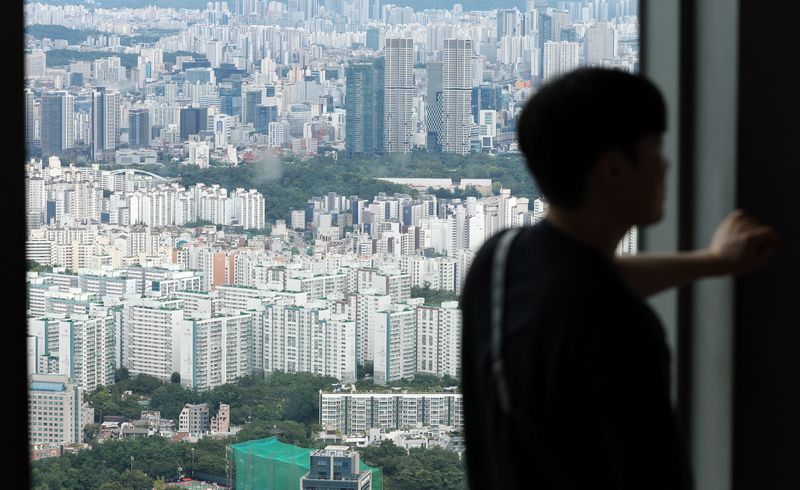
[Financial News] With the consistency of real estate policies expected to come under scrutiny ahead of the parliamentary audit on the 6th of next month, the National Assembly Research Service (NARS) has drawn attention by citing the conflict between housing supply measures and loan regulation policies, instability in the Jeonse and monthly rent market, and measures against Jeonse fraud as key issues.
The consistency of the policy combination of expanding supply while tightening lending, the time lag between the mid-to-long-term solution of public housing supply and the immediate shortage of rental properties, and the lack of fundamental measures to address the recurring damage caused by Jeonse fraud against young people are expected to be the key points of scrutiny directed at the Ministry of Land, Infrastructure and Transport (MOLIT) during this parliamentary audit.
In '2026 National Audit Issue Analysis: This Year's Questions the Government Must Answer,' published on the 27th of last month, the National Assembly Research Service (NARS) asked the Ministry of Land, Infrastructure and Transport (MOLIT), "It is a structure that blocks the way to live in the same place while claiming to build houses where there is demand," and asked, "What is the top priority goal of the current housing policy?" This pointed out the phenomenon where policies to expand housing supply are clashing with loan regulation policies.
Expanding housing supply while blocking loans... "How can one buy a house?"
The government is simultaneously pushing for a large-scale expansion of supply and strong lending regulations starting from June 2025. Under the June 27 lending measures, the limit for mortgage loans in the Seoul metropolitan area and regulated regions was restricted to a maximum of 600 million won, and loans for multi-home owners were completely banned. In the September 7 measures, a total of 1.35 million units (270,000 units per year) based on construction starts were announced for Seoul and the metropolitan area between 2026 and 2030.
Subsequently, the October 15 measures introduced a "triple regulation" that simultaneously designated apartment, row house, and multi-family housing complexes within regulated areas as adjustment target areas, speculative overheating zones, and land transaction permit zones, and raised the stress interest rate for calculating the Debt Service Ratio (DSR) from 1.5% to 3.0%.
The problem is that the areas targeted for increased supply largely overlap with those targeted for loan regulations. Regarding this, the National Assembly Research Service (NARS) pointed out, "While the government says it will expand housing supply in Seoul, the metropolitan area, and key downtown locations, it is simultaneously implementing restrictions on housing mortgage loans, designating regulated areas, and expanding land transaction permit zones centered on those very regions."
In particular, pointing out the time lag issue where supply arrives in the market only years later, whereas lending regulations take effect immediately upon announcement, NARS asked, "If actual buyers are the beneficiaries of the policy, why are you regulating the financial channels that affect them first?"
Seoul Apartment Jeonse Listings Halved in Two Years... "Not a Lack of Support, but an Absence of Listings"
The crisis in the Jeonse and monthly rent markets was also pointed out as an unavoidable problem. According to the National Assembly Research Service (NARS), the proportion of monthly rent transactions (including deposit-backed monthly rent and semi-Jeonse) as of May 2026 was 68.6%, an increase of 7.6 percentage points (p) compared to the same period last year. Looking at the trend over the past five years, it has been on an upward trend every year, rising from 51.9% in 2022 to 55.5% in 2023, 57.8% in 2024, 61.0% in 2025, and 68.6% in 2026.
The shift toward monthly rent in non-apartment housing is becoming more severe, reaching 80.9% nationwide by 2026. This is the result of a complex interplay of factors, including tightened regulations on Jeonse loans following the aftermath of Jeonse fraud, tenants' preference for safety due to fears of non-return of deposits, and landlords' preference for cash flow following stricter capital gains taxes on multi-home owners. However, the government maintains the stance that it will alleviate rental instability through housing supply, public rental housing, and youth support, without implementing separate comprehensive measures for Jeonse and monthly rent after 2025.
In response to this, the National Assembly Research Service (NARS) pointed out, "The government speaks of the expansion of public rental housing and public housing as the key solution to stabilizing the monthly rent market, but what is needed now is a tangible increase in listings in the metropolitan market within the next six months to a year," adding that "there are major flaws in terms of time lag and effectiveness."
It was also pointed out that "while the government is pushing for the expansion of public rental housing to support low-income and vulnerable groups, the actual problems appearing in the Jeonse and monthly rent market in the metropolitan area are a 'sharp decline in market listings' and 'surges in prices.'" This suggests that the government is approaching the Jeonse and monthly rent issue solely as an extension of welfare policy and is not viewing it as a supply crisis within the housing market itself.
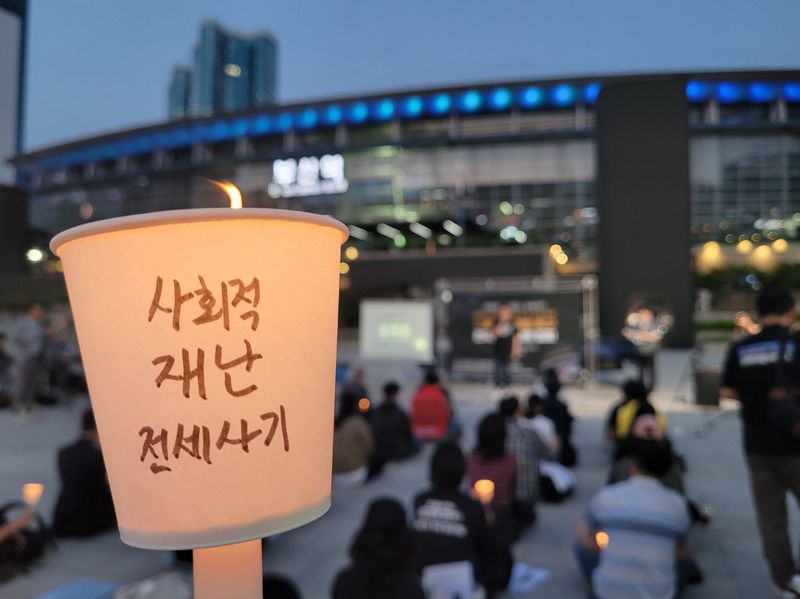
Three out of four victims of Jeonse fraud are young people... but the proportion is actually increasing.
As of the end of June 2026, the number of cases recognized as victims of Jeonse fraud and receiving support under the 'Special Act on Support for Victims of Jeonse Fraud and Housing Stability' reached 39,669. The problem is that among these, young adults under the age of 40 accounted for 30,128 cases, or 75.95% of the total.
Of the total increase of 20,048 cases of damage from July 2024 to June 2026, 78.21% (15,680 cases) occurred among young adults under the age of 40. Damages among those in their 20s (aged 20 to under 30) totaled 10,086 cases, and damages among those in their 30s (aged 30 to under 40) totaled 20,038 cases, bringing the combined total for those in their 20s and 30s to 30,124 cases.
The National Assembly Research Service (NARS) pointed out that "damage from Jeonse fraud continues to be concentrated among young people," and argued that this should be treated as a structural crisis in youth housing stability rather than general rental damage. In particular, noting that government measures are not being redesigned to suit the youth demographic despite approximately 78% of the increase in damages occurring among young people, the agency demanded the presentation of specific quantitative targets regarding the proportion of damage to young people, the number of new victims, the number of high-risk contracts blocked, and the deposit recovery rate.
[email protected] Kim Hee-sun Reporter