Japan’s Nikkei Index Plunges 2.85%: “Could Black Monday Happen Again?”
- Input
- 2026-09-02 16:23:09
- Updated
- 2026-09-02 16:23:09
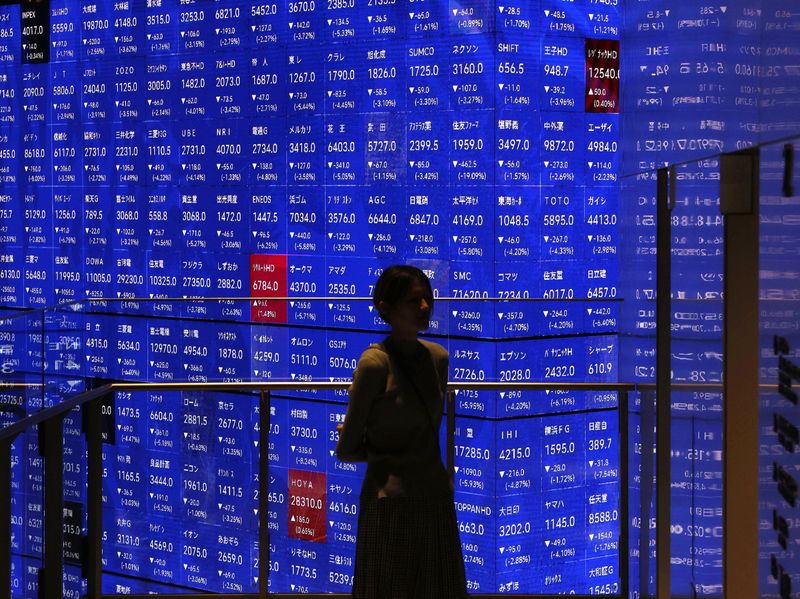
【Tokyo—Correspondent Hye-jin Seo】The Nikkei 225 Stock Average, Japan’s benchmark index, plunged 2.85% on the 2nd as global government bond yields surged across the board. With heavy selling concentrated in artificial intelligence (AI) and semiconductor stocks, some in the market warned that a repeat of the 1987 “Black Monday”—when stock markets collapsed after a sharp rise in interest rates—could be possible.
The Nikkei index closed at 64,325.64, down 1,889.70 points, or 2.85%, from the previous trading day at the Tokyo stock market. It fell for a third consecutive session. After plunging nearly 2,000 points at one point during the session, it broke below the 65,000 mark for the first time in about a month.
AI and semiconductor stocks, which had led the market’s gains, drove the decline. SoftBank Group fell 7% at one point, while Tokyo Electron and Advantest each dropped 5%.
The immediate cause of the market decline was a rise in global government bond yields, led by the Group of Seven (G7). Expectations are spreading that yields will rise further amid concerns over a renewed acceleration in inflation and expanded fiscal spending.
U.S. long-term yields rose to 4.80% on the 1st local time, reaching their highest level since January 2025. German long-term yields also climbed to the upper 3.3% range during the session, their highest level since 2011. Japanese long-term yields, which surpassed 3% for the first time in 30 years on the 1st, rose as high as 3.015% during the session, their highest level since September 1996.
Worsening tensions in the Middle East also pushed yields higher. New York crude oil futures surged after the United States Central Command (CENTCOM) announced on the 1st that it had carried out airstrikes on Islamic Revolutionary Guard Corps positions in Iran. Concerns that higher oil prices could rekindle inflationary pressure led to selling of government bonds.
Hiroshi Namioka, chief strategist at T&D Asset Management, said, “In addition to the decline in U.S. crude oil inventories, Iran may take a hard-line stance ahead of the U.S. midterm elections in November.” He added, “This is a situation in which concerns about a prolonged conflict could easily grow.”
Higher expectations for interest-rate increases in Japan and the United States are also weighing on stocks.
In Japan, expectations for another rate hike by the Bank of Japan (BOJ) spread rapidly after the Japanese and U.S. governments coordinated an intervention to buy yen late in July. Markets put the probability of the BOJ raising rates at its monetary policy meeting this month at about 94%.
Inflationary pressure in Japan also remains strong. According to Teikoku Databank, 4,923 food and beverage items are expected to see price increases this month, about three times the number recorded in the same month last year and the highest figure in three years and five months.
Takayasu Kudo, chief economist at BofA Securities, forecast, “As food price increases are reflected in the consumer price index (CPI) from September onward, broad-based price increases will become evident from the end of the year through early next year.” BofA Securities expects the BOJ’s policy rate, currently at 1%, to rise to 2% by July next year. Kudo said a 3% long-term yield would be “merely a way station.”
Rising interest rates are particularly unfavorable for growth stocks such as AI companies, whose share prices have risen on expectations of future earnings. As rates increase, the present value of future earnings declines, reducing their investment appeal.
Some market analysts say recent conditions resemble those just before Black Monday in 1987. At the time, oil prices became unstable amid the Iran-Iraq War, and stocks plunged after U.S. interest rates rose.
Eiji Kinouchi, chief technical analyst at Daiwa Securities, noted, “At the time, newly appointed Federal Reserve System (Fed) Chair Alan Greenspan raised interest rates, and international coordination was not smooth.” He added, “There are many similarities today, including the possibility that incoming Fed Chair Kevin Warsh could raise rates.”
The Tokyo Stock Price Index (TOPIX), which had risen for nine consecutive trading sessions through that day, also ended its winning streak. Kinouchi forecast that the Nikkei index could fall to the 58,000 level by early next month, saying that TOPIX rallies had tended to form a short-term peak when a nine-session winning streak ended in the past.
Nihon Keizai Shimbun reported, “Rising interest rates may signal that ‘the end of the party’ is approaching in a stock market that had celebrated the historic gains of AI and semiconductor stocks.”
[email protected] Hye-jin Seo Reporter