"Usefulness, Not Functionality, Is the Deciding Factor"... What Does the IFA CEO See as the Future of AI Appliances? [IFA 2026]
- Input
- 2026-09-03 14:38:09
- Updated
- 2026-09-03 14:38:09
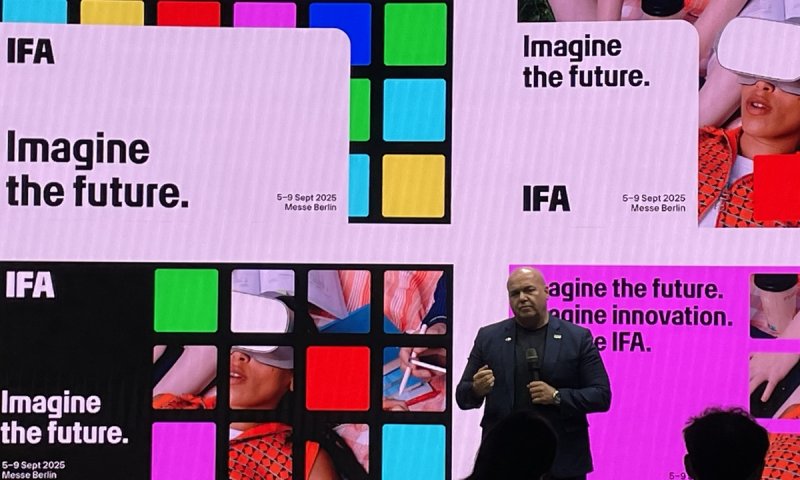
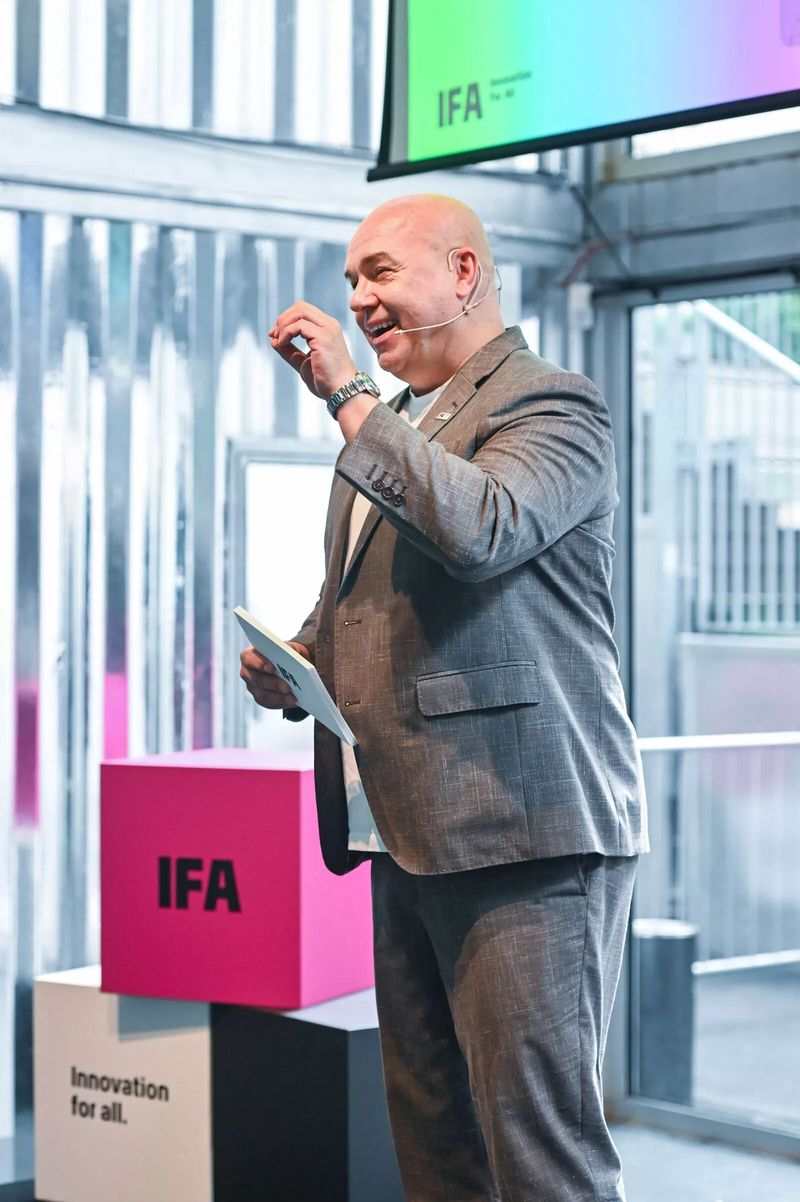
In particular, regarding whether AI can generate new replacement demand amid the slump in the home appliance market, he emphasized that utility matters more than "AI itself." He said, "I do not believe that simply adding AI to a product will automatically create a new replacement cycle," adding, "Through AI, home appliances need to use less energy, save a meaningful amount of time, make maintenance and management easier, or work much more effectively with other devices in the home."
As the biggest change at this year's 102nd IFA, CEO Lintner cited the fact that AI and robots, once discussed as future technologies, have begun to connect with everyday life. He explained that "AI is no longer limited to individual products or categories," noting that its application is expanding across home appliances, computing, smart living, health, entertainment, and mobility.
Physical AI and humanoids are also key topics at this year's IFA. This year's IFA will showcase various humanoids centered around IFA Next, an innovation exhibition space. Programs such as 'Robots on the Runway' and RoboCup have also been organized. CEO Lintner said, "There is real acceleration in the field of physical AI," adding, "As AI, sensors, computing, and robotics technologies converge, machines are evolving to understand and interact with the physical environment."
However, he took a cautious stance on the popularization of humanoids. He explained that not all humanoids exhibited at IFA in Berlin are at the stage where they can be immediately released as products for general consumers. "Not all humanoid robots are ready to become everyday consumer products tomorrow," he said, while noting that "the significance lies in the industry's focus shifting from 'Can we technically build such machines?' to 'Where can we create actual value?'"
Regarding Samsung Electronics Co., Ltd. and LG Electronics, Korea's leading home appliance companies, he cited their technological capabilities, brand power, and extensive experience in global markets as strengths. He predicted, "Korean companies will be able to differentiate themselves in the global market based on high-quality products and design, connected ecosystems, and an understanding of the consumer experience."
He also assessed that the rapid growth of Chinese companies is intensifying competition in the global home appliance industry. CEO Lintner said, "Chinese technology companies are seeking to enter overseas markets with large-scale manufacturing capabilities, strong innovation, rapid development cycles, and advanced products," adding, "I believe this is creating competition in the industry, and that we are all moving forward together in a direction that creates tangible value for consumers."
[email protected] Im Soo-bin Reporter