[“JOB-like Reporters”] “200,000 won for a single glass?”...A Sommelier’s Survival Story at Keumyang International’s Wine Shop
- Input
- 2026-09-02 15:33:56
- Updated
- 2026-09-02 15:33:56
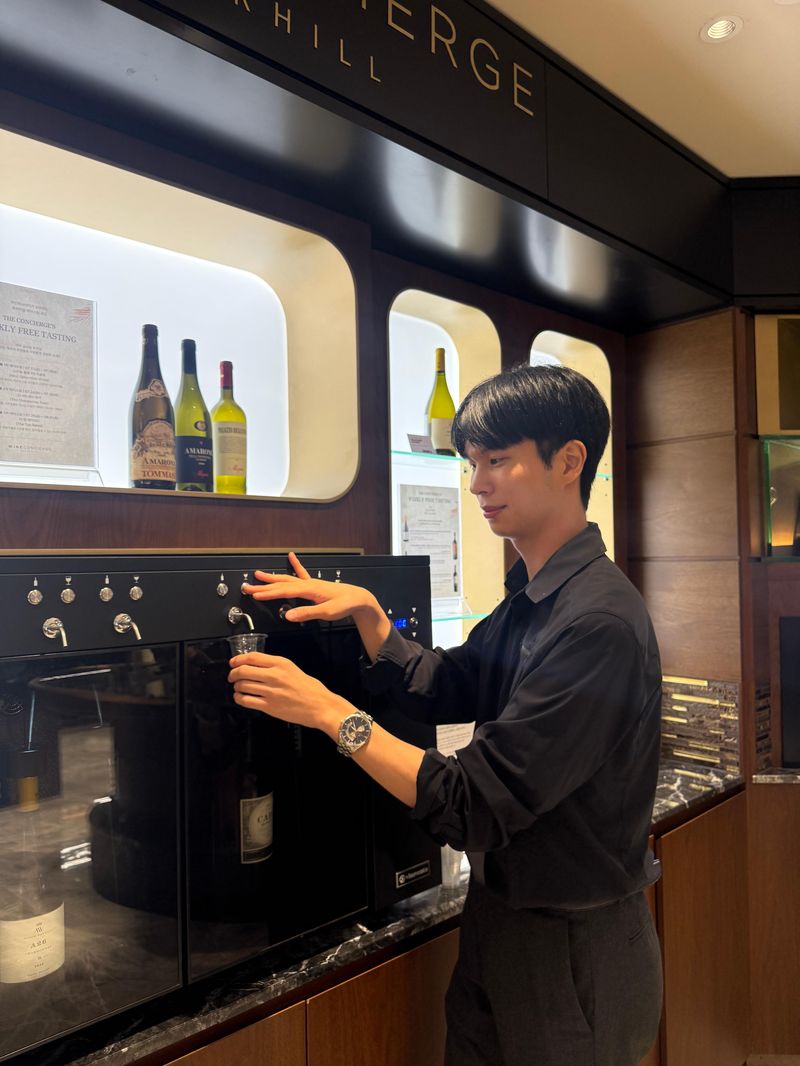
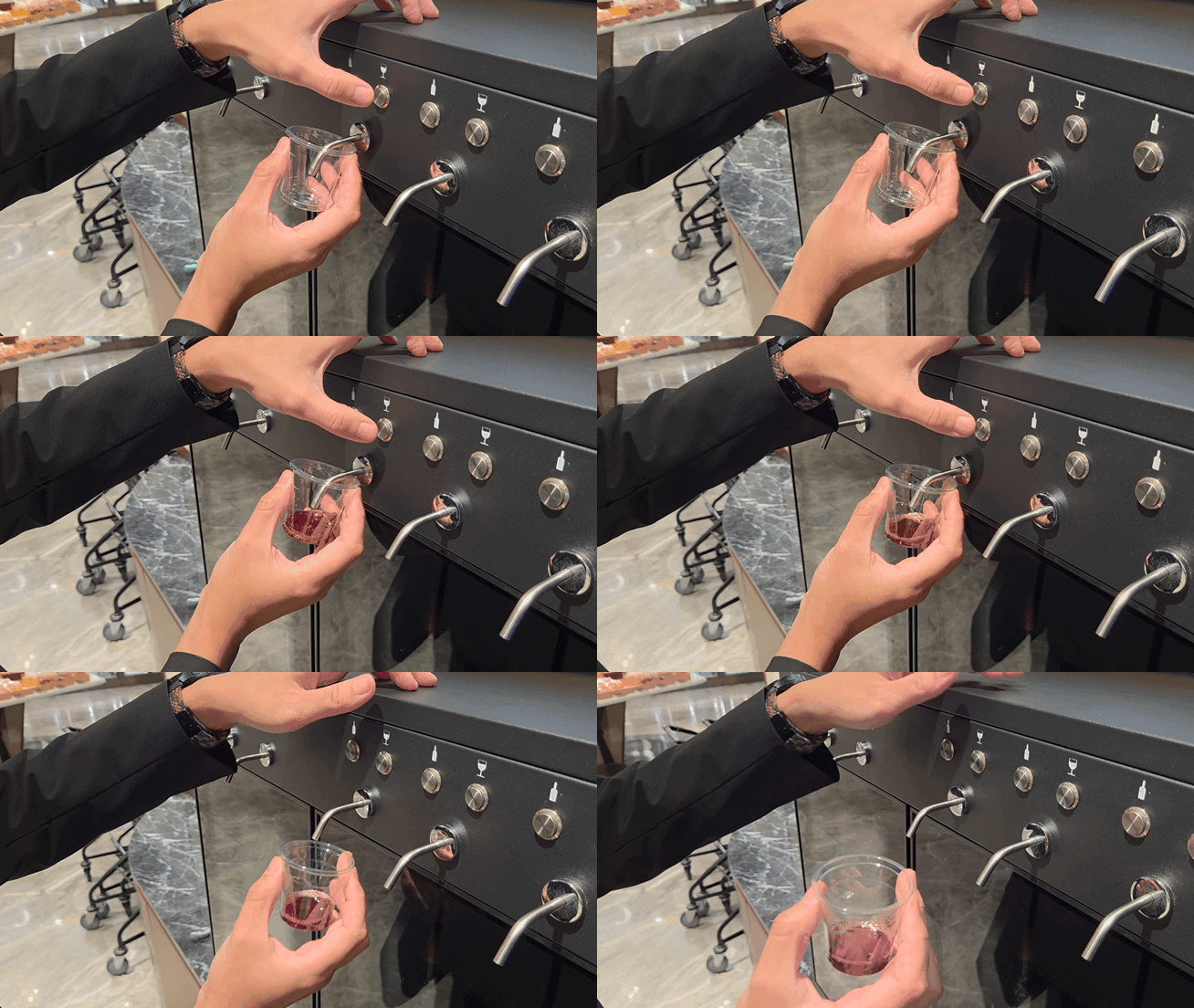
[Financial News] “For guests enjoying the buffet, please recommend a versatile champagne or Chardonnay. Pair steak with Cabernet Sauvignon and Syrah, and Japanese cuisine with crisp Sauvignon Blanc or dry Riesling.”
On the 14th of last month, as crowds flocked to hotels for a staycation during the extended holiday, this reporter transformed into a one-day sommelier at Keumyang International Wine Concierge, located at Walkerhill Hotels & Resorts in Gwangjin District, Seoul, as part of the “JOB-like Reporters” job-experience feature. Since I usually enjoy wine, I prided myself on knowing at least the “ᄋ” of wine—that is, the very basics. But once I put on the uniform, the world of sommeliers proved far deeper and more profound than I had imagined.
A sommelier’s job is not simply to uncork bottles and pour drinks. In addition to knowing grape varieties, classifications, and flavors, a sommelier must understand where a wine was produced and, beyond that, the history and story contained in each bottle to offer customers the perfect pairing.
Sommelier Ji Hyun-joo, who served as my mentor that day, emphasized, “A sommelier’s key skill is not recommending wine simply because it is expensive or famous, but selecting the most suitable wine based on the customer’s preferences, palate, and the circumstances in which they plan to enjoy it.”
Before the hands-on work began, an intensive crash course got underway. In just over two hours, I had to absorb everything from the differences between red and white wine and champagne to technical terms describing sweetness, astringency, and body, as well as the formulas for pairing wine with food. I had arrived relying on the shallow rule of thumb that “red goes with meat and white with fish,” but as words such as “Cabernet Sauvignon,” “Chardonnay,” and “Riesling” poured into my mind, it soon felt as if my brain were cramping.
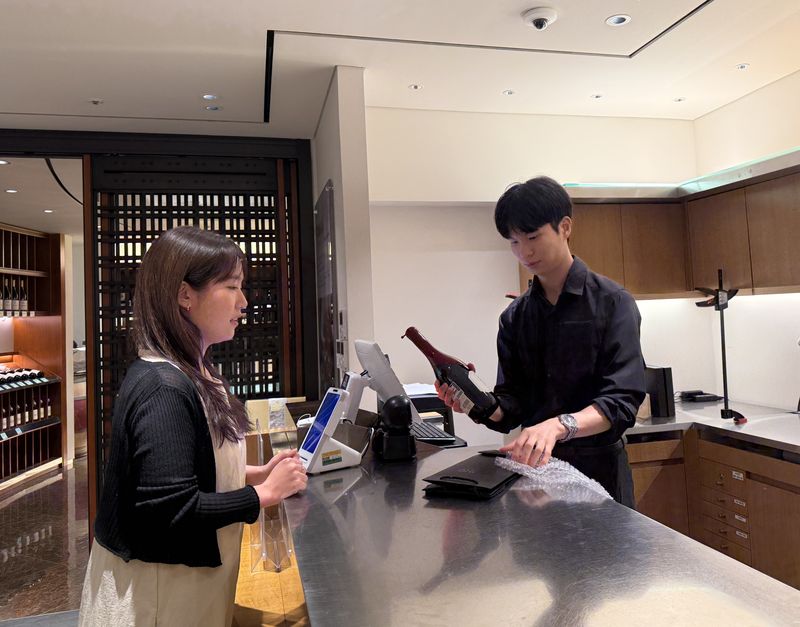
While the professional sommeliers assisted customers, I was assigned to package wine. The problem was the price. Handling bottles costing anywhere from tens of thousands to hundreds of thousands of won made my hands tremble as I wrapped them in protective material and placed them in shopping bags. I packaged each bottle with extreme care, thinking, “It would be a disaster if one fell and broke.”
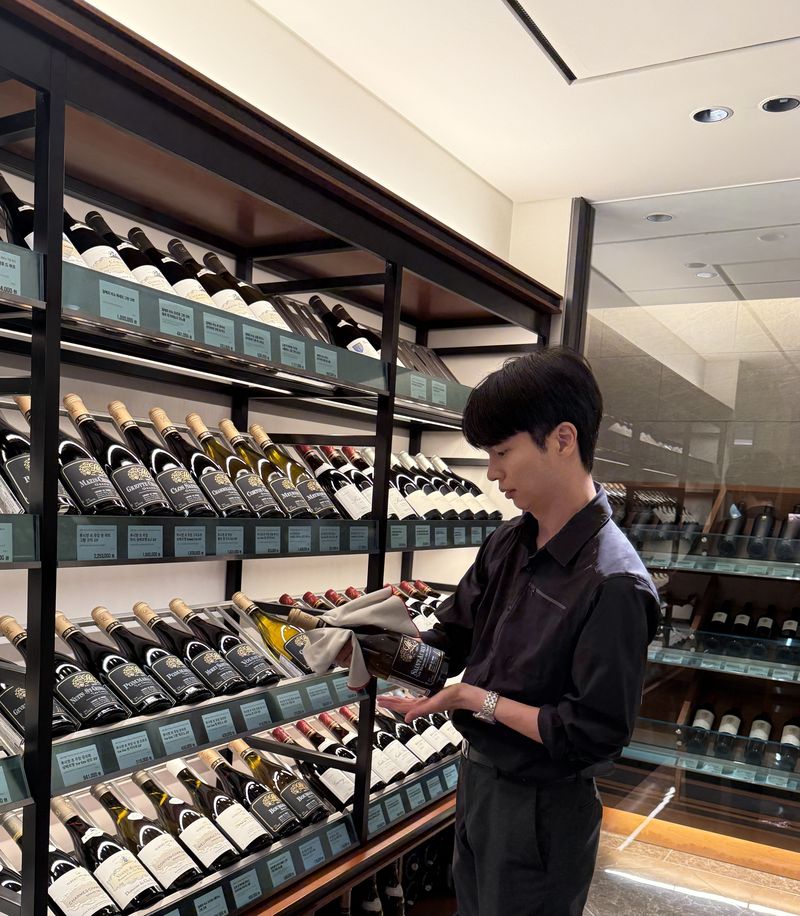
After the packaging was finished, full-scale store-management duties followed. Behind the elegant appearance of a sommelier lay a great deal of unseen work required to manage the wine concierge. Dust had to be wiped individually from dozens- and hundreds-of-thousands-of-won bottles of premium wine with a soft cloth. When washing and polishing top-end wine glasses costing well over 200,000 won per glass, I had to stay intensely focused in case the thin glass shattered.
The work also involved carrying heavy wine boxes and constantly changing their display locations so that newly stocked seasonal wines would stand out. The neatly arranged wines beneath the glamorous lights were, in the end, displays created through someone’s sweat.
As she corrected the way I tilted the glass, Sommelier Ji explained, “The secret to pouring wine well is to pour it in a gentle stream so that it comes into as much contact with the air as possible, allowing the customer to fully experience its flavors.” She added, “Only when the aroma rises richly through aeration can you encounter the wine’s true aroma and taste.”
After carrying heavy bottles and packaging them nervously throughout the day, my back and legs were sore, but I felt proud. A sommelier is not simply a waiter who pours drinks. It is a profession that tells the stories of time and nature contained in a bottle of wine, making a customer’s special day even more perfect.
After glimpsing the vast and profound world of wine through the sommelier experience, I think I will be able to speak confidently the next time I visit a wine shop and talk with a sommelier. Rather than simply saying, “Please give me a tasty wine,” I might ask, “Could you recommend a bottle of wine with a wonderful story that pairs well with my mood today and the food I’ll be eating?” On my way home from work, the faint scent of wine clinging to my uniform felt especially wonderful.
[email protected] Park Kyung-ho Reporter