Did Police Leadership Prevent Jang Yoon-gi’s ‘Rape-Murder’? Former National Office of Investigation Chief Sung-joo Park Indicted
- Input
- 2026-09-02 14:49:00
- Updated
- 2026-09-02 14:49:00
[Financial News] Prosecutors investigating allegations that police mishandled the case after forwarding high school girl murder suspect Jang Yoon-gi to prosecutors on an ordinary murder charge have indicted Sung-joo Park, the former chief of the National Office of Investigation. Prosecutors concluded that the rape-murder charge was not properly established because police leadership ordered the stalking and rape offenses that led to the murder to be investigated separately.
The Gwangju District Prosecutors’ Office said on Sept. 2 that it had indicted Park without detention on charges including abuse of authority and obstruction of the exercise of rights. In May, prosecutors also indicted three police officials, including the heads of the Violent Crime Investigation Division and the Women and Juvenile Crime Investigation Division at the National Office of Investigation, over their handling of the Jang Yoon-gi case.
Park and the others are accused of ordering the Criminal Affairs Division and the Women and Juvenile Affairs Division to investigate separately the offenses committed by Jang Yoon-gi, 23, from stalking and rape through to murder, despite repeated requests from working-level officers at local police stations. Prosecutors concluded that the order prevented Gwangju Gwangsan Police Station, which handled the case, from properly establishing the rape-murder charge against Jang Yoon-gi.
At the time, police were facing intense public criticism over their inadequate response to the “Namyangju stalking revenge murder.” They also responded complacently to the sexual assault and stalking of a female coworker at Jang Yoon-gi’s part-time job shortly before he murdered the high school girl, including by failing to make a callback.
Prosecutors found that Park ordered the stalking and rape cases to be investigated separately from the murder because he feared renewed criticism that the murder could have been prevented if the police had taken appropriate initial action. Acting on Park’s instruction, “It’s not something we need to bring up first, is it?”, working-level officials at the National Office of Investigation reportedly rejected several requests from the Gwangsan Police Station investigation team to merge the cases.
After a series of developments, the Jang Yoon-gi case was divided and forwarded to prosecutors as separate cases, including an ordinary murder charge under the Criminal Act carrying a minimum sentence of five years in prison. Following a supplementary investigation, prosecutors indicted Jang Yoon-gi on rape-murder charges, for which he can be punished only with life imprisonment or a more severe sentence.
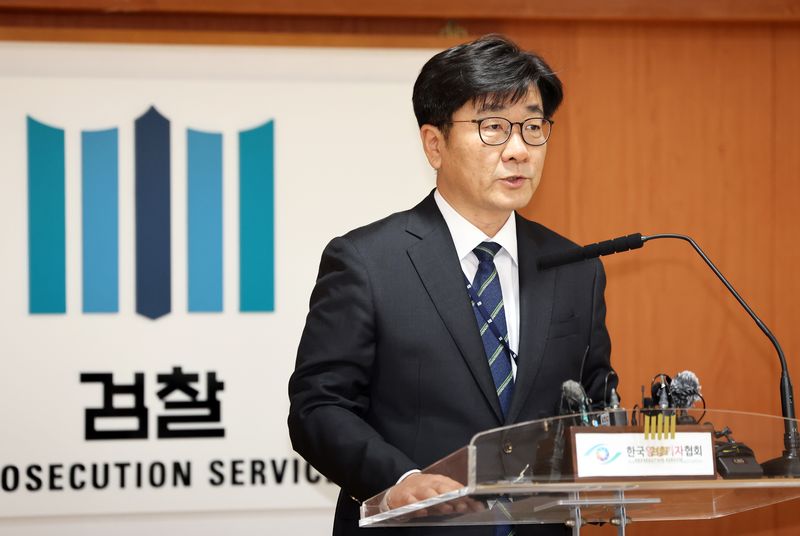
At a recent final trial hearing held at the Gwangju District Court, prosecutors sought the death penalty for Jang Yoon-gi. Shin Tae-hoon, deputy chief prosecutor of the Gwangju District Prosecutors’ Office, said at a media briefing that day, “This case is an example of uncovering improper intervention by the police’s highest investigative leadership in frontline investigations.” He added, “We hope it will serve as an opportunity to prevent similar interference in investigations and ensure that frontline investigative agencies can legitimately exercise their investigative authority.”
[email protected] Jung Ji-woo Reporter