Daejeon Metropolitan City Opens Era of 5 Trillion Won in State Funding by 2027... Green Light for Long-Awaited Projects Including Daejeon Medical Center and Tram
- Input
- 2026-09-02 14:47:25
- Updated
- 2026-09-02 14:47:25
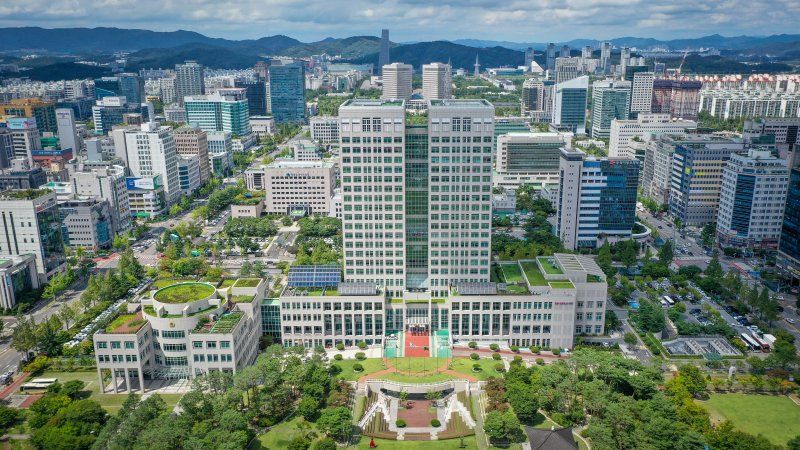
The most notable achievement is the full-scale commencement of the Daejeon Medical Center construction project, which had been stalled for a long time. With 7 billion won allocated for construction costs, the Daejeon Medical Center, to be built in the Seonnyang District of Yongun-dong, Dong District, is set to break ground. The center, which will feature 15 medical departments and 319 beds, is expected to become a key hub for resolving the gap in essential medical services within the region, which has previously lacked public medical infrastructure. In addition, 1.9 billion won has been allocated for the Oesam–Yuseong Terminal Bus Rapid Transit (BRT) connecting road construction project, a project that had faced difficulties for two years due to a failure to secure state funding; this is expected to significantly alleviate chronic traffic bottlenecks around the Yuseong Interchange.
Key investments aimed at fostering future growth engines and expanding transportation networks are also following suit. 204.3 billion won will be invested in Daejeon Metro Line 2. Additionally, the government proposal includes the National Research Laboratory (NRL) 2.0 project (10 billion won), which will conduct advanced bio- and precision medicine research in conjunction with Chungnam National University, and the Startup City creation project (16 billion won), involving 24 institutions including Korea Advanced Institute of Science and Technology (KAIST) and government-funded research institutes. Furthermore, the Seogu Jeongnim Middle School–Junggu Sajung-dong road construction project (9 billion won) and urban regeneration projects such as the Jung-gu Daeheung-dong New Village (10.7 billion won) were also included.
Securing this budget is expected to serve as a turning point for Daejeon to leap forward as a mecca for the advanced bio-medical industry, where industry, universities, research institutes, and hospitals are organically connected based on its cutting-edge science and technology infrastructure. In particular, as the construction of the Daejeon Medical Center and the National Research Laboratory 2.0 project gain momentum simultaneously, the establishment of a virtuous cycle ecosystem extending from basic and clinical research to demonstration and public medical services is expected to accelerate.
Daejeon Metropolitan City plans to launch a National Assembly campaign starting this November and stake everything on securing increased funding from the National Assembly for unapproved and reserved projects. In particular, the city intends to ensure that major reserved budget items, such as the architectural design costs (700 million won) for the Daejeon branch of the Serious Crimes Investigation Agency—which is scheduled to launch in October—are secured during the National Assembly's deliberation process.
Han Chi-heum, Director of the Planning and Coordination Office of Daejeon Metropolitan City, stated, "It is a meaningful achievement that long-cherished projects and future growth engines have been comprehensively reflected," adding, "We will make every effort to secure additional state funding at the National Assembly stage through close cooperation with local political circles."
[email protected] Kim Won-jun Reporter