'Illegal Mixed Refrigerants' Causing Air Conditioner Outdoor Unit Fires... "Suspect If It's Too Cheap"
- Input
- 2026-09-02 14:27:57
- Updated
- 2026-09-02 14:27:57
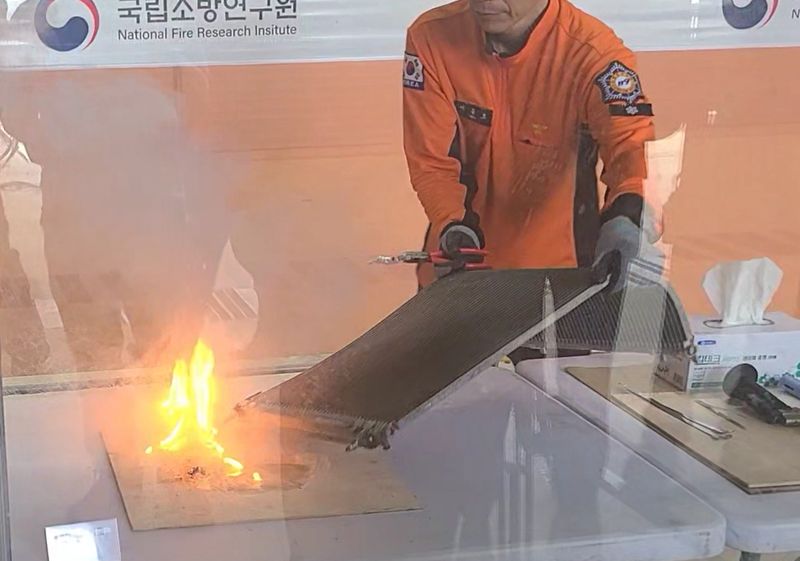
[Financial News] It has been confirmed that illegal mixed refrigerants, disguised as the non-flammable refrigerant 'R-22' and sold online, can generate hazardous substances capable of spontaneous combustion inside air conditioner outdoor units, potentially causing fires.
Fire authorities tracked related fires that occurred over the past five years and confirmed 36 cases; following 13 cases last year, 14 cases have already occurred this year through July alone. The government is pursuing measures to block the distribution of illegal refrigerants through overseas direct purchases and online sales.
The National Fire Agency (NFA) announced on the 2nd that, as a result of a joint investigation conducted by the National Fire Research Institute, fire investigation agencies in Seoul and Gyeonggi, and the Gyeongsangnam-do Fire Department, it was confirmed that illegal mixed refrigerants generate 'trimethylaluminum,' a spontaneously combustible substance, inside outdoor units.
The product in question is labeled as R-22 refrigerant, used in older air conditioners, but it is actually an illegal mixed refrigerant containing R-40 (Chloromethane).
R-22 is a non-flammable substance, but its price has risen significantly as production has been halted since 2023 due to ozone layer depletion issues.
The National Fire Agency (NFA) explains that, taking advantage of this situation, low-cost mixed refrigerants that have not gone through official import procedures are being distributed through online shopping malls and direct overseas purchases.
R-40 is a substance not used as a refrigerant due to its high toxicity and flammability. However, illegal vendors mix it into R-22 containers and label the product as R-22, making it difficult for consumers to distinguish the authenticity visually.
Operates normally at first... generates hazardous substances during operation
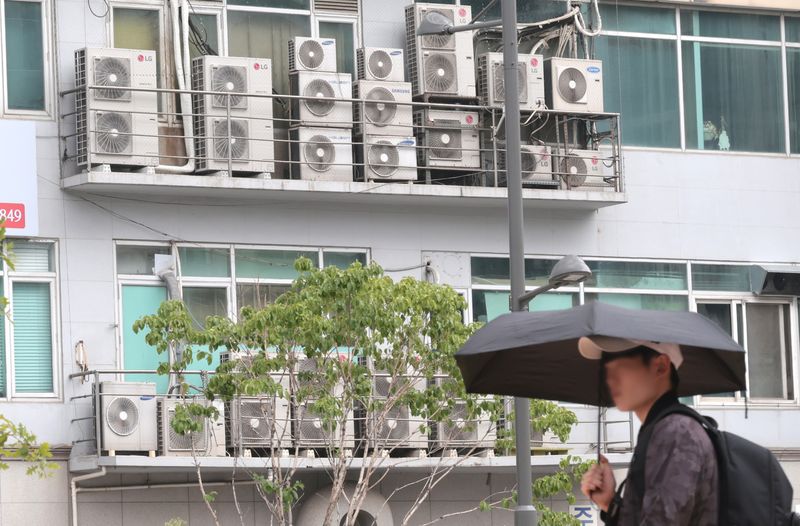
According to an investigation by the National Fire Agency (NFA), Chloromethane contained in the illegal mixed refrigerant reacted with aluminum parts, such as rotors and pipes inside the air conditioner's outdoor unit, to produce trimethylaluminum.
Trimethylaluminum is a spontaneously combustible and water-reactive substance classified as a Class 3 hazardous material under the Hazardous Materials Safety Management Act. It can ignite spontaneously when exposed to air, and reacts violently upon contact with water to produce flammable substances.
The dangerous aspect is that the air conditioner may operate normally when the refrigerant is first injected. However, the National Fire Agency (NFA)'s analysis indicates that hazardous substances are gradually generated inside the unit while it is running, and can ignite upon contact with air or moisture when the pipes are cut for removal or refrigerant recharging.
Over the past five years, a total of 36 fires suspected of being caused by air conditioner refrigerants have been recorded. The number rose from 1 in 2022, 2 in 2023, and 6 in 2024 to 13 last year, and 14 cases have already occurred through July of this year. There were also 11 cases that were initially classified as having other causes but were re-examined as refrigerant-related fires.
The situation in which the most fires occurred was during the air conditioner removal and refrigerant charging process, accounting for 17 cases, or 47.2% of the total. This was followed by fires occurring during air conditioner operation with 13 cases (36.1%), 4 cases (11.1%) while not in operation, and 2 cases (5.6%) of unknown cause.
There have also been casualties. On July 24, a fire investigator collecting evidence at the scene of a house fire in Jinju, South Gyeongsang Province, suffered second-degree burns on both hands when sparks flew from the refrigerant inlet of an outdoor unit. In June in Ganghwa, Incheon, a man in his 70s was seriously injured in an explosion while injecting gas into an outdoor unit and was transported by medical helicopter. Refrigerant-related fire and explosion accidents also occurred in Mokpo in June of this year and in Seoul in April of last year.
Government Considers Blocking Overseas Direct Purchases and Online Distribution
On August 14, the National Fire Agency (NFA) held its first meeting with relevant agencies, including the Ministry of Climate, Energy and Environment, the Ministry of Trade and Industry, and the Korea Consumer Agency (KCA). On the 25th of the same month, the Korea Gas Safety Corporation, fire inspection agencies in Seoul and Gyeonggi, and the Gyeongsangnam-do Fire Department also participated to discuss measures to block overseas direct purchases and online sales.
The government plans to review measures such as blocking the import and online distribution of illegal mixed refrigerants and issuing consumer warnings.
The National Fire Agency (NFA) emphasized that even refrigerants that have undergone formal customs clearance and quality inspections are not dangerous.
However, they advised avoiding refrigerants that are excessively cheaper than the market price or lack quality certification marks, and recommended receiving air conditioner refrigerant charging and repairs through officially registered companies.
"Illegal mixed refrigerants cannot be identified with the naked eye, making it difficult for users to recognize the danger," said Joo Young-guk, director of the 119 Response Bureau at the National Fire Agency (NFA). "We will continue to monitor the status of fires in cooperation with relevant departments and promptly report any additional findings."
[email protected] Lee Bo-mi Reporter