'Park Chang-wook, Former Gyeongbuk Provincial Council Member Who Gave 100 Million Won to 'Geonjin Shaman,' Receives Final One-Year Prison Sentence
- Input
- 2026-09-02 14:19:54
- Updated
- 2026-09-02 14:19:54
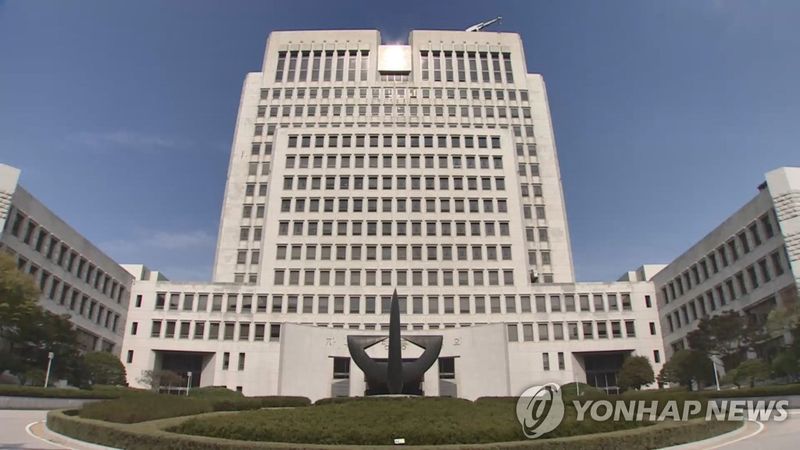
According to legal sources on the 2nd, the Supreme Court of Korea's Third Division, with Justice Oh Seok-joon presiding as the chief justice in charge of the case, upheld the lower court's one-year prison sentence for Park, who was indicted on charges of violating the Act on Real-Name Financial Transactions and Confidentiality. His wife, identified by her surname Seol, who was indicted alongside him, received a six-month prison sentence suspended for two years. Broker Kim, who facilitated the nomination request, received a final sentence of one year and four months for violating the Attorney-at-Law Act. All three defendants and the special counsel appealed, but the Supreme Court rejected all of the appeals.
The Supreme Court ruled on the special counsel's appeal, "There was no error in the lower court's judgment that violated the rules of logic and experience, exceeded the limits of the principle of free evaluation of evidence, or misunderstood the legal principles concerning the crime of violating the Political Funds Act." Regarding the appeals by Park and Seol, it explained, "There was no error in misunderstanding the legal principles concerning 'evasion of the law,' joint principals, or criminal intent under the Real-Name Financial Transactions Act."
Ahead of the eighth nationwide simultaneous local elections in April 2022, Park told Kim that he would give him 100 million won if Kim secured a party nomination for him. Investigators found that Kim asked Jeon to help secure the nomination around April 20 of that year. After the nomination was confirmed, the two met Jeon on May 18 and handed him 100 million won. Park ran in the Bonghwa County constituency and won the election.
The money was raised immediately before it was handed over. Seol arranged to borrow 100 million won from an acquaintance through Park's younger brother, then received the money through accounts held in the names of five people, withdrew it in cash that same day, and delivered it to Park. The use of these "split transfers" led to charges under the Real-Name Financial Transactions Act. The three were indicted last September by the Kim Keon-hee Special Counsel Team, led by Special Counsel Min Joung-kie.
The first and second trials acknowledged that Park had handed over 100 million won in exchange for a nomination request, but found him not guilty of violating the Political Funds Act. Jeon had used the title of adviser while working at the Network Headquarters under the election campaign committee formed to support the People Power Party's candidate in the 20th presidential election from November 2021 to January 2022, and he had recommended several preliminary candidates for party nominations. However, the courts found that these circumstances alone did not make him "a person engaged in political activities" as defined by the Political Funds Act. They also determined that it was difficult to conclude that the 100 million won was political funds, which must be objectively and clearly expected to be spent on political activities.
By contrast, Park was found guilty of violating the Real-Name Financial Transactions Act. Since paying 100 million won in exchange for a party nomination is itself subject to criminal punishment under Article 47-2(1) of the Public Official Election Act, which prohibits the receipt or provision of money or other valuables in connection with a political party's candidate recommendations, the courts held that using accounts in other people's names to raise the money constituted "other evasion of the law" under Article 3(3) of the Real-Name Financial Transactions Act.
Kim also faced charges of receiving approximately 81.24 million won in February 2024 after a company representative asked him to help the company win a construction project commissioned by the National Agricultural Cooperative Federation and he solicited NACF officials in return. The first trial found him guilty on all counts and sentenced him to one year and six months in prison, along with the confiscation of approximately 82.28 million won. The second trial reduced the sentence to one year and four months and did not order confiscation, ruling that the amount could not be determined because payments for soliciting public officials handling official affairs and payments for soliciting a private company were mixed together.
[email protected] Kim Dong-gyu Reporter