Jeju uprising's 'Distorted Family Relationships' to Be Rectified for Two More Years... Association of Bereaved Families of Jeju 4·3 Victims: "An Opportunity to Restore Their Honor"
- Input
- 2026-09-02 12:49:34
- Updated
- 2026-09-02 12:49:34
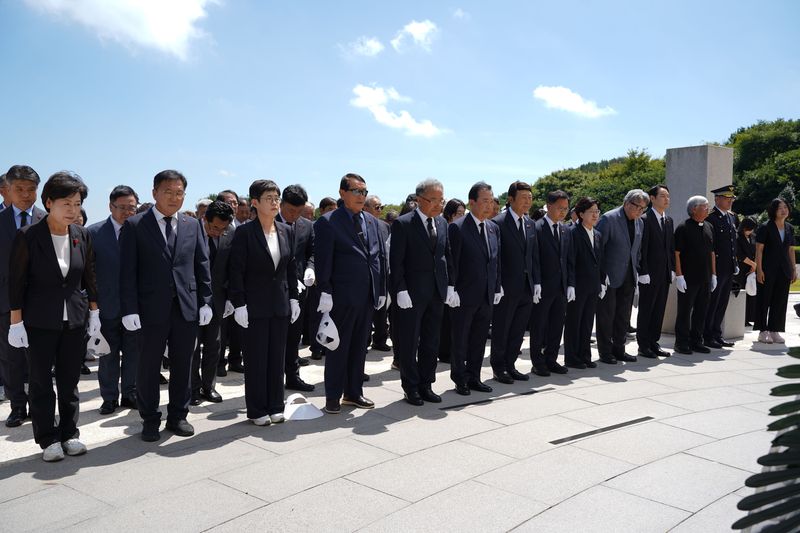
[Financial News Jeju = Reporter Jeong Yong-bok] The period during which victims and bereaved family members of the Jeju uprising whose actual family relationships differ from their legal records can correct their family relationship registers has been extended by two years. The Association of Bereaved Families of Jeju 4·3 Victims urged authorities to actively identify and support eligible applicants, calling the measure an expansion of opportunities to restore the honor of aging first-generation bereaved family members and their descendants.
According to the Association of Bereaved Families of Jeju 4·3 Victims on the 2nd, the association welcomed the implementation of the amended Enforcement Decree of the Special Act on the Investigation of the Truth of the Jeju 4·3 Incident and the Restoration of Honor of Victims, which extends the application period for creating and correcting family relationship registers until August 31, 2028.
The association assessed the amendment as "another milestone toward a just resolution of the Jeju uprising." In particular, as the first-generation bereaved family members who directly experienced the Jeju uprising are aging, it considers the additional two-year application period an important opportunity for bereaved family members and descendants to restore their honor.
The Jeju uprising left deep scars not only on the lives of the victims but also on the legal relationships of the families they left behind.
Some victims died amid the turmoil, but their deaths were not properly recorded. There were also victims without family registers, for whom no family register had been created at all. In other cases, couples who had actually lived together had no legally recorded marital relationship, or relationships between parents and children and between adoptive parents and adopted children were recorded differently from reality.
In the past, bereaved family members had to pursue individual lawsuits or non-contentious proceedings to correct such records. Elderly bereaved family members also faced a considerable burden in personally gathering documents and proving the facts.
The system has been supplemented in stages. Following the complete revision of the Jeju 4·3 Special Act in 2021, special provisions concerning de facto marriage and adoption relationships were established in 2024, and relevant rules of the Supreme Court of Korea were also revised. As a result, public relief procedures have been expanded, allowing family relationships to be restored through investigation, deliberation, and decisions by the Committee for the Investigation of the Truth of the Jeju 4·3 Incident and the Restoration of Honor of Victims, provided certain requirements are met.
The amendment to the enforcement decree secures an additional two years during which this procedure can be used.
Eligible applications include recording and correcting a victim's death and creating family relationship registers for victims without family registers. They also include confirming the existence of a biological parent-child relationship between a victim and a de facto child, as well as determinations concerning de facto marital and de facto parent-child relationships.
The association emphasized that "identifying actual eligible applicants and connecting them with the system is just as important as extending the application period." It said that relevant agencies, including Jeju Province, must actively publicize the program and support applications so that elderly bereaved family members and descendants living outside Jeju do not fail to apply simply because they are unaware of the system.
Securing documents for applications and providing guidance on the procedures are also important. As the number of first-generation people who can testify about circumstances during the Jeju uprising declines, proving family relationships may become increasingly difficult over time.
The association emphasized that "the amendment to the enforcement decree must not stop at extending the application period; through strict and fair investigations and comprehensive deliberations, it must lead to the complete restoration of the honor and substantive rights of victims and bereaved family members."
Kim Chang-beom, chairman of the Association of Bereaved Families of Jeju 4·3 Victims, said, "The two-year extension of the application period is a valuable opportunity to restore the honor of aging first-generation bereaved family members and their descendants," adding, "Active publicity and careful application support are necessary so that not a single wronged bereaved family member is left behind."
He added, "I hope that this amendment to the enforcement decree will further strengthen the institutional foundation for uncovering the truth about the Jeju uprising and restoring honor," and said, "I will stand with the bereaved families until the values of justice, peace, and human rights are fully realized."
[email protected] Jeong Yong-bok Reporter