Japan’s LDP Says ‘Proactive Fiscal Policy Will Not Waver’ Even as Long-Term Rates Hit 3%
- Input
- 2026-09-02 13:24:40
- Updated
- 2026-09-02 13:24:40
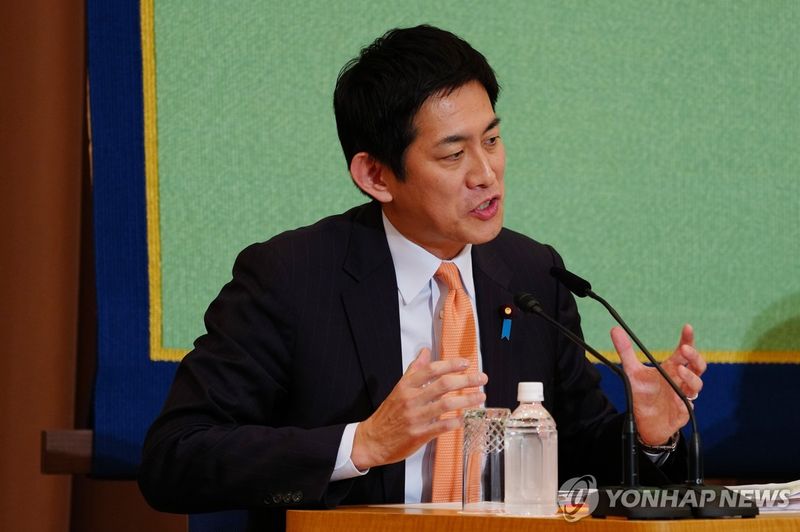
【Financial News Tokyo = Hye-jin Seo, correspondent】Japan’s ruling Liberal Democratic Party (LDP) said on the 2nd that it would maintain its proactive fiscal policy after the country’s long-term interest rate rose above 3% for the first time in 30 years. Although markets have raised concerns that fiscal expansion under Prime Minister Sanae Takaichi’s administration is driving rates higher, the party ruled out any policy change. Some within the party even argued, “If it exceeds 5%, we would have to think about it, but 3% is not a figure to panic over.”
According to Nihon Keizai Shimbun, Takayuki Kobayashi, chairman of the LDP Policy Research Council, said at a press conference that day, “Our commitment to responsible proactive fiscal policy remains unchanged.”
Kobayashi emphasized, “There is not the slightest wavering in our direction of managing fiscal policy carefully and building a strong economy,” adding, “We will increase tax revenue by creating a strong economy and enhance fiscal sustainability.” He avoided answering market criticism that the Takaichi administration’s proactive fiscal policy was fueling higher interest rates.
Nihon Keizai Shimbun reported that sentiment within the LDP strongly leaned toward viewing the sharp rise in interest rates as not a serious risk.
An LDP Tax Commission executive argued, “The prime minister explained that even while pursuing proactive fiscal policy, she would not increase government bond issuance,” adding, “The market is simply overreacting.” Another party executive said, “If rates exceeded 5%, which is higher than in the United States, we would need to think about it, but 3% is not a figure to panic over.”
The LDP campaigned on proactive fiscal policy in February’s election for the House of Representatives of Japan. Because raising concerns about higher interest rates could lead to calls for a change in policy direction, a strong view within the party is that “proactive fiscal policy will not change now that it has been promised.”
Prime Minister Sanae Takaichi avoided directly assessing interest-rate levels because of their potential impact on markets. Meeting reporters at the Prime Minister’s Office the previous day, she said, “Interest rates are determined in the market against the backdrop of various factors, including policy conditions overseas,” adding, “If the prime minister comments specifically on market trends, it could have unintended effects, so I will refrain from commenting.”
However, she made clear that interest-rate trends would be reflected in future budget planning and economic and fiscal management. Takaichi said, “It is only natural to assess and analyze various economic conditions, including interest rates, and make timely and appropriate decisions,” adding, “While responding to necessary fiscal needs, we will achieve both a strong economy and fiscal sustainability.” The government also decided to pursue budget reforms that incorporate recurring policies into the initial budget rather than relying on large supplementary budgets.
The opposition, meanwhile, raised concerns that day about the Takaichi administration’s fiscal management. Yūichirō Tamaki, leader of the Democratic Party for the People (DPFP), referred to the projected interest rate of 3.8% applied to the fiscal 2027 budget proposal and asked, “Is it acceptable to leave it as it is?”
Earlier, the Ministry of Finance Japan (MOF) set the projected long-term interest rate for fiscal 2027 at 3.8% to calculate government bond interest costs. Some have proposed using interest-cost savings resulting from actual rates coming in below projections to fund a consumption-tax cut. However, if the upward trend in interest rates continues, securing such funding could become difficult.
Meanwhile, in the Tokyo bond market that day, the yield on newly issued 10-year Japanese government bonds, a benchmark for Japan’s long-term interest rates, rose as high as 3.015% during the session. It set a new high for the second consecutive day, reaching its highest level in approximately 30 years, since 1996.
[email protected] Hye-jin Seo Reporter