Pine Wilt Disease Outbreak in Dongjak District... Seoul City Puts All Out to Prevent Spread
- Input
- 2026-09-02 11:45:00
- Updated
- 2026-09-02 11:45:00
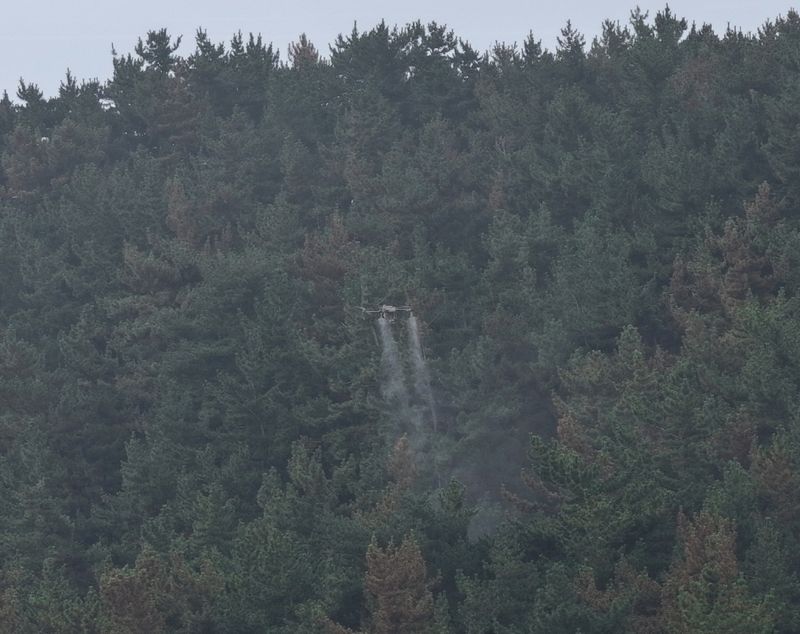
[Financial News] The Seoul Metropolitan Government announced on the 2nd that, following the final confirmation of one tree infected with pine wilt disease in Dongjak District, it has activated an emergency response system with relevant agencies, including the Korea Forest Service (KFS), and is making all-out efforts to prevent the spread throughout Seoul. The infected tree is a pine tree located in Samil Park in Dongjak District, which was finally confirmed on the 27th of last month after a second diagnosis.
The city has decided to conduct detailed surveillance and surveys of dead trees centered on the affected areas to determine the scale of damage and whether there are any additional infections. In addition, it plans to formulate future control measures by conducting parallel epidemiological investigations to identify the cause of the outbreak and the routes of its spread.
To prevent the artificial spread of pine wilt disease, a total of 22 neighborhoods—including seven in Dongjak District, eight in Seocho-gu, and seven in Gwanak District—have been newly designated and managed as restricted zones, and enforcement regarding the movement of pine trees will be strengthened, focusing on major roads and forest access routes. In particular, in accordance with the 'Special Act on the Control of Pine Wilt Disease,' intensive crackdowns will be conducted on the movement of pine trees without a certificate confirming non-infection, as well as the unauthorized import and movement of pine trees and firewood suspected of infection. The policy is to respond strictly to illegal activities that cause the spread of the disease in accordance with relevant laws. The movement restrictions apply to four species—Korean pine, Japanese black pine, Korean pine, and Korean white pine—as well as felled products with a diameter of 2 cm or more; violations are punishable by imprisonment of up to one year or a fine of up to 10 million won.
The city is working to identify the cause of the infection by investigating the connection with existing outbreak areas, surrounding pest control history, and the movement routes of pine trees in cooperation with relevant agencies. Joint surveillance will be conducted not only in Dongjak District but also in neighboring districts such as Seocho-gu and Gwanak District to prevent the spread of the disease across district boundaries, while simultaneously inspecting the occurrence and control status of pine wilt disease throughout Seoul. Furthermore, in the second half of the year, based on the results of detailed surveillance, intensive control measures will be implemented on newly infected trees, and monitoring will be strengthened for outbreak areas and regions at risk of further spread. Preventive control measures, such as tree injections, will be carried out in necessary areas.
Kim Young-hwan, Director General of the Garden City Bureau of the Seoul Metropolitan Government, stated, "Prompt monitoring and control in the early stages of pine wilt disease are of the utmost importance," adding, "We will strengthen joint responses with relevant agencies and do our best to prevent the spread by implementing intensive control measures in the second half of the year."
[email protected] Seongchorong Reporter