“I Bought Aggressively Whenever the Market Crashed”... How a Man in His 30s Who Earned 1.46 Million Won a Month Made 2.2 Billion Won in Six Years
- Input
- 2026-09-02 13:13:09
- Updated
- 2026-09-02 13:13:09
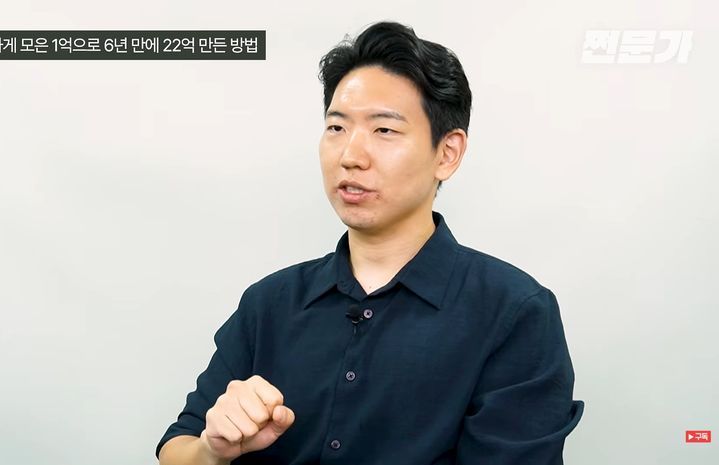
[Financial News] An office worker who joined a small or midsize company after failing the civil service examination following six years of preparation has attracted attention by building net assets of 2.2 billion won in six years, starting with a first monthly salary of 1.46 million won. His key strategies for growing his wealth included forced saving to build seed money, allocating funds across representative South Korean and U.S. asset classes, and rotating investments to target market downturns.
Office-worker investor Kim Dong-myeon appeared on the YouTube channel “Money Expert” on the 31st of last month and disclosed how he built his assets, from joining a small or midsize company in his late 20s to the present.
Kim’s starting point was “forced saving” to build seed money. At a time when his monthly income was around 2 million won even after allowances were included, he divided his accounts into four and automatically transferred 80% of his salary into an investment account. The remaining 20% was strictly controlled, with 10% allocated to fixed expenses and 10% to variable expenses. By limiting food expenses to no more than 200,000 won a month, he accumulated funds over two years and combined them with severance pay and loans to secure 110 million won in seed money.
Using this capital, Kim narrowed his focus to “South Korean real estate and U.S. stocks” as his representative asset classes. Noting that about 70% of household assets in South Korea are concentrated in real estate, while about 70% of household assets in the United States are concentrated in financial assets, he diversified his funds between transit-accessible apartments in the Seoul metropolitan area and products tracking the S&P 500.
In the stock market, he used a contrarian bargain-buying strategy based on the historical maximum drawdown, or MDD. After identifying a pattern in which the S&P 500 undergoes a correction of about 14% roughly once a year on average, he increased the scale of his staggered purchases whenever the decline exceeded 14%. When Tesla had fallen 50% from its peak and Bitcoin had plunged 48%, he bought aggressively and realized gains of around 100% during the subsequent rebounds.
From a portfolio-management perspective, “rebalancing” and “rotation among assets” proved effective. He normally maintained a portfolio consisting of 60% stocks and 40% safe assets, such as bonds and gold, but sold safe assets to buy additional stocks when markets crashed. He also operated four apartments in large complexes of at least 500 units near transit stations in the Seoul metropolitan area through gap investments, reinvesting increases in jeonse deposits accumulated every two years into sharply fallen U.S. stocks and virtual assets. He created a virtuous cycle by moving profits taken from the stock market back into real estate.
Kim emphasized, “I achieved this by directly implementing the proven methods of masters such as Warren Buffett and John Bogle after reading more than 100 investment books.” He added, “Buying representative asset classes at low prices when they crash and waiting until the market recovers is a principle that anyone can replicate.”
However, financial and real-estate experts warn that blindly following Kim’s success story could be dangerous. They point out that his results were possible because the real-estate upcycle coincided with a strong U.S. stock market, while his strategy involved highly leveraged gap investments and high-risk assets.
A market expert advised, “During an adjustment in which home prices and jeonse deposits fall together, or amid a prolonged period of high interest rates, the gap-investment structure can lead to a reverse-jeonse crisis and difficulties repaying principal and interest, potentially causing a serious liquidity crisis or bankruptcy.” The expert added, “Conservative risk management that takes each individual’s cash flow and tolerable level of risk into account must come first.”
[email protected] Reporter Moon Young-jin Reporter