Japanese Financial Markets See 'Triple Weakness' as Stocks, Bond Prices and Yen All Fall
- Input
- 2026-09-02 12:13:58
- Updated
- 2026-09-02 12:13:58
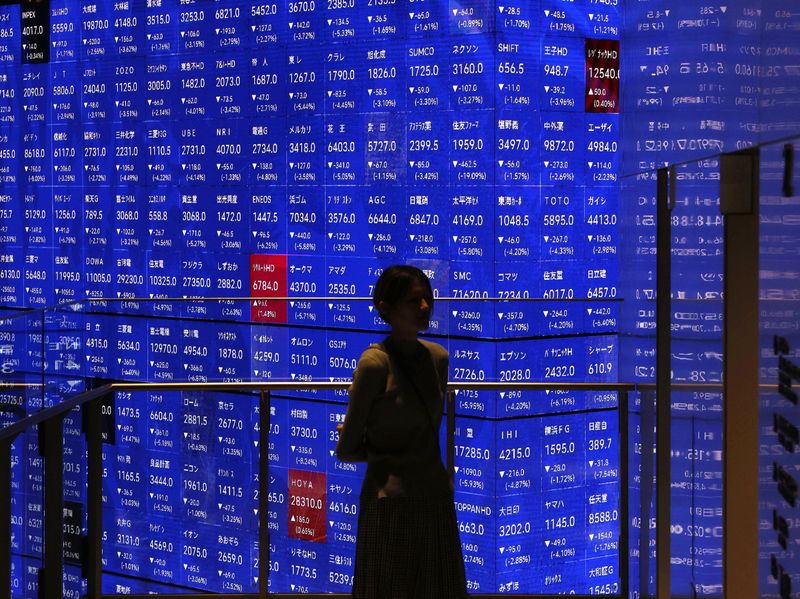
【Financial News Tokyo = Correspondent Hye-jin Seo】Japanese financial markets showed “triple weakness” on the 2nd, with stocks, bonds and the yen all declining at the same time. The Nikkei 225 Stock Average fell more than ¥1,900 at one point during the session, bringing its decline close to 2.9%. Bond prices also dropped amid selling of Japanese government bonds, pushing the long-term yield as high as 3.015%. The yen weakened to the ¥160-per-dollar range. As international oil prices surged amid worsening tensions in the Middle East, expectations of further rate hikes in the United States and Japan added to the pressure, prompting investors to increasingly avoid risk.
■ Nikkei falls 2.9% intraday as bonds sell off across all maturities
The Nikkei 225 Stock Average ended the morning session at 64,473.16 on the Tokyo Stock Exchange (TSE), down 1,742.18 points, or 2.63%, from the previous trading day. Its intraday decline exceeded 1,900 points at one point, bringing the drop close to 2.9%.
With the TSE Prime Market broadly weaker, heavy selling has centered on semiconductor and electronic-component stocks, including Tokyo Electron and Advantest.
Selling also continued in the bond market. The yield on newly issued 10-year Japanese government bonds, a benchmark for long-term rates, briefly rose 0.010 percentage point from the previous day to 3.015% annually. That was the highest level in about 30 years, since 1996. After breaking above the 3% threshold at 3.005% the previous day, it set a new high for the second consecutive day.
Selling of Japanese government bonds has spread across all maturities. The two-year yield reached 1.840%, its highest level since April 1995, while the five-year yield climbed to a record 2.295%. The 20-year and 30-year yields rose to 3.900% and 4.195%, respectively.
The yen also remained weak. In Tokyo foreign-exchange trading, the yen stood at ¥160.28 per dollar as of 10 a.m., down ¥0.30 from 5 p.m. the previous day. Concerns that higher oil prices will increase crude-import costs, along with dollar-buying demand from importers, are weighing on the yen.
The immediate triggers for the triple weakness were worsening tensions in the Middle East and a sharp rise in oil prices. As the United States and Iran exchanged attacks, West Texas Intermediate crude oil (WTI) futures jumped to the $92-per-barrel range in Asian trading on the morning of the 2nd. Fears that higher energy prices will reignite inflation and pressure corporate earnings and consumption have led to selling in both stocks and bonds.
■ Hawkish remarks from Ueda and Takata push odds of a September hike above 94%
Expectations that the Bank of Japan (BOJ) will raise interest rates soon are also weighing on the market. BOJ Governor Kazuo Ueda said on the 2nd, "When underlying inflation is approaching 2%, we need to conduct policy with greater attention than before to upside risks to prices."
BOJ policy board member Hajime Takata also described this year as the “third phase” of monetary-policy normalization and stressed, "Japan also needs agile interest-rate hikes." In the overnight index swap (OIS) market, the probability that the BOJ will raise its policy rate by 0.25 percentage point at its monetary policy meeting on the 17th and 18th rose as high as 94%.
Rising U.S. interest rates are adding to the burden. The U.S. 10-year Treasury yield briefly reached 4.80% annually on the 1st, its highest level since January 2025. With surging oil prices, expectations of further rate hikes, rising federal government debt and corporate funding demand for artificial-intelligence (AI) investment all converging, the possibility of the yield breaking above 5% is also being discussed in the market.
The United States is also pressuring Japan to normalize its monetary policy. According to the U.S. Treasury Department, Treasury Secretary Scott Bessent told Governor Ueda, "I strongly support Japan taking decisive market and monetary-policy measures to address the yen's significant undervaluation."
Market warnings suggest that a rise in Japan's 10-year government bond yield above 4% could trigger a full-scale shock in equities.
Daiki Takei, a strategist at Resona Holdings, told Nihon Keizai Shimbun, "If long-term yields rise to 4.3%, that would reflect four rate hikes within the next year," adding, "If rates rise at that pace, growth in companies' earnings per share (EPS) could be offset."
The implication is that although expectations for AI investment and improved earnings have so far cushioned the impact of rising rates, a move into the 4% range could undermine the corporate-profit growth scenario that has been driving gains in Japanese equities.
[email protected] Hye-jin Seo Reporter