U.S. Presses Japan to "End Reflation," BOJ Says It Will Discuss Rate Hikes at Every Meeting, Including September
- Input
- 2026-09-02 11:28:21
- Updated
- 2026-09-02 11:28:21
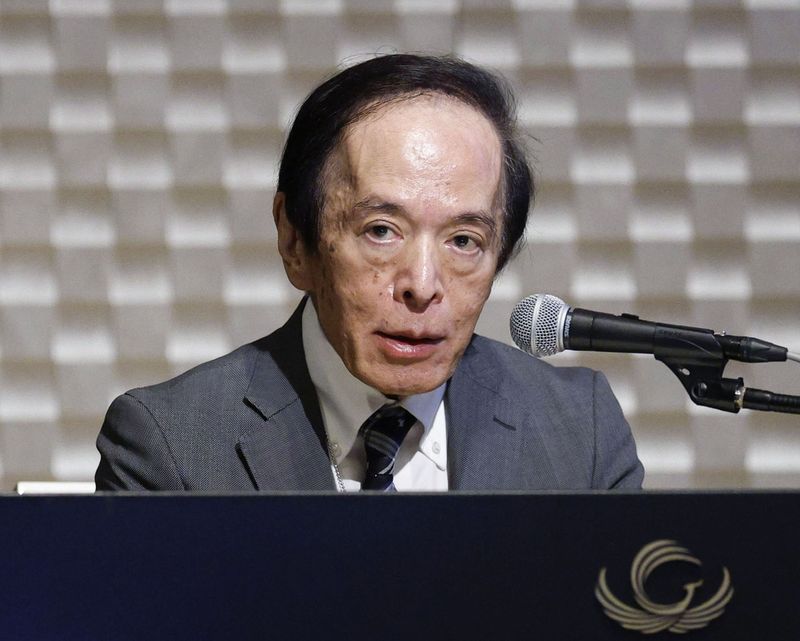
【Financial News Tokyo = Correspondent Hye-jin Seo】Bank of Japan (BOJ) Governor Kazuo Ueda said on the first (local time), "We will thoroughly discuss whether to raise interest rates at every meeting, including the next monetary policy meeting." The assessment reflects growing inflation risks stemming from higher oil prices due to tensions in the Middle East, expanding demand related to artificial intelligence (AI), and yen weakness. The United States also pressed Japan to end its reflation policy and correct yen weakness, urging the BOJ to normalize monetary policy. As a result, markets raised the probability of an additional rate hike at the BOJ's monetary policy meeting scheduled for the 17th and 18th to as high as 94%.
According to Nihon Keizai Shimbun on the second, Governor Ueda made the remarks at a closing press conference for the Group of Twenty (G20) finance ministers' and central bank governors' meeting held the previous day in Asheville, North Carolina.
Governor Ueda cited rising oil prices caused by worsening conditions in the Middle East, expanding AI-related demand, and yen weakness as inflation risk factors. "Data consistent with our outlook are emerging," he said, emphasizing, "We will consider upside risks to prices when determining how to conduct policy."
However, he also said, "We have raised interest rates about five times so far, and the effects are gradually accumulating," adding that the impact of previous rate hikes would also be reviewed. Markets are effectively treating an additional September hike as a foregone conclusion. According to Doton Research and others, the probability of a September rate hike priced into the overnight index swaps (OIS) market stood at 94% as of the previous afternoon.
As expectations for a rate hike strengthened, selling of Japanese government bonds (JGBs) intensified. The yield on newly issued 10-year government bonds, a benchmark for long-term interest rates, rose as high as 3.015% that day. It set a new high for the second consecutive day, reaching its highest level in about 30 years since September 1996.
The rise in international oil prices amid continued attacks by the United States and Iran also fueled bond selling. Governor Ueda analyzed the recent surge in interest rates as "a movement following the global rise in interest rates, which reflects inflationary pressure from the Middle East, AI-related financing, and assessments of fiscal policies in various countries."
U.S. Treasury Secretary Scott Bessent also pressed the BOJ to normalize monetary policy. At the G20 closing press conference the previous day, he said, "I told Japan that it must end its reflation policy." Reflation refers to a policy of deliberately boosting prices and economic activity by increasing fiscal spending and expanding the money supply to escape deflation. Secretary Bessent held successive meetings with Governor Ueda on the 30th of last month and with Japanese Finance Minister Satsuki Katayama on the 31st.
Secretary Bessent assessed that inflation had exceeded 2% under Abenomics, promoted by former Prime Minister Shinzō Abe, saying, "The reflation policy was successful." He continued, "It is now Takaichi-nomics," urging Japan to move away from expansionary fiscal and monetary policies based on disinflation.
According to the U.S. Treasury Department, Secretary Bessent told Governor Ueda, "I strongly support Japan taking decisive market and monetary policy measures to address the significant undervaluation of the yen." Governor Ueda was reserved about their meeting, saying, "We had a useful discussion on various topics, but I will not comment on the details."
Analysts say the United States' pressure for Japan to normalize its policies is also linked to the potential impact of rising Japanese interest rates on the U.S. Treasury market. If Japanese institutional investors shift funds from U.S. Treasuries, which carry foreign-exchange risk, to Japanese government bonds offering higher yields, demand for U.S. Treasuries could decline and U.S. interest rates could rise.
Finance Minister Satsuki Katayama, meanwhile, rejected international concerns about Japan's expansionary fiscal policy. She said, "We explained that we would prioritize growth while also ensuring fiscal sustainability," adding that there had been "surprisingly little" concern from other countries. Regarding long-term interest rates exceeding 3%, she avoided a specific assessment, saying, "Interest rates are determined by various factors."
[email protected] Hye-jin Seo Reporter