UNIST Leads Development of Quantum Sensing Technology for Application in Ulsan’s Key Industries
- Input
- 2026-09-02 14:37:39
- Updated
- 2026-09-02 14:37:39
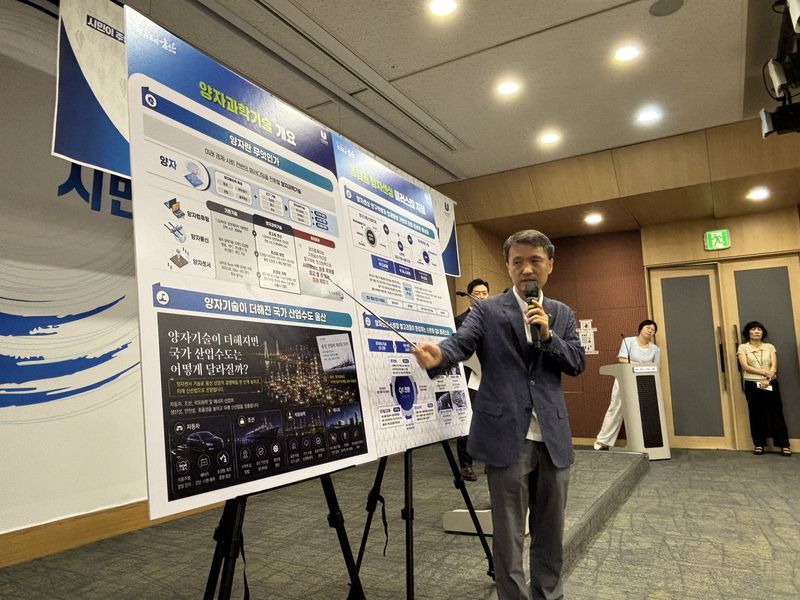
【Financial News Ulsan = Reporter Choi Su-sang】The Busan-Ulsan-Gyeongnam Southeast Region Quantum Sensing Cluster, in which the three provincial governments of Busan, Ulsan, and South Gyeongsang Province are participating as a single super-regional team, has been finally selected for the national quantum cluster competition organized by the Ministry of Science and ICT. As a result, Ulsan National Institute of Science and Technology (UNIST) has been designated as a key research and development hub. Ulsan Metropolitan City plans to use the selection as an opportunity to launch efforts in earnest to create a new industrial ecosystem by combining quantum technology with the region’s key industries.
According to Ulsan Metropolitan City on the 2nd, the Busan-Ulsan-Gyeongnam Southeast Region Quantum Sensing Cluster, approved at the Quantum Power Committee meeting held the previous day, is a super-regional cooperation project jointly pursued by Busan, Ulsan, and South Gyeongsang Province over four years from 2027 to 2030. Busan Metropolitan City Government will lead the project, with Ulsan Metropolitan City and South Gyeongsang Province participating jointly. Quantum sensing will serve as the core specialized field, linked with quantum materials, parts, and equipment, as well as quantum algorithm technologies.
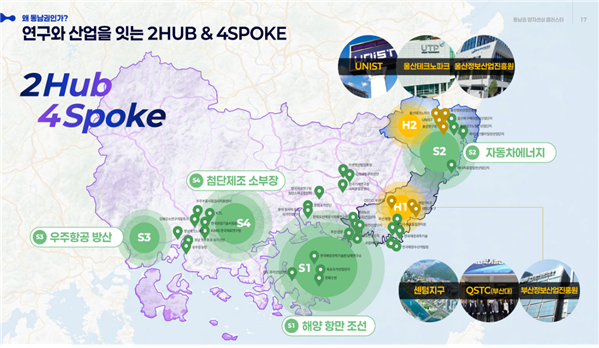
The cluster is built around two technology hubs and four demand spokes. UNIST was selected alongside Pusan National University (QSTC) as a technology hub responsible for research and development and technical support. UNIST will develop foundational quantum-sensing technologies linked to industrial demand across the Busan-Ulsan-Gyeongnam region, including shipbuilding and marine industries, ports and logistics, aerospace and defense, mobility, and energy. It will also provide technical support to help apply these technologies in industrial settings.
The selection is seen as official recognition of UNIST’s accumulated research capabilities in quantum science and technology as part of a national project to build a quantum industry ecosystem. The broader plan is to establish a support system spanning technology discovery, verification, demonstration, and commercialization, so that innovative quantum technologies developed in university and research institute laboratories can lead to industrial demonstrations and commercialization. Through this effort, the Southeast region aims to become a hub for quantum technology commercialization, connecting outstanding quantum research achievements with innovation at local companies and the creation of new industries.
Ulsan Metropolitan City plans to demonstrate quantum sensing applications by linking the technology with the region’s key shipbuilding and marine, mobility, and energy industries. It will review industrial demand and technical feasibility comprehensively before proceeding with demonstrations in stages, while supporting the application and commercialization of technologies developed at UNIST in actual industrial settings. Regarding the local funding burden, Busan, Ulsan, and South Gyeongsang Province will share an equal proportion of the government contribution, with the specific amount subject to adjustment based on the final government budget.
The project is also aligned with the Ministry of Science and ICT’s implementation direction for the seven future growth engines, known as SEED. It will additionally support the development of quantum materials, parts, and equipment technologies and research and development in quantum algorithms, while establishing a system for training talent in quantum convergence through the joint participation of local universities, research institutes, and companies. The plan is to create a full-cycle quantum industry ecosystem spanning research and development, industrial demonstrations, technology commercialization, and the training of specialized personnel, thereby generating new regional growth engines and specialized jobs for young people.
[email protected] Choi Su-sang Reporter