Acting Police Chief Jaesung Yoo Retires: “Police Investigations Are Not a Power but a Responsibility and a Duty”
- Input
- 2026-09-02 11:23:43
- Updated
- 2026-09-02 11:23:43
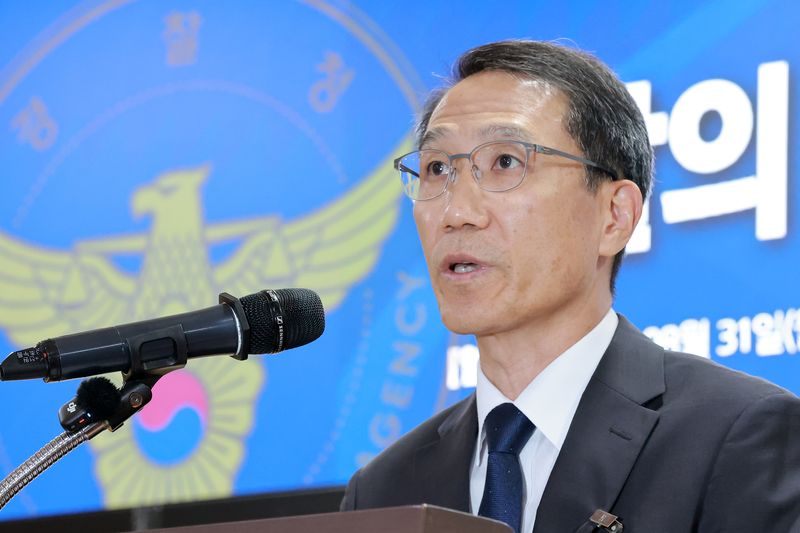
[Financial News] Jaesung Yoo, acting Commissioner General of the Korean National Police Agency and its 45th deputy chief, retired on the 2nd after 38 years in the police force. As the organization prepares for the complete separation of investigation and prosecution, he urged police officers to remember that “police investigations are not a power but a responsibility and a duty.” Amid growing criticism over the police’s handling of the Jang Miran missing-person case, which was falsely closed, and allegations of an inadequate investigation into the Jang Yungi incident, he also stressed the need to review the organization’s command and oversight structure and its internal systems as a whole.
At a farewell ceremony held at the Korean National Police Agency that day, Yoo said, “Our police force stands at another critical turning point. In just one month, investigation and prosecution will be completely separated,” making the point.
He emphasized, “Unlike other investigative agencies, the police cannot choose which cases to investigate,” adding, “We must respond to every appeal from the public and do our utmost to resolve every case entrusted to us. No matter how small a case may be, it can be a matter of a lifetime for those involved.”
Yoo delivered a strongly self-critical message regarding the various controversies surrounding the police. “The series of recent incidents and accidents makes us question even the reason for the police’s existence,” he said. “Mistakes must always be followed by appropriate accountability.”
At the same time, he said, “Holding individuals accountable alone cannot address the root of the problem. We must take an even more clear-eyed look at ourselves in response to every one of these questions: Did the command and oversight system operate without gaps? Were the standards and procedures fully in place? Did the internal systems perform their intended functions?”
His remarks were understood as a call to examine not only individual misconduct but also the organization-wide management and oversight systems amid a series of controversies over the police’s handling of cases and internal misconduct.
Yoo also called for institutional improvements concerning the protective duties police officers are taking on at the scene. Police currently respond first to people who need protection because of suicide attempts, psychiatric emergencies, intoxication, or drug-related problems. However, a shortage of facilities to which these individuals can be transferred has left police responsible for providing protection for extended periods.
“People in danger should receive professional help in a timely manner, while police should be able to respond quickly to other emergencies,” he said. “I hope a public emergency relief agency responsible for this work will be established as soon as possible.”
He also stressed the need to expand police personnel and equipment. Yoo said, “The 140,000 police officers have an enormous amount to handle, and the responsibility they carry is equally heavy. Strengthening the public-safety infrastructure by adding the personnel, facilities, and equipment that are truly needed is a national task that must be accomplished.” He added, “Investing in public safety is the surest way to protect the lives and safety of the people.”
He also asked junior commanders to pay attention to police officers’ mental well-being and to manage personnel appointments fairly.
Yoo said, “Even now, there are many colleagues around us who endure each day while hiding their inner wounds. Commanders, please look carefully after their pain first and extend a warm hand.” He particularly urged them, “When deciding promotions and assignments, please make your judgments solely according to the principle of fairness.” He added, “That choice will bring colleagues together and become a force for restoring the public’s trust.”
Yoo was born in Buyeo, South Chungcheong Province, in 1966. After graduating from the fifth class of the Korean National Police University, he joined the police force in 1989. He served as head of investigations at the Gangwon Provincial Police Agency, chief of Daejeon Dongbu Police Station, head of the investigation planning division at the Korean National Police Agency, chief of Seoul Mapo Police Station, and head of the cyber safety division at the Korean National Police Agency. He later held key posts including investigation review officer and scientific investigation management officer at the Korean National Police Agency, head of its Cyber Investigation Bureau, commissioner of the Chungnam Provincial Police Agency, commissioner of the Daegu Metropolitan Police Agency, and head of the Criminal Affairs Bureau at the Korean National Police Agency. After being promoted to superintendent general last year, he served as deputy chief of the Korean National Police Agency and led the organization as acting Commissioner General for approximately one year and three months.
Yoo said, “If you ask me now what kind of commander I want to be remembered as, I would answer that I want to be remembered as a comfortable commander and a humane, conscientious police officer.” He added, “Living as a member of the Korean National Police has been the greatest honor of my life.” Kim Jongcheol, the newly appointed deputy chief of the Korean National Police Agency, will serve as acting Commissioner General after Yoo.
[email protected] Kim Yeji Reporter