BOK: "Inflation to Slow in September, but Upward Trend to Continue, Led by Core Inflation"
- Input
- 2026-09-02 09:23:30
- Updated
- 2026-09-02 09:23:30
[Financial News] The Bank of Korea (BOK) forecast that consumer inflation in September would be lower than in August, as the base effect from last year's telecommunications fee discounts fades. However, it maintained a cautious stance on the inflation outlook, expecting underlying price pressures to continue, particularly in core items.
The BOK held a meeting on inflation conditions at its headquarters in Jung District, Seoul, on the 2nd, chaired by a deputy governor, to review recent price trends and the outlook.
The BOK said, "Consumer inflation in September is expected to be lower than in August as the base effect fades, but an underlying upward trend is expected to continue, led by core items."
It added, "With uncertainty related to the war in the Middle East still high, consumer prices are expected to continue rising sharply, led by core inflation, due to the pass-through of cost shocks and growing demand-side pressures." The BOK emphasized, "We will continue to monitor inflation conditions with vigilance."
Consumer inflation in August stood at 3.1% year on year, up 0.3 percentage points from 2.8% in July.
The sharp increase in August inflation was largely driven by the base effect from last year's telecommunications fee discounts. The increase in public-service prices accelerated significantly, from 1.4% in July to 6.5% in August.
Core inflation rose even more sharply. Core inflation reached 3.4% in August, up 0.8 percentage points from 2.6% the previous month. The increase reflected continued price gains in personal services and durable goods, compounded by the base effect from telecommunications fees.
Living-cost inflation also rose from 2.5% in July to 3.2% in August.
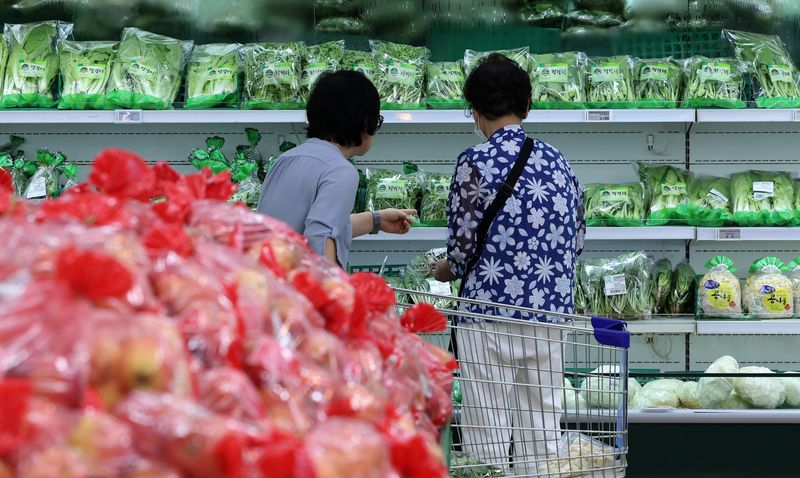
By contrast, prices of petroleum products and agricultural, livestock, and fishery goods limited the overall increase in inflation. The inflation rate for petroleum products fell from 15.5% in July to 14.2% in August. Prices of agricultural, livestock, and fishery goods shifted from a 0.9% increase over the same period to a 2.6% decline. Government discount programs and other measures also helped curb price increases for these goods.
The BOK assessed that uncertainty surrounding the inflation outlook remained high even if consumer inflation slowed in September.
In particular, it is closely watching the possibility that cost shocks could pass through to domestic prices and that demand-side pressures could intensify, as external uncertainty related to the war in the Middle East persists.
The BOK plans to closely monitor underlying price trends, particularly core inflation, while continuing to assess the impact of changes in external conditions on domestic prices.
[email protected] Hong Ye-ji Reporter