Jeju, Granted 5,321 Powers, Turns to Industry for the Next 20 Years of Special Self-Government
- Input
- 2026-09-02 09:08:08
- Updated
- 2026-09-02 09:08:08
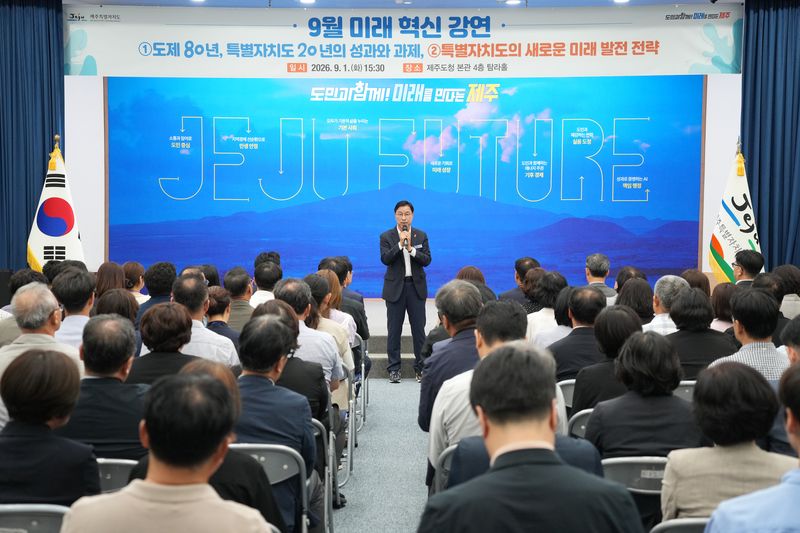
【Financial News Jeju=Reporter Jeong Yong-bok】 Jeju, which became the nation’s first special self-governing province, has received 5,321 powers from the central government over the past 20 years. It is now moving to shift its strategy toward connecting those powers with corporate testing and the growth of future industries.
According to Jeju Special Self-Governing Province on the 2nd, the province held the September Public Officials’ Future Innovation Lecture at Tamra Hall in Jeju Provincial Government on the afternoon of the 1st. About 200 senior officials and employees attended the event, which reviewed the achievements of Jeju’s 80 years as a province and 20 years of special self-government, as well as its future development strategy.
Jeju was separated from South Jeolla Province and elevated to provincial status under a U.S. military government ordinance on August 1, 1946. On July 1, 2006, it became the nation’s first special self-governing province, beginning an experiment in decentralization by transferring central-government powers to the region.
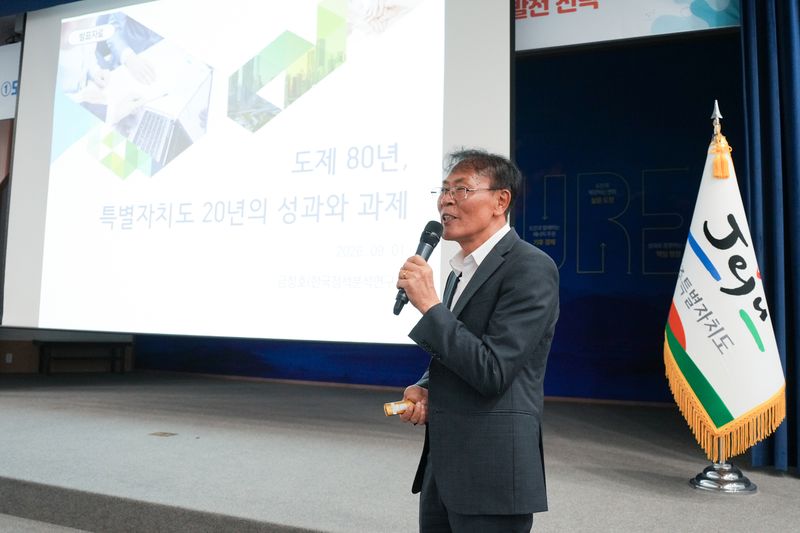
Kum Chang-ho, former chair research fellow at the Korea Research Institute for Local Administration, analyzed institutional changes since the launch of special self-government under the theme “Achievements and Challenges of Jeju’s 80 Years as a Province and 20 Years of Special Self-Government.”
Through phased institutional reforms, Jeju received 5,321 national administrative powers. Its distinctive systems, including autonomous organization, finances, and an autonomous police force, also expanded. However, experts said Jeju must move beyond viewing the transfer of powers itself as an achievement of special self-government.
Kum Chang-ho proposed, “To respond to the changing local policy environment, including the expansion of special self-governing entities, Jeju must redefine its own new vision and legal status and expand Jeju-specific special provisions centered on its administrative system and industrial sectors.”
The limitations of Jeju’s industrial structure were also evident in figures presented at the event. Jeju’s economy grew by approximately 1.9 times over the past 20 years, but services accounted for approximately 80% of its industrial structure as of 2024. Agriculture, forestry, and fisheries accounted for a relatively high 10.3%, while manufacturing made up only approximately 3%.
The assessment is that although the economy has grown around tourism and services, the question of how many high-productivity industries and companies Jeju has developed is separate.
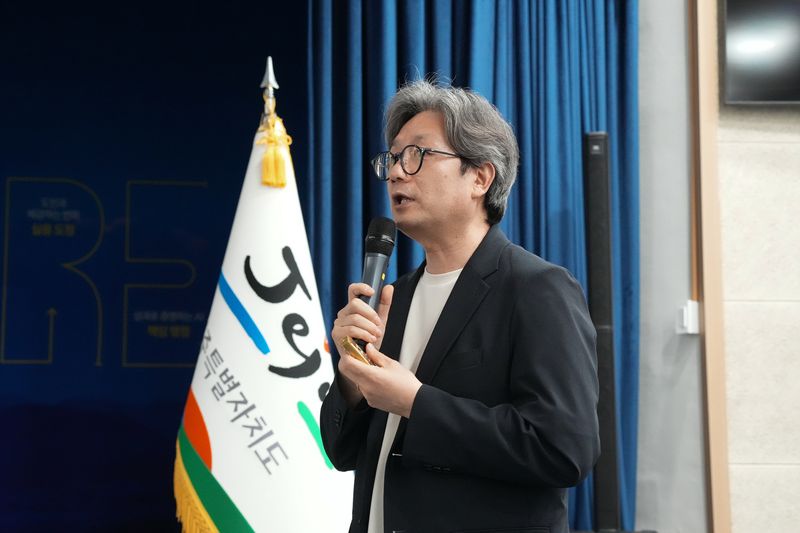
Lee Jae-seung, a vice president at Kakao, proposed that the next 20 years of special self-government should focus on “industry and companies.”
In a lecture titled “A New Future Development Strategy for a Special Self-Governing Province,” Lee emphasized that the starting point for future-industry policy should be “Why must it be Jeju?” rather than “Which industries should we attract?”
His proposal is to use the Jeju Special Act to test technologies and businesses in Jeju that are difficult to pursue elsewhere, while creating a differentiated environment where companies can establish their first market in Jeju.
Lee explained that Jeju’s special-government powers can produce economic effects only if the province creates a structure in which attracting companies leads to commercialization and corporate growth, which then returns to residents through jobs and income.
Jeju is fostering new industries, including renewable energy, electric vehicles, green hydrogen, space, biotechnology, and artificial intelligence (AI). Jeju Province is pursuing a strategy to differentiate itself as a testing ground for future industries by using regulatory exceptions and the independent testing environment provided by its status as an island.
The policy environment surrounding 20 years of special self-government has also changed. When Jeju launched the system in 2006, it was the nation’s only special self-governing province. Since then, the number of special self-governing entities has grown to include Sejong Special Self-Governing City, Gangwon State, and Jeonbuk State. As the government has also expanded regional development policies centered on metropolitan economic zones, Jeju must redesign its own special provisions and competitiveness.
Jeju Governor Wi Seong-gon also emphasized the need to reconsider whether the existing growth strategy can continue unchanged.
Governor Wi said, “Jeju’s population, economic scale, and tourism environment have changed significantly over the 20 years since the launch of special self-government.” He added, “We need to look back and ask whether the past tourism development-centered strategy remains effective today, and newly consider the direction in which to take special self-government and Jeju’s industrial policy.”
Jeju Province plans to develop specific policies that connect the achievements of special self-government not merely to the number of powers transferred, but to regulatory improvements for new industries, corporate testing, investment, and employment.
The challenges Jeju must address after 80 years as a province and 20 years of special self-government have also become clear. Assessing how much the 5,321 transferred powers have actually changed residents’ lives and creating new special provisions to narrow gaps in industrial structure and productivity will be the test that determines the next 20 years of special self-government.
[email protected] Reporter Jeong Yong-bok Reporter