"Flying Feels Like a Burden These Days"... Koreans Closing Their Wallets Overseas While Foreigners Spend Freely in Korea
- Input
- 2026-09-02 12:00:00
- Updated
- 2026-09-02 12:00:00

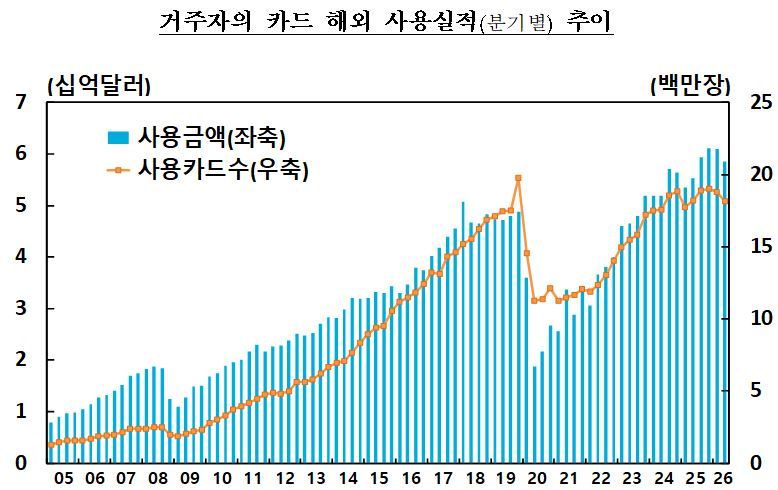
According to the "Overseas Card Usage by Residents in the Second Quarter of 2026" report released by the Bank of Korea (BOK) on the 2nd, residents' overseas credit and debit card spending totaled $5.85 billion in the second quarter.
After reaching a quarterly record high in the fourth quarter of last year, spending remained at a similar level in the following quarter ($6.1 billion), but fell by 4.2% this time. However, it was up 5.9% from the same period a year earlier.
Regarding the factors behind this quarter's results, the BOK explained, "Despite the increase in direct overseas purchases through online shopping, the contraction in travel-related spending due to the decrease in the number of outbound Korean travelers was a major factor."
In fact, the number of Korean outbound travelers in the second quarter of this year fell 20.4% from the previous quarter to 6.631 million. During the same period, direct overseas purchases through online shopping increased 4.3%, from $1.35 billion to $1.41 billion.
By card type, credit card spending ($4.075 billion) decreased 0.6% from the previous quarter, while debit card spending ($1.773 billion) also fell 11.5%.
In contrast, non-residents' domestic card spending reached $4.86 billion, up 36.1% from the previous quarter ($3.57 billion) and setting a new all-time high. The previous record was $3.79 billion in the second quarter of last year. Spending was also up 28.2% from the same period a year earlier.
[email protected] Kim Tae-il Reporter