U.S. Treasury Secretary Bessent Backs Governor Ueda’s “Decisive Monetary Policy” ... Calls for Rate Hike
- Input
- 2026-09-02 09:15:41
- Updated
- 2026-09-02 09:15:41
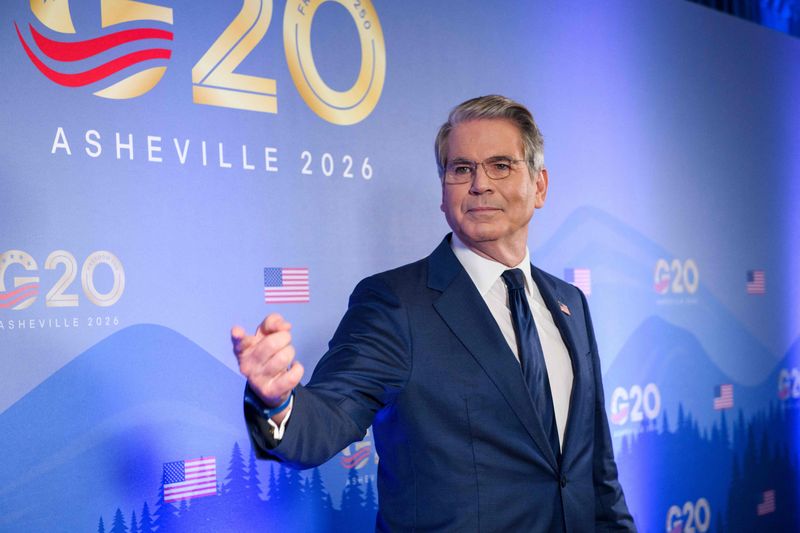
[Financial News] U.S. Treasury Secretary Scott Bessent said the Japanese yen is significantly undervalued and stressed the need for an active response from the Japanese government and the Bank of Japan (BOJ).
He argued that monetary policy normalization and clear communication with markets are necessary because yen weakness is fueling inflation in Japan.
At the same time, Bessent sought to calm concerns, saying that the U.S. economy continues to grow and that “the sharp rise in Treasury yields is not a serious situation.”
The Treasury Department said on the 1st (local time) that Bessent met with BOJ Governor Kazuo Ueda on June 30 on the sidelines of the G20 finance ministers’ and central bank governors’ meeting in Asheville, North Carolina. He also expressed these views in media interviews.
He said he strongly supports the decisive market and monetary policy measures Japan is taking to address the yen’s “significant undervaluation.” He also pointed out that yen weakness is raising import prices and increasing domestic inflationary pressure in Japan.
Bessent: “I believe the BOJ will take measures to strengthen the yen”
He also stressed that “establishing and communicating sound monetary policy is important” to stabilize inflation expectations and prevent excessive exchange-rate volatility. He reaffirmed that the United States and Japan should cooperate closely on shared macroeconomic issues.
Bessent also indicated that he expects Japan to take further steps to raise the yen’s value. In an interview with CNBC, he said he believes the Japanese government and the BOJ will take measures that lead to a stronger yen.
These remarks bolster expectations that the BOJ could raise interest rates again. Higher policy rates would narrow the interest-rate gap between the United States and Japan, potentially easing downward pressure on the yen.
The United States has recently focused on the possibility that yen weakness could affect not only Japan but also global financial markets. Japan is one of the world’s largest holders of U.S. Treasuries, raising concerns that instability in the yen and Japanese government bond markets could spread to U.S. financial markets.
Meanwhile, Bessent made strenuous efforts in media interviews on the sidelines of the G20 finance ministers’ meeting to ease market concerns about U.S. Treasuries.
On the 1st (local time), he told Fox Business, “I don’t think we are in any kind of serious situation” regarding U.S. Treasuries.
He said, “What happened during the month when the Treasury market was volatile is not important,” adding, “It was the same in August, and since January 20, 2025, when President Donald Trump took office, the U.S. bond market has performed better than those of any other major country in the world.”
Bessent: Strong Growth and Fundamentals Make Bond Market Concerns Excessive
He also said, “If you look at the components of bond yields, inflation expectations have remained stable so far,” expressing the view that recent bond-market concerns are excessive given the U.S. economy’s solid growth and its status as an AI superpower, among other economic fundamentals.
Bessent emphasized that “what is also important is that we are growing,” pointing to the continued growth of the U.S. economy despite a large fiscal deficit.
The turmoil in the U.S. Treasury market became particularly pronounced last month. Market analysts attribute it to a combination of surging oil prices caused by the war in Iran, growing concerns about U.S. government debt, and increased corporate bond issuance led by major AI companies. The Trump administration is in a difficult position, facing rising interest rates when it would prefer them to fall.
The Treasury Department’s unusual market intervention over yen weakness was also intended to help keep U.S. Treasury yields stable. If Japan had aggressively sold its U.S. Treasury holdings to defend the yen, prices would have been expected to fall, pushing yields higher.
[email protected] International Affairs Specialist Lee Seok-woo Reporter