Woo Jeong-yeop: “South Korea Spends Money in Washington but Sees No Results”—What Are the Three Major Flaws in Its U.S. Lobbying?
- Input
- 2026-09-02 13:30:34
- Updated
- 2026-09-02 13:30:34
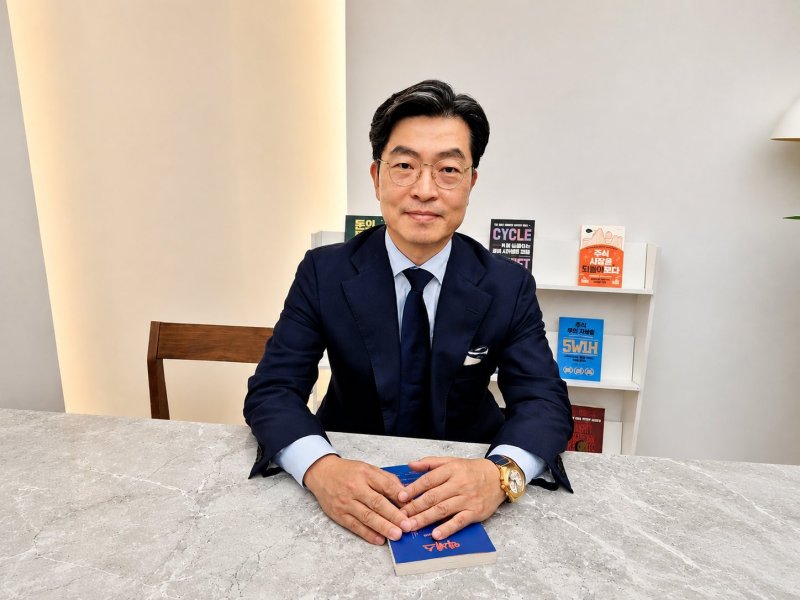
[Financial News] As the global trade environment undergoes rapid change and policy uncertainty grows amid the U.S.-China rivalry for hegemony and the launch of Donald Trump’s second administration, calls are growing for the South Korean government and companies to fundamentally change their lobbying strategies in the United States.
The country needs to move beyond approaches that rely on short-term issue resolution or personal networks and adopt a “broad-based policy response” that understands the U.S. policymaking structure and secures lasting allies in Washington, D.C.
In an interview with Financial News on the 2nd, Dr. Woo Jeong-yeop, a senior research fellow at the Hudson Institute, emphasized, “In the United States, lobbying is not an illicit backroom deal. It is a legalized, institutionalized industry and a means of responding to policy. If Korean companies and the government view lobbying merely as a cost, it will be difficult for them to communicate effectively with Washington’s political circles.” Woo recently published a book titled “Access,” which covers these issues.
In the United States, lobbying is an institutionalized policy activity—not something conducted in the shadows
In South Korea, the word “lobbying” often evokes illegal solicitations or secret deals. In the United States, however, it has become an institutionalized activity through which companies and organizations with interests at stake in policymaking and legislation convey their positions to policymakers.Dr. Woo explained, “After going through various scandals, the United States has developed by overhauling the relevant laws and systems and moving toward transparently disclosing lobbying activities. Anyone can knock on a lawmaker’s office door, but what matters is securing time and relationships in advance to speak with policymakers.”
In other words, the essence of American-style lobbying lies in creating structures and relationships that provide sustained access to the policymaking process, rather than relying on a one-time personal connection with a particular politician.
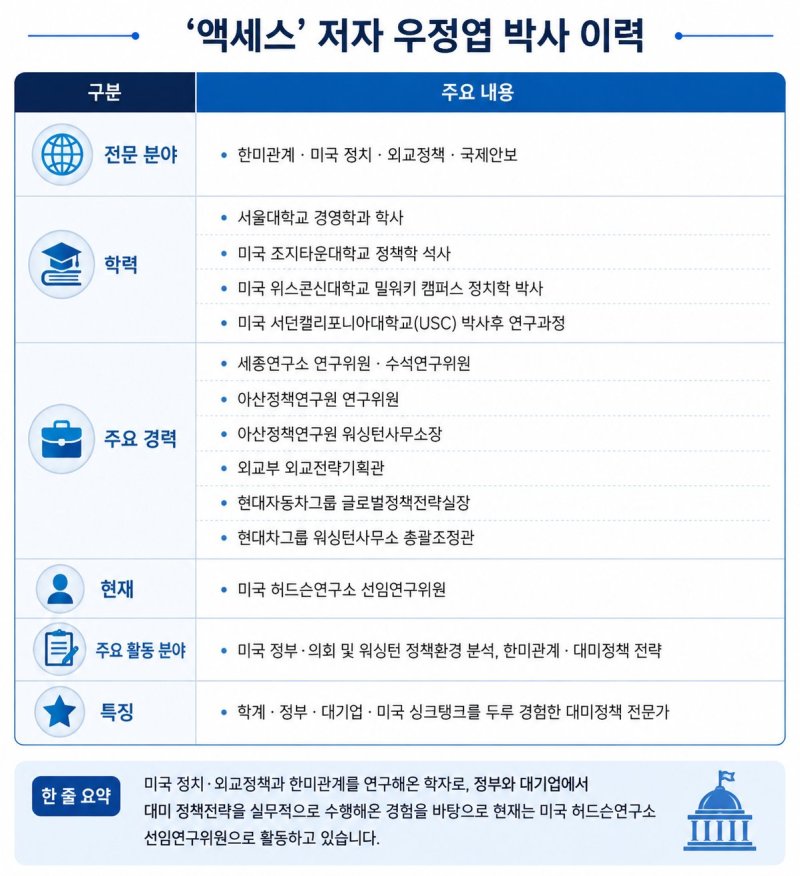
Dr. Woo pointed to cases in which U.S. political circles reacted against South Korea’s recent regulatory moves, highlighting the limitations of the country’s capacity to respond to policy issues in the United States.
“Korean companies and the government often look for prominent lobbyists or influential figures only after a problem has erupted,” he said. “It is difficult to succeed if lobbying is approached like hiring a lawyer after a lawsuit has already been filed.”
To gain influence in Washington, D.C., South Korea must build relationships with policymakers during normal times, before any specific issue arises, and consistently communicate positive messages about Korean companies and industries.
Dr. Woo noted, “Even when there is no immediate issue, relationships must be built within the Washington ecosystem and allies secured so they can be mobilized in a crisis. If organizations respond ad hoc after a situation occurs or replace lobbying firms whenever an administration or corporate executive changes, they accumulate no policy assets.”
The three major flaws in South Korea’s U.S. lobbying: “Personal connections are valued over policy expertise”
Dr. Woo identified three major problems with the U.S. lobbying strategies of the South Korean government and companies.The first is the lack of clear objectives. In many cases, lobbying itself becomes the focus without setting a clear goal for what should be obtained or what policy changes should be achieved.
The second is a strategy centered on reactive responses. Because action begins only after a policy or regulation has become reality, it is often difficult to reverse negative public sentiment and policy directions that have already taken shape in the United States.
The third is the practice of selecting lobbyists based on personal connections or fame rather than expertise. Dr. Woo said, “In South Korea, there is an expectation that a well-known and prominent American figure can solve anything in the United States. But in Washington, D.C., experts who deeply understand the relevant industry and policies and properly know the local policymaking structure are far more important.”

He explained that the ability to connect the interests of a particular industry with the logic of U.S. policymaking and explain that relationship is especially important, more so than simply having political connections.
He also identified corporate executives’ perception of U.S. policy response teams as mere cost centers as an issue that needs to be addressed.
Dr. Woo emphasized, “We live in an era when a single line of regulation or one policy can wipe out or create trillions of won in profits. Policy response should not be viewed as a cost center that merely spends money, but as a profit center that protects a company’s earnings and creates new opportunities.”
Particularly when policy changes in the United States directly affect the global operations of South Korean companies, U.S. lobbying should not be evaluated solely on cost efficiency. Rather than focusing only on direct results relative to investment, companies should regard reducing policy risks and building long-term friendly relationships as strategic assets in their own right.
“The message must remain consistent even when administrations and personnel change”
Dr. Woo also pointed out that, compared with countries such as Japan, Taiwan, and Israel, which wield relatively strong influence in the United States, South Korea’s messages to Washington, D.C., can waver with changes in government or corporate personnel.Dr. Woo said, “It is important to continuously identify and publicize positive examples that can change the perceptions of U.S. policymakers. Even when administrations or officials change, the message about how South Korea and Korean companies contribute to the United States must be conveyed consistently.”
He added, “It is time to stop merely calculating costs and begin making long-term structural improvements suited to the United States market and the way Washington, D.C., operates. U.S. lobbying should be viewed not as a one-time response to specific issues, but as a sustained policy capability for the country and its companies.”[email protected] Kang Jung-mo Reporter