Takaichi: “Long-term rates at 3% are determined by the market; fiscal management must be judged appropriately”
- Input
- 2026-09-02 08:24:17
- Updated
- 2026-09-02 08:24:17
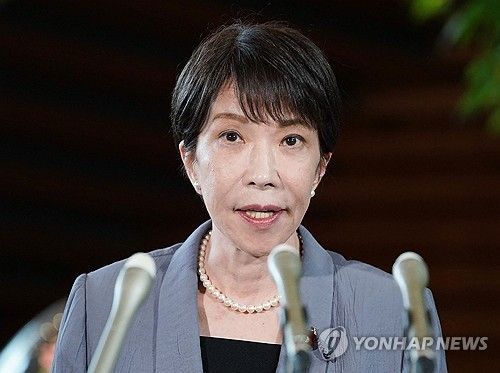
【Financial News, Tokyo = Correspondent Hye-jin Seo】Japanese Prime Minister Sanae Takaichi refrained from making a specific assessment of long-term interest rates, which have risen above 3% for the first time in 30 years, saying they are “determined by the market against the backdrop of various factors.” She indicated, however, that the government would closely monitor rate trends and reflect them in future budget planning and economic and fiscal management.
According to Nihon Keizai Shimbun (Nikkei) on the 2nd, Prime Minister Takaichi met with reporters at the Prime Minister’s Office the previous day and said, “Interest rates are determined by the market against the backdrop of various factors, including policy conditions in other countries.”
She added, “I will not comment because specific remarks by the prime minister about market trends could have an unexpected impact on the market.”
Takaichi also signaled that she would manage economic and fiscal policy while taking rising interest rates into account. “In economic and fiscal management, including budget preparation, it is only natural to assess and analyze various economic conditions, including interest-rate trends, and make timely and appropriate judgments,” she emphasized.
She also said the government would pursue budgetary reforms so that ongoing policies are reflected in the initial budget rather than relying on large-scale supplementary budgets. Takaichi said, “We will appropriately respond to necessary fiscal needs while achieving both a strong economy and fiscal sustainability.”
In Japan’s bond market the previous day, the yield on newly issued 10-year government bonds, a benchmark for long-term interest rates, rose as high as 3.005%. It was the first time in about 30 years, since 1996, that Japan’s long-term interest rates had entered the 3% range.
The rise in rates was also influenced by U.S. Treasury Secretary Scott Bessent’s call for Bank of Japan Governor Kazuo Ueda to normalize monetary policy.
On the 30th of last month local time, Bessent met Ueda in Asheville, North Carolina, and said, “I strongly support Japan taking decisive market and monetary-policy measures to address the severe undervaluation of the yen.”
He emphasized that “appropriate monetary-policy formulation and communication with the market are important” to stabilize inflation expectations and prevent excessive exchange-rate volatility. He also pointed out that the yen’s weakness was contributing to upward pressure on prices in Japan.
Bessent also assessed Japan’s long-term interest rates exceeding 3%, saying, “Japan is taking the right steps.” In the market, his remarks were interpreted as the United States effectively supporting an additional rate hike by the BOJ, strengthening expectations of an early increase.
Analysts say concerns about the U.S. Treasury market may also lie behind the United States’ support for Japan’s monetary-policy normalization. If Japanese interest rates rise, Japanese institutional investors could withdraw funds from U.S. Treasuries and move them into higher-yielding Japanese government bonds. This could reduce demand for U.S. Treasuries and potentially push up long-term U.S. interest rates.
[email protected] Hye-jin Seo Reporter