Himalayan Glacier Collapse Disaster: "Cracks and Other Warning Signs Detected Shortly Before the Disaster"
- Input
- 2026-09-02 10:11:14
- Updated
- 2026-09-02 10:11:14
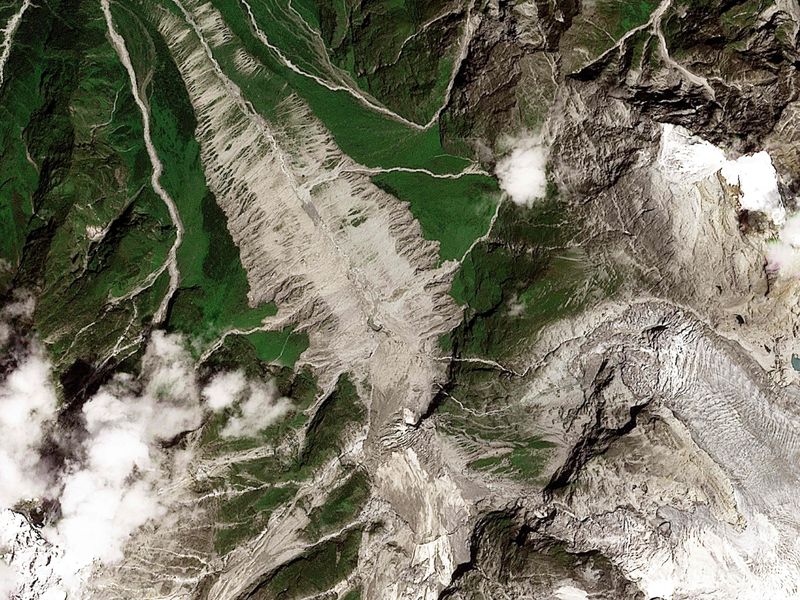
[Financial News] An international team of scientists has released a report stating that clear warning signs were observed at the site shortly before the Himalayan glacier collapse, which triggered massive landslides and flooding and caused devastating damage.
CNN reported on the first (local time) that a report released by HiRISK, a scientific consortium tracking environmental hazard data in Asia’s mountainous regions, confirmed that warning signs had emerged several days before the disaster. The glacial meltwater had visibly turned brown, while cracks were spreading across the surrounding rocky slopes.
Scientists noted that "a considerable number of lives could have been saved" if more comprehensive early warning systems had been in place downstream. According to the investigation, the initial debris flow moved so quickly that existing systems could not provide enough time for evacuation at the first affected areas, including the border checkpoint. However, downstream areas that had more than 10 minutes of lead time could have substantially reduced the damage through early warnings.
In fact, authorities from China and Nepal held talks in May to strengthen cooperation on monitoring natural disasters in the Himalayas. Although early warning devices had been installed at some glacial lakes in China, the area where the latest disaster occurred lacked an operational system capable of monitoring glacier-related hazards in real time.
Experts emphasized the urgent need for cross-border cooperation on disaster response, pointing to the vast and difficult-to-monitor terrain of the Himalayas. Austin Lord, a senior researcher at the nonprofit think tank Stimson Center, said, "This incident occurred in a monitoring blind spot, making it extremely difficult to detect in advance." He stressed, "It is essential to share information between Nepal and China and establish a joint system for analyzing cross-border risks."
[email protected] Yoon Jae-jun Reporter