German Government Blames Russia for Drone Attack at Leipzig/Halle Airport
- Input
- 2026-09-02 10:11:19
- Updated
- 2026-09-02 10:11:19
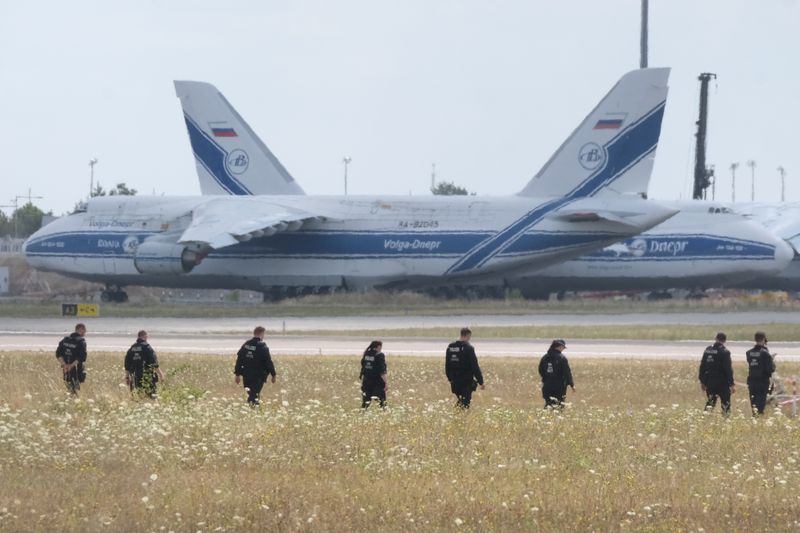
[Financial News] The German government officially identified Russia as being behind last month’s attempted drone terrorist attack at Leipzig/Halle Airport and launched sweeping retaliatory measures, including the closure of a consulate general and tighter regulations.
Euronews reported on the 1st (local time) that German Interior Minister Alexander Dobrindt said at a press conference that an assessment of the incident found that it "matches the typical form of Russia’s hybrid operations taking place in Europe."
A state of emergency was declared after drones carrying explosives were discovered at Leipzig/Halle Airport in eastern Germany during the night between the 4th and 5th of last month. Police used a robot to dismantle a device found near a Ukrainian cargo plane. Weeks later, another drone bearing traces of explosives was found.
Leipzig/Halle Airport plays a key role in transporting military supplies for the German military and its North Atlantic Treaty Organization (NATO) allies. It is also a hub for Ukraine’s Antonov Airlines.
German Foreign Minister Johann Wadephul announced that Germany would "take stringent measures against Russia, the perpetrator of the hybrid attack in Leipzig." He said the Russian Consulate General in Bonn would be closed by the 18th and that the Russian Cultural Center in Berlin would also be shut down. Germany also plans to tighten border checks on Russian nationals and increase pressure on Russia’s shadow fleet, he added.
Germany plans to place the incident on the official agenda of the NATO Council. Bild reported, citing German government sources, that Germany’s ambassador to NATO is expected to formally raise the issue of the hybrid attack as early as the 2nd.
German Chancellor Friedrich Merz had previously warned that Germany was being targeted by hybrid attackers. He initially took a cautious stance, referring only to the "possibility of foreign involvement," but the completion of the investigation into those behind the incident is understood to mean that Russia is now being directly targeted.
The Russian House of Science and Culture in Berlin, which has long been suspected of serving as a hub for espionage activities, was also included among the facilities slated for closure. Roderich Kiesewetter, a lawmaker from the conservative opposition, said that around 100 unidentified people were living at the facility and that its unusually high electricity consumption suggested it was a spy headquarters filled with surveillance equipment.
Meanwhile, Russia immediately issued a strong protest. Sergei Nechaev, Russia’s ambassador to Germany, categorically denied the allegations in a statement, saying, "Germany’s claims are baseless, absurd, and contrary to common sense." He warned that the sanctions would have an unprecedentedly damaging impact on relations between the two countries and said the German government would bear full responsibility for the consequences.
European Commission President Ursula von der Leyen said on X, formerly Twitter, that she had spoken by phone with Chancellor Merz and "expressed full solidarity with Germany in the face of Russia’s attacks."
EU foreign policy chief Kaja Kallas also emphasized, after meeting with EU defense ministers in Dublin, Ireland, that "Russia is trying to weaken our support for Ukraine through physical hybrid attacks, but it will not succeed." She added that the EU was preparing its broadest-ever sanctions against Russia.
[email protected] Yoon Jae-jun Reporter