"The culmination of 10 years of technology development"—Range Rover Electric unveiled, launching in South Korea in mid-next year
- Input
- 2026-09-02 09:00:00
- Updated
- 2026-09-02 09:00:00
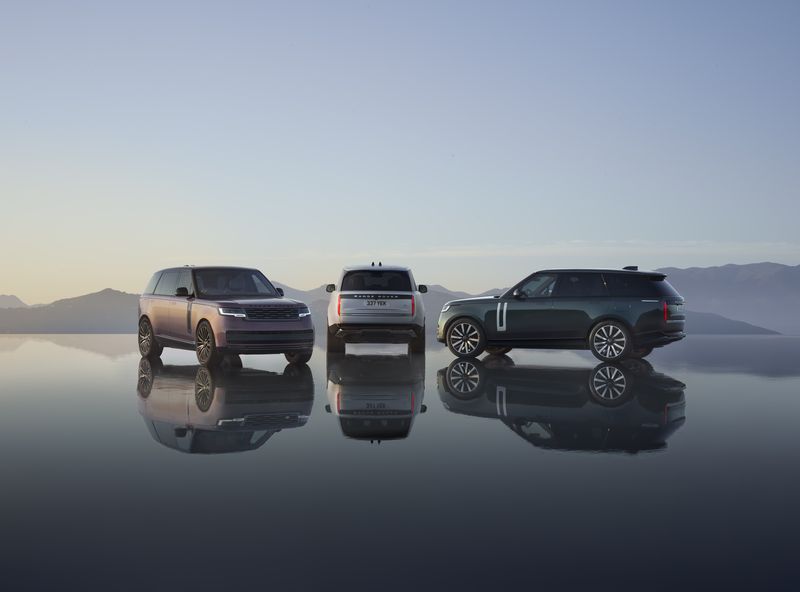
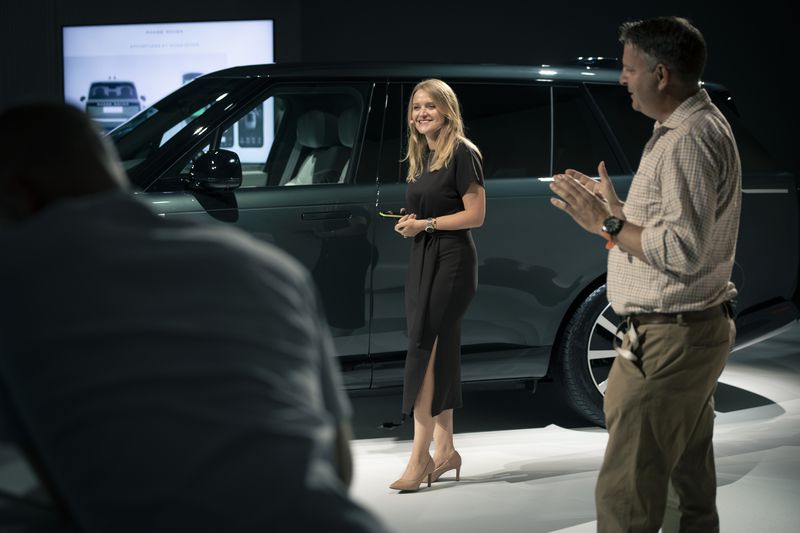
JLR said it has gone beyond simply replacing an internal-combustion engine with an electric motor. By combining exceptional quietness with powerful torque, the company aims to elevate the brand's long-standing concept of a "moving sanctuary."
On July 18 (local time), JLR unveiled Range Rover's first all-electric model, Range Rover Electric, to global media at its headquarters in Gaydon, the UK, and introduced its key features.
Jaguar Land Rover Korea also unveiled Range Rover Electric on the 2nd and announced that it would officially launch the model in South Korea in the middle of next year.
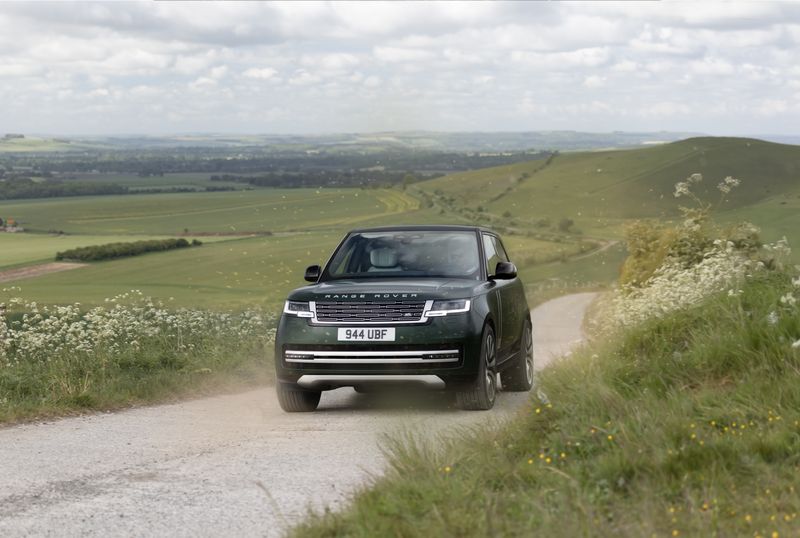
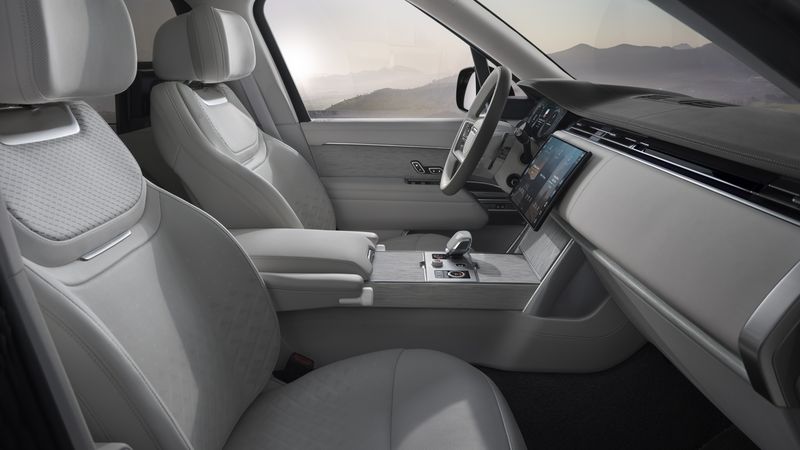
JLR established a clear principle during development: "Preserve the Range Rover DNA." The exterior retains Range Rover's distinctive restrained design, while aerodynamic refinements were made to the wheels and underbody, along with the adoption of a grille equipped with a cooling system. Above all, the company explained that it focused on enhancing the luxury and terrain-driving capability of the existing Range Rover through electrification technology.
■Outstanding performance on every surface
The vehicle is equipped with a 260 kW permanent-magnet electric motor on each axle. It delivers a maximum output of 550 horsepower (PS) and peak torque of 86.7 kg·m, providing power comparable to that of a large V8 engine.
It accelerates from a standstill to 100 km/h in 4.5 seconds. Overtaking acceleration from 80 km/h to 120 km/h takes just 2.7 seconds.
The motors use silicon-carbide semiconductors that control power in microsecond increments. This raises torque by 20% compared with conventional motors of the same size while reducing power losses. The technology is designed to deliver both the immediate response characteristic of electric motors and the smooth acceleration feel valued by Range Rover. As a result, the vehicle achieves high efficiency and outstanding performance on all road surfaces.
JLR also preserved the off-road capability often considered a weakness of electric vehicles. The Intelligent Driveline Dynamics system proactively limits traction loss by adjusting the torque sent to the rear wheels from 100% to 0%, depending on road conditions.
The newly developed Integrated Traction Management system controls motor speed within 50 milliseconds, managing wheel slip up to 100 times faster than an internal-combustion vehicle. It operates together with the single-pedal mode, which allows the driver to precisely control speed on inclines using only the accelerator pedal. From a standstill, the vehicle can start smoothly on slopes of up to 33 degrees, while it can climb gradients of up to 45 degrees while driving.
■Key electrification components developed and produced in-house
Range Rover Electric is equipped with a double-stack lithium-ion battery with a usable capacity of 118.5 kWh, comprising 344 prismatic cells. Its driving range on a single charge is up to 600 km under the European WLTP standard, or approximately 535 km based on the real-world driving standard presented by JLR.
The vehicle also reduces charging time through an 800V electrical system and split-charging technology. Using a 350 kW-class DC fast charger, the battery can be charged from 10% to 80% in approximately 22 minutes. A 10-minute charge adds 220 km of range under the WLTP standard.
JLR strongly highlighted its in-house development and production of key electrification components. The battery pack and electric drive unit were designed directly by JLR and are produced at the Electric Propulsion Manufacturing Centre (EPMC) in Wolverhampton, the UK. The battery pack was designed to withstand extreme conditions ranging from minus 40 degrees Celsius to 90 degrees Celsius.
Martin Limpert, Range Rover managing director, said, "Range Rover Electric is the culmination of 10 years of engineering and technology development." He added, "By combining an electrified powertrain with advanced chassis technology, we have delivered Range Rover's distinctive refinement and driving capability without compromise."
The new Range Rover Electric is scheduled to launch in two specifications: the standard-wheelbase Range Rover Autobiography and the long-wheelbase SV. Pricing and detailed specifications for the South Korean market will be disclosed later.
[email protected] Hak-jae Kim Reporter