'Range Rover Electric Erases Its EV Identity,' Delivering Weighty Yet Smooth Performance [FN Mobility]
- Input
- 2026-09-02 09:00:00
- Updated
- 2026-09-02 09:00:00
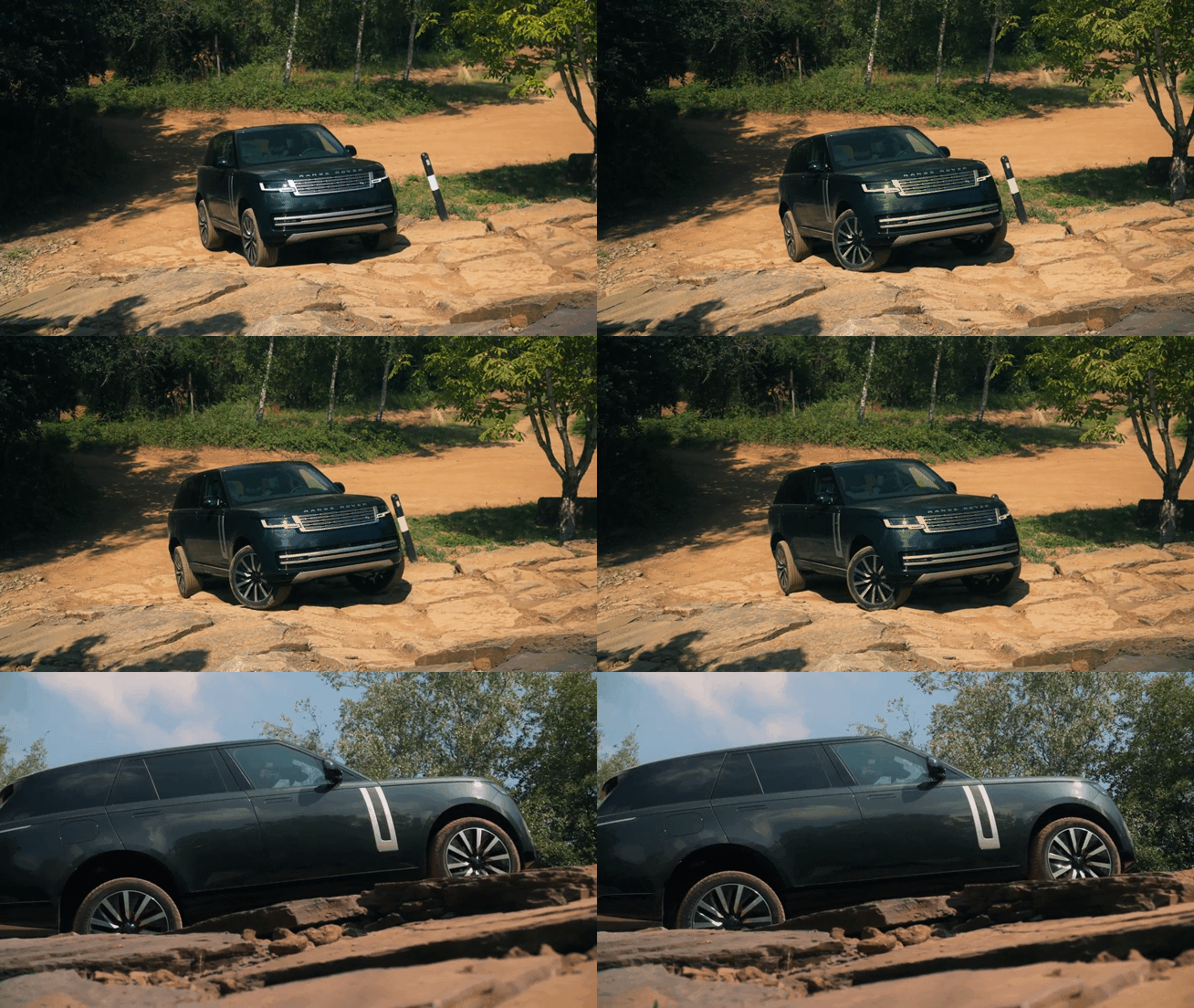
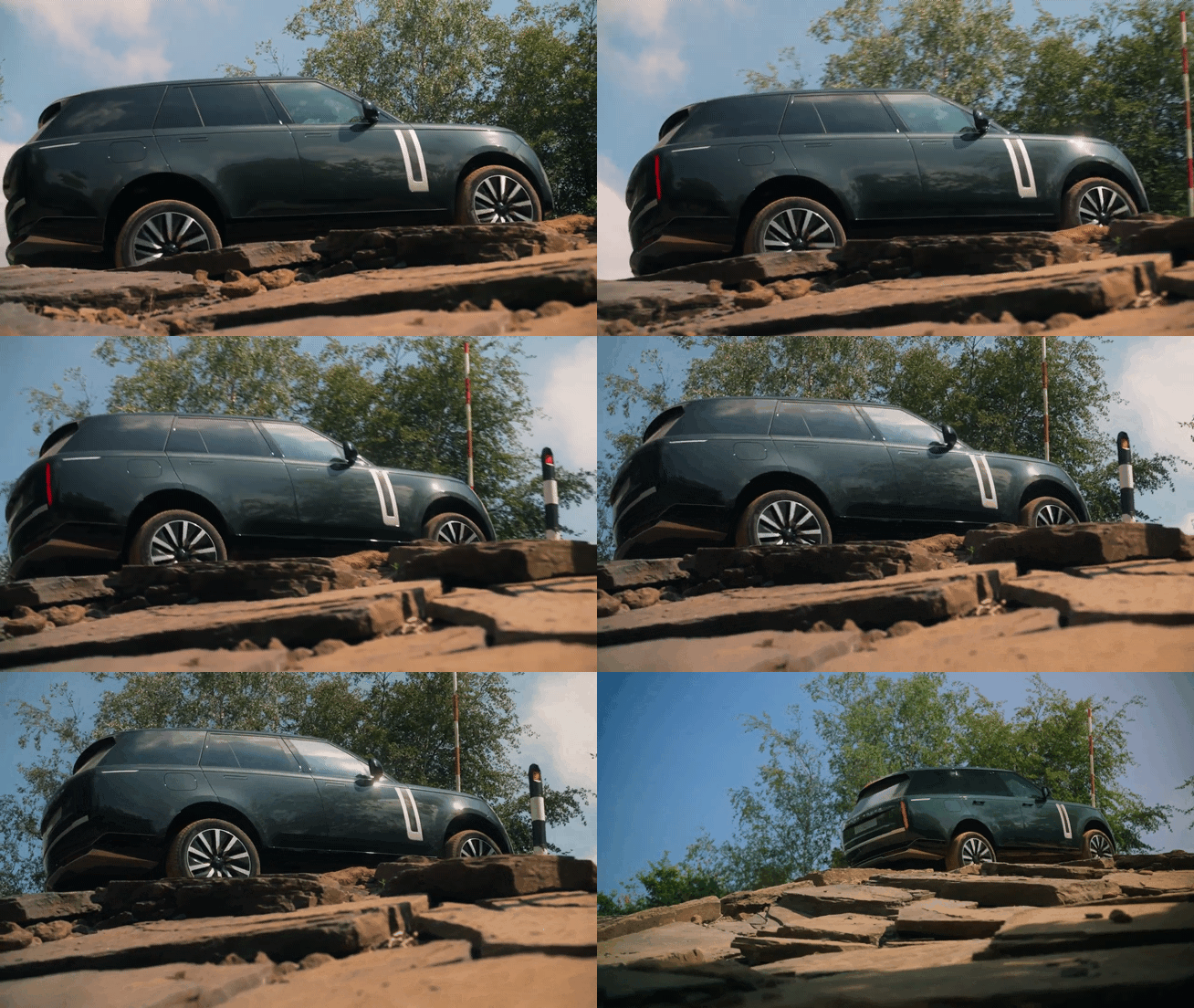
I set out to test-drive the Range Rover Electric after being told it was a fully electric vehicle, but I was struck by its weighty yet smooth feel from the moment I took hold of the steering wheel.
Whether driving on ordinary roads or off-road sections, the Range Rover Electric showed none of the sudden deceleration or unfamiliar feel typically associated with electric vehicles.
The sensation of holding the steering wheel was the same as in an existing internal-combustion Range Rover. The only noticeable difference was that the engine was almost inaudible, creating moments when I realized, "Ah, right—it is an electric vehicle."
■ Comfortable ride and quiet cabin
Gaydon, located not far from Shakespeare's birthplace, Stratford-upon-Avon, is home to JLR's headquarters, where the company develops and validates technologies for vehicles including the Range Rover.
On July 18 local time, a secure facility opened to a group of international journalists featured a test course that condensed a range of real-world conditions, including paved roads, off-road terrain, and steep slopes. There, the prototype of the electric version of the original luxury sport utility vehicle (SUV), the Range Rover Electric, made its appearance.
My first impression after getting into the Range Rover Electric was its weighty yet smooth handling and comfortable ride.
The comfort I felt on ordinary roads, off-road sections, and sloped paths alike made clear that there was little difference between the conventional internal-combustion Range Rover and its electric counterpart.
Before the test drive, a JLR representative emphasized, "The Range Rover's electrified powertrain will reduce cabin noise while enhancing the model's signature effortless performance and uncompromising driving capability." The explanation became easy to understand during the drive.
In ordinary driving, I selected Single Pedal mode, which allows the accelerator alone to control starting, speed, and stopping. Regenerative braking then felt noticeably smoother. Even when I suddenly lifted my foot off the accelerator, the vehicle did not feel as though it had stopped abruptly. I was able to continue driving safely and comfortably without pressing the brake.
■ Capability demonstrated off-road
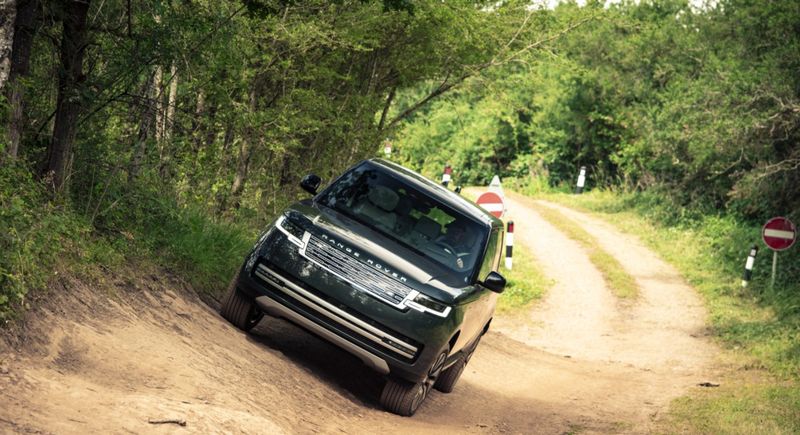
The Range Rover Electric's capability became even more apparent after it left the paved road and entered off-road terrain marked by bumpy dirt tracks and deeply rutted tire paths.
Even off-road, the ride was so good that it felt like driving on asphalt.
Although it was a large electric SUV with its battery mounted beneath the floor, the body did not sway significantly, and the actual driving experience was remarkably composed.
As the vehicle automatically detected the road surface and adjusted its driving, Single Pedal mode also operated smoothly off-road. The suspension adjusted automatically, responding to accelerator inputs and minimizing the discomfort of off-road driving.
The Range Rover Electric is equipped with new technology designed to provide precise control in any environment. JLR explained that Intelligent Driveline Dynamics can adjust rear-wheel torque from 100% to 0% to prevent loss of traction.
Single Pedal mode proved especially valuable on an extremely steep slope where the road ahead was barely visible.
After climbing the slope, I completely lifted my foot off the accelerator at the instructor's direction. The vehicle stopped steadily at the top of the incline before a sharp descent. When I lightly rested my foot on the accelerator, the vehicle began moving slowly downhill, and its speed could be adjusted in fine increments by varying the pressure on the pedal.
Next came a side slope, where the vehicle traversed the incline with its body tilted to one side. After raising the air suspension, we began moving. My body leaned to one side, but once the vehicle climbed the slope slowly and I pressed the pedal, it began moving smoothly.
The anxiety that it might tip over soon faded as the vehicle crossed the tilted slope steadily, allowing me to experience the Range Rover Electric's ride comfort once again.
Matt Becker, JLR's vehicle engineering director, said, "The key to the Range Rover Electric is its ability to deliver a comfortable and refined experience on any surface while also providing outstanding performance. We worked hard to preserve these characteristics. From low-traction, rough terrain to smooth highways, the Range Rover Electric maintains an impressively stable and precise driving feel."
[email protected] Hak-jae Kim Reporter