Incheon Airport Terminal 1 to Undergo ‘Nonstop Renewal’... Schiphol Model to Be Adopted
- Input
- 2026-09-02 10:00:00
- Updated
- 2026-09-02 10:00:00
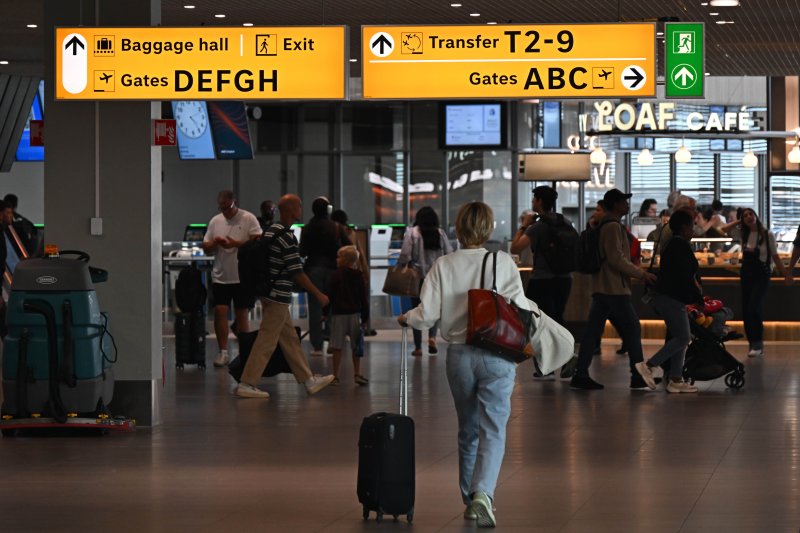
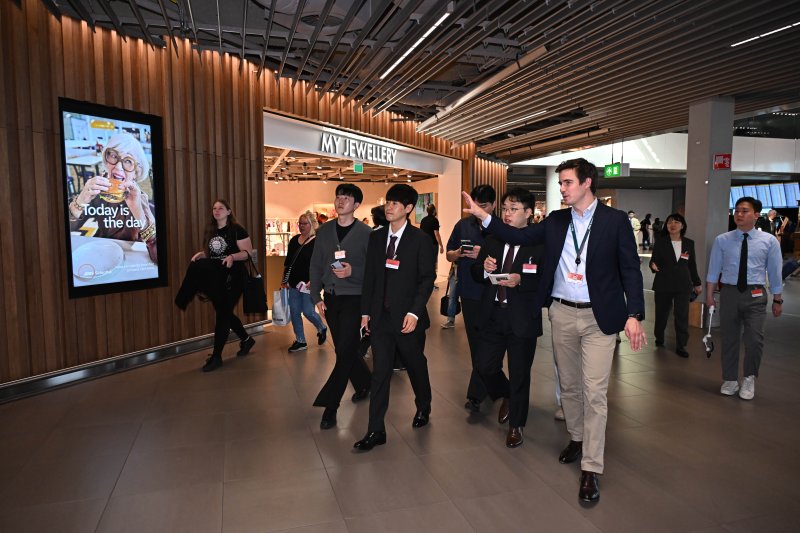
【Amsterdam, Netherlands = reporter Kim Dong-ho】At Amsterdam Airport Schiphol in the Netherlands, where renewal work is underway, the passenger terminal maintained its characteristic orderly and calm atmosphere despite the crowds, seemingly at odds with the “under construction” status. Centered around its duty-free shops, Schiphol cleverly separates passenger flows for departures and arrivals. Its warm wood-toned interiors and artistically designed structures also provide travelers with a comfortable experience. The airport has expanded in stages while remaining fully operational, completely separating construction zones from passenger routes with temporary partitions. This suggests that the key directions for Incheon Airport Terminal 1’s renewal should go beyond simply refurbishing aging facilities to include efficient reconfiguration of passenger flows and traveler-friendly spaces.
Incheon International Airport Corporation plans to actively adopt the successful example of Amsterdam Airport Schiphol in the Netherlands, a model of “nonstop renovation,” ahead of the full renewal of Incheon Airport Terminal 1 (T1), which is entering its 25th year of operation. As major hub airports worldwide rush to expand their massive infrastructure in response to strong growth in global air travel demand, Incheon Airport is also embarking on an extremely challenging renewal project. It will invest KRW 1.8 trillion to transform the existing terminal into a state-of-the-art facility without suspending operations. To maintain operational continuity while carrying out a comprehensive renovation, the airport plans to benchmark Schiphol’s meticulous phased innovation strategy, centered on securing alternative infrastructure in advance and conducting construction in divided nighttime shifts.
Incheon Airport T1 to Benchmark Schiphol’s ‘Phased Innovation’
Tim Roas, head of international cooperation at Amsterdam Airport Schiphol, said at the airport in Amsterdam, Netherlands, on September 1 (local time), “Remodeling a terminal while keeping it operational is like performing surgery with a patient’s heart left open.” He emphasized, “To minimize inconvenience for passengers, we are pursuing cyclical redevelopment centered on securing boarding piers in advance and carrying out work at night.”According to an analysis by Airports Council International (ACI), global air travel demand is expected to maintain strong annual growth of 3.4% through 2043. Airports that cannot accommodate the rapidly increasing number of passengers face severe bottlenecks and declining service quality, putting them at risk of falling behind in the competition among hubs. Incheon Airport has proactively secured world-class hardware capable of handling 106 million passengers annually by successfully completing its fourth-phase expansion. However, T1, which first opened in 2001 and has served as South Korea’s gateway for more than 25 years, now faces limitations in incorporating the latest energy-efficiency standards and strengthened safety regulations amid aging facilities.
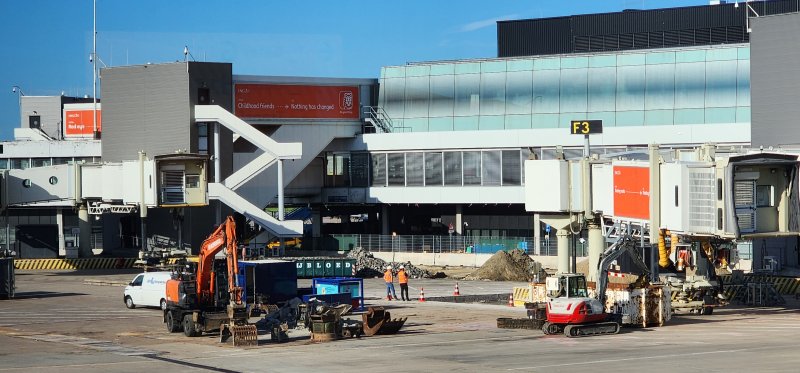
Incheon Airport is therefore paying close attention to the innovative example of Amsterdam Airport Schiphol, one of Europe’s leading hubs, which marks its 110th anniversary this year. Located near the city center, Schiphol is effectively unable to expand its external site physically. It is undertaking a comprehensive improvement project costing a staggering KRW 16 trillion (approximately €10 billion), with completion targeted for 2035. The airport must handle about 70 million passengers annually. To preserve the advantages of its single-terminal structure while reducing the congestion passengers experience, it moved security screening and immigration checkpoints from the existing first-floor departure level to a newly built mezzanine. In addition, Schiphol adopted a sequential transition strategy: it plans to open a new A-pier on available land south of the airport before the 2027 holiday season, first shifting passenger demand to the new pier and then proceeding with the remodeling of existing terminal areas in stages.
Tim, head of international cooperation at Amsterdam Airport Schiphol, said, “Because there was no alternative space, it was unavoidable to carry out the nonstop renewal while keeping the airport operational in order to handle immediate passenger demand.” He added, “This created complex challenges, including narrower passenger routes due to the installation of safety barriers and a temporary decline in passenger satisfaction during construction.” He continued, “Passenger satisfaction in the affected areas temporarily declined because of the unavoidable inconvenience during construction. However, after the work was completed and the newly renovated facilities opened, satisfaction rebounded significantly and rose sharply,” citing the project as a successful example of renewal.
Concerns Over Construction Delays From Nonstop Work... ‘Temporary Terminal’ Is Key
Building on Schiphol’s approach, Incheon Airport will also launch its massive T1 comprehensive improvement project, with a total budget of KRW 1.8 trillion. Detailed design, currently about 20% complete, is accelerating. The airport plans to finalize the design in September 2027, begin full-scale construction in 2028, and complete the project in 2035. The work will include replacing all mechanical, electrical, telecommunications and firefighting systems—the terminal building’s nervous system—as well as introducing a state-of-the-art security system that subjects all checked baggage to 3D high-speed screening immediately after check-in. A large integrated immigration and departure hall will also be created to significantly reduce waiting times for departure procedures.However, a massive nonstop construction project—comparable to replacing an airplane’s jet engine entirely in midair—comes with practical limitations and considerable concerns. As Schiphol’s case shows, much of the construction must be carried out during late-night hours, when restrictions are greater, to minimize the impact on airport operations. This inevitably leads to sharply higher labor costs and difficulties securing workers. A substantial increase in the project’s overall cost and an extended construction period are therefore unavoidable. If a specific area were completely closed, or shut down, in favor of construction speed and convenience, T1’s passenger-handling capacity would plunge from the 54 million passengers it must accommodate annually to 30 million to 40 million. That could trigger an uncontrollable and massive disruption to airport operations.
Ultimately, before launching the full renewal of T1, securing in advance a so-called “temporary replacement terminal” capable of fully making up for any loss of passenger-handling capacity throughout the lengthy construction period is being identified as the single most critical factor determining the project’s success or failure.
Jo Seong-mi, head of the Management Strategy Team at Incheon International Airport Corporation, explained, “The construction of a new Terminal 3 would be a much larger long-term project in terms of both budget and construction period, making it unsuitable for short-term passenger dispersal.” She added, “We are currently in close discussions with the Ministry of Land, Infrastructure and Transport (MOLIT) to secure an alternative boarding area that can be connected to existing infrastructure and used relatively quickly to accommodate some of the airline demand.”
[email protected] Kim Dong-ho Reporter