Quantum computing alliance among South Korea, Japan and Taiwan brings Yonsei, Keio and NTU together
- Input
- 2026-09-01 21:23:13
- Updated
- 2026-09-01 21:23:13
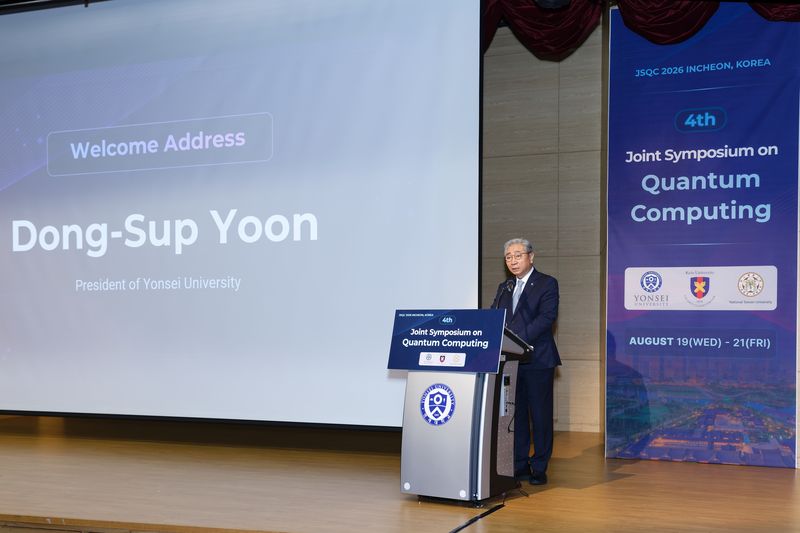
[Financial News] Leading universities from South Korea, Japan and Taiwan are joining forces across borders to pool their research capabilities in quantum computing, a field emerging as a key battleground in the global race for technological supremacy.
According to Yonsei University on the 1st, its Quantum Information Technology Research Institute successfully concluded the 4th International Joint Symposium on Quantum Computing (JSQC 2026) in collaboration with Keio University and National Taiwan University. The event was held for three days from Aug. 19 to 21 at Underwood Memorial Library on Yonsei University International Campus.
JSQC is a regular academic collaboration platform launched in March 2023, when the three major East Asian universities signed a trilateral memorandum of understanding (MOU) to expand technological cooperation and personnel exchanges in quantum computing. The symposium was first held at Yonsei University in 2023, then at National Taiwan University in 2024 and Keio University in 2025. Marking its fourth edition this year, it returned to South Korea and further strengthened the foundation for a sustained multilateral research alliance.
At this year's symposium, participants focused on a wide range of applied research across industries, from chemical system simulations for drug and materials development to error-correction technologies aimed at overcoming the current limits of quantum technology, as well as next-generation hardware and neural network algorithms.
The keynote speakers included Professor Kyungsun Moon, the first head of Yonsei University's Quantum Information Technology Research Institute, along with Professor Kwan Si-seong of National Taiwan University, Professor Naoki Yamamoto of Keio University, and Professor Jaewan Kim of the Korea Research Institute of Standards and Science (KRISS). They outlined the future direction of quantum technology. A poster session was also held for early-career researchers at the master's and doctoral levels to present their findings, fostering active exchanges aimed at nurturing future specialists.
Park Sung-soo, head of Yonsei University's Quantum Information Technology Research Institute, said, "Through this symposium, we shared the latest research achievements in quantum computing and explored new possibilities for cooperation." He added, "We will continue to contribute to the development of the quantum computing research ecosystem through sustained international exchanges and joint research."
[email protected] Kim Man-gi Reporter