Trump Presses for Rate Cuts, Saying Growth Does Not Cause Inflation
- Input
- 2026-09-01 18:17:48
- Updated
- 2026-09-01 18:17:48
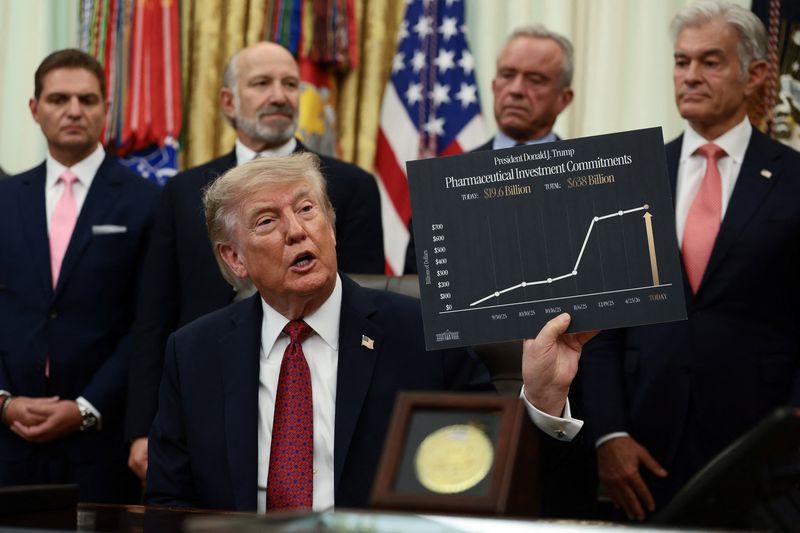
At a White House event on July 31 local time focused on lowering prescription drug prices, Trump said, "We could have gross domestic product (GDP) growth of 14%, 15%, 16%, even 20%." He added, "Growth does not cause inflation." His remarks were a direct rebuttal to the Fed's logic for keeping rates high, or even raising them further, because of inflation.
The Fed left its benchmark rate unchanged at 3.50% to 3.75% in July. At the time, three members of the Federal Open Market Committee (FOMC) argued instead for a 0.25 percentage point increase. In a Jackson Hole speech on the 28th, Kevin Warsh, Chair of the Federal Reserve, suggested that further rate hikes could still be possible, saying there is "work to do" unless officials gain confidence that inflation is falling fast enough toward the Fed's 2% target.
Trump, by contrast, argued that U.S. interest rates should be among the lowest in the world. "In the past, when good economic data came out, rates went down," he said. "Now, when good numbers come out, rates go up because people are too afraid of inflation."
Trump's argument rests on the idea that economic growth does not always lead to inflation. If productivity and production capacity expand along with demand, prices may not come under strong upward pressure even when the economy grows quickly. On the other hand, if demand rises faster than the economy's ability to produce, inflationary pressure can build. Still, the growth rates Trump cited are far above the current pace of the U.S. economy. In the second quarter of this year, real U.S. GDP grew at an annualized rate of just 1.5%.
On the same day, growth was also the central message the United States put forward at the Group of Twenty (G20) finance ministers and central bank governors meeting in Asheville, North Carolina. Speaking to reporters, Bessent said, "Since the global financial crisis and COVID-19, the world has been flooded with debt." He added, "The only way out is to solve it through growth."
Global debt reached a record high of about $353 trillion this year. The United States is also facing growing concerns over fiscal deficits and rising interest costs as national debt has surpassed $40 trillion. Heavy Treasury issuance and worries about fiscal soundness are also pushing investors to demand higher yields on long-term bonds, adding to upward pressure on long-term rates.
U.S. Treasury yields have in fact surged again recently. On the day, the yield on the 10-year Treasury note climbed above 4.75% intraday, reaching its highest level since January last year. Inflation concerns also returned as oil prices rose above $90 a barrel amid renewed fighting in Iran.
Bessent, however, dismissed concerns about the U.S. Treasury market as excessive. In an interview with CNBC, he said, "First, I don't know where the turmoil in the Treasury market is." He added, "This year, the U.S. Treasury market has been the best performer among major countries."
In the end, the Trump administration's answer can be summed up as a head-on push for growth. Bessent is arguing that raising growth would expand the economy and tax revenue, easing the burden of national debt, while also stressing that the fundamentals of the U.S. Treasury market remain strong.
[email protected] Reporter