Jeju Island to Receive Record 2.3481 Trillion Won in State Funding; AX and Workation Projects Head to the National Assembly
- Input
- 2026-09-01 16:27:15
- Updated
- 2026-09-01 16:27:15
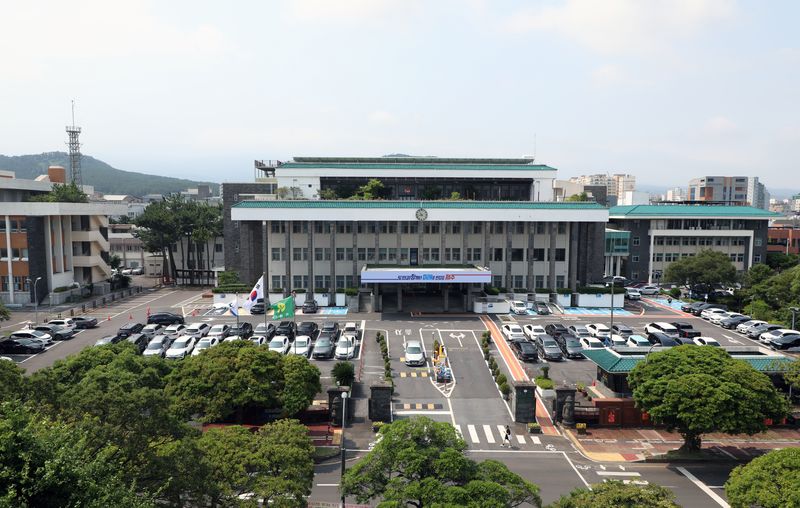
[Financial News, Jeju = Reporter Jung Yong-bok] State funding for Jeju projects in the 2027 budget proposal has been tentatively tallied at 2.3481 trillion won. Although this is the largest amount ever, the government proposal does not fully include key initiatives such as artificial intelligence transformation (AX) demonstrations and a workation hub, which Jeju Island is promoting as future growth engines. The final scale is expected to depend on the National Assembly’s review.
According to Jeju Special Self-Governing Province on the 1st, 2.3481 trillion won in Jeju-related state funding was included in the 2027 government budget proposal approved at the State Council of South Korea earlier that day.
That is an increase of 113.9 billion won, or 5.1%, from the 2.2342 trillion won in state funding in Jeju Island’s 2026 main budget, which the province used as the comparison basis. After first surpassing 2 trillion won in 2025 with 2.0659 trillion won, the figure will remain above 2 trillion won for a third consecutive year.
By year, the amount rose from 1.6709 trillion won in 2022 to 1.8433 trillion won in 2023 and 1.8370 trillion won in 2024, then to 2.0659 trillion won in 2025, 2.2342 trillion won in 2026, and 2.3481 trillion won in the 2027 government proposal.
However, this figure is only a provisional amount reflected in the government budget proposal. The final state funding total for next year will be confirmed only after deliberation and approval by the National Assembly.
There were also downward adjustments for some large-scale projects. Budget for the National Sports Festival and National Para Games operations and facility renovations was cut by 15.7 billion won from the previous year, while funding for the Jeju public wastewater treatment facility modernization project was reduced by 42.2 billion won in the government proposal. The combined reduction for the two projects reached 57.9 billion won, but total state funding still increased.
The Jeju Account under the Regional Balanced Development Special Account also grew larger. The 2027 Jeju Account was set at 739.8 billion won, up 37.9 billion won, or 5.4%, from this year, marking another record high.
The Jeju Account is a separate account within the Regional Balanced Development Special Account dedicated to Jeju Special Self-Governing Province. Because it serves as a key funding source for regional development and pending projects tailored to Jeju’s characteristics, how it is used is just as important as the overall increase in state funding.
The government proposal also took the first step on some of Jeju’s future-industry projects. It included 1 billion won for the Four National Science and Technology Institutes–Jeju Joint Campus. Jeju has asked the government to support the project, which it envisions as a base for educating talent in clean energy, space, bio, and mobility industries on the island.
The proposal also included 250 million won for building Jeju’s ship maintenance, repair and overhaul (MRO) industrial ecosystem and 1.52 billion won for establishing the Jeju Marine Bio Functional Ingredient Center.
The energy transition budget was even larger. The proposal set aside 71.2 billion won for private-sector electric vehicle adoption. It also included 13.78 billion won for the Power-to-Heat (P2H) project, which converts renewable electricity into thermal energy, 9.7 billion won for hydrogen vehicle subsidies, and 7 billion won for hydrogen charging station installation.
Another 8.48 billion won was allocated for building Jeju as a carbon-neutral leading city. In Jeju, where the share of renewable power generation is high, the government proposal reflected funding that combines electric vehicles, hydrogen, and the use of surplus electricity as part of a broader energy transition.
The proposal also included infrastructure, primary industry, and tourism projects. It allocated 4 billion won for expanding National-Aid Local Road No. 99 on Namjo-ro, 3.39 billion won for opening roads around the Jeju Civilian-Military Complex Port, and 27.73 billion won for the Jeju public wastewater treatment facility modernization project.
It also set aside 11.2 billion won for a rental-type smart farm and 9 billion won for a Marine Healing Center. Another 1 billion won was reflected for the Jeju International Citrus Expo.
Lottery Fund projects total 209.2 billion won. The money is expected to go toward support for small business owners and vulnerable groups, improved mobility rights for transportation-disadvantaged residents, and efforts to revitalize the local economy.
On the other hand, several of the projects Jeju Island requested from the government as future strategic initiatives either failed to clear the government proposal threshold or were only partially reflected.
A representative example is the Jeju AX transformation demonstration (PoC). Jeju Island is pushing a project to demonstrate an AI data center powered by renewable energy and to apply AI to region-specific industries such as energy and space.
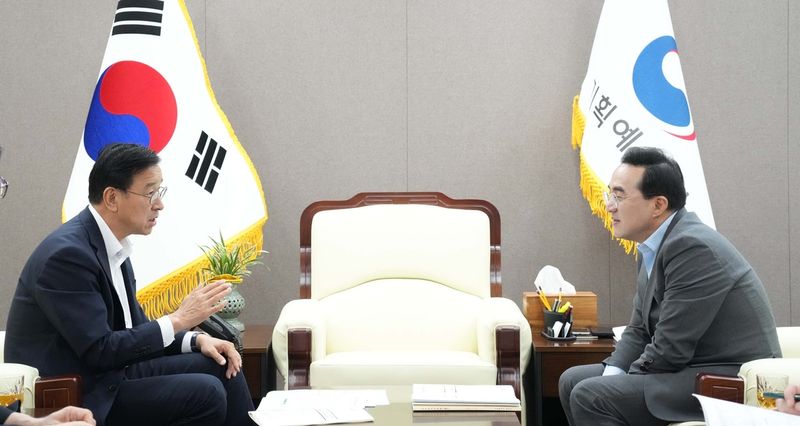
In July, Governor Wi Seong-gon met with Minister of Planning and Budget Park Hong-keun and jointly proposed the AX transformation initiative and the Four National Science and Technology Institutes–Jeju Joint Campus. While the joint campus received 1 billion won in the government proposal, the AX demonstration project will need to secure funding again at the National Assembly stage.
The plan to attract and operate a workation hub center for global remote workers, the Jeju Resource Circulation Cluster, and the Jeju 4.3 Peace Park revitalization project were also cited as major items needing supplementation.
Jeju Island plans to work with local lawmakers and the Jeju Special Self-Governing Provincial Council to request new funding for projects left out of the proposal and increases for some existing projects during the National Assembly’s budget review.
The government’s total national spending for 2027, finalized on the day, is 820.9 trillion won, up 12.8% from this year. Jeju’s 5.1% increase in reflected state funding is lower than the growth rate of total national spending. However, because the composition of projects and the scope of accounting differ between total national spending and funding for a specific region, there are limits to directly comparing budget-securing performance based only on the growth rate.
Jeju Island also used 2.2342 trillion won in 2026 state funding as its comparison basis this time because that figure refers to the state funding reflected in Jeju Island’s 2026 main budget. It differs from the provisional amount tallied when last year’s government budget proposal was announced, so the two figures should be distinguished when making comparisons.
In the end, the real impact on Jeju’s finances next year will depend less on the record-breaking total and more on which projects receive funding and how much. The remaining tasks are to grow the future-industry projects that received their first budget in the government proposal into full-scale programs and to revive the AX, workation, and Jeju 4.3-related projects that were left out at the National Assembly stage.
Governor Wi Seong-gon said, "We worked to reflect Jeju’s pending issues and future strategy projects in the government budget proposal as much as possible," adding, "During the National Assembly review as well, we will cooperate with local lawmakers and the provincial council to secure additional funding for key projects and deliver results that residents can feel."
[email protected] Jung Yong-bok Reporter