"Samsung SDI to Benefit from Surge in ESS Demand Driven by U.S. AI Power Shortages" — KB Securities
- Input
- 2026-09-02 05:59:00
- Updated
- 2026-09-02 05:59:00
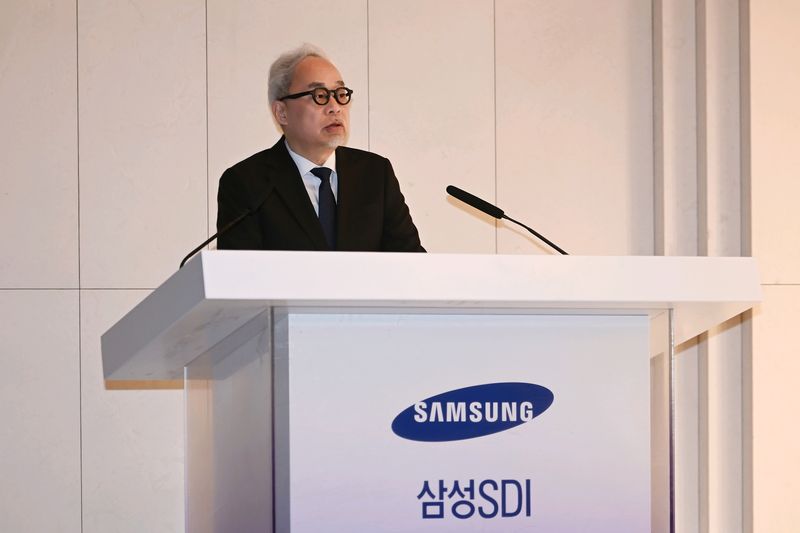
On the 2nd, KB Securities explained, "Weak EV sales and expanding market share by Chinese competitors are burdens, but ESS growth is expected."
Changes in U.S. power-grid policy were identified as a key investment point. KB Securities analyst Jeon Woo-je explained, "As rapidly growing AI-related power shortages in the United States prompted the launch of policies to ease grid constraints, demand for behind-the-meter (BTM) ESS, which is directly connected, began to increase initially from the end of 2025." He added, "Samsung SDI converted EV facilities that were under construction in the United States into ESS facilities at the right time, allowing it to benefit from power shortages from 2026 to 2030."
The report also detailed the benefits expected under each policy timeline. Following the approval of the Co-location Order by PJM Interconnection (PJM), the largest U.S. power grid, at the end of 2025, behind-the-meter (BTM) expansion at AI data centers (AIDC) has been accelerating. Once the North American Electric Reliability Corporation (NERC) finalizes its reliability standards in 2027–2028, large-scale ESS units for stability at AIDCs will become mandatory.
Jeon said, "The increase in on-grid capacity will follow after 2028, but current AIDC demand is overwhelming supply, so there are no concerns about cannibalization between BTM and on-grid systems." He added, "Samsung SDI is a leader not only in general-purpose ESS but also in specialized batteries for AIDCs, including BBU/UPS, and is expected to continue benefiting even after 2029–2030, when front-of-the-meter (FTM) connections expand." Samsung SDI holds a 40%–50% share of the global UPS market, while the fact that mass production of solid-state batteries is just one year away was also assessed as a premium factor.
The improvement in earnings is also expected to be substantial. Sales in 2026 and 2027 are estimated at 16.075 trillion won and 19.337 trillion won, respectively, with growth expected to continue. ESS, with sales of 427 billion won and 761.6 billion won, respectively, is expected to drive most of the growth. Operating profit is projected to improve to 341.9 billion won in 2026, marking a return to profitability, and 1.4238 trillion won in 2027.
[email protected] Kim Dong-chan Reporter