Jeju audit committee to examine the entire process of agricultural, fisheries subsidies; full audit of spending since 2023 begins
- Input
- 2026-09-01 15:13:18
- Updated
- 2026-09-01 15:13:18
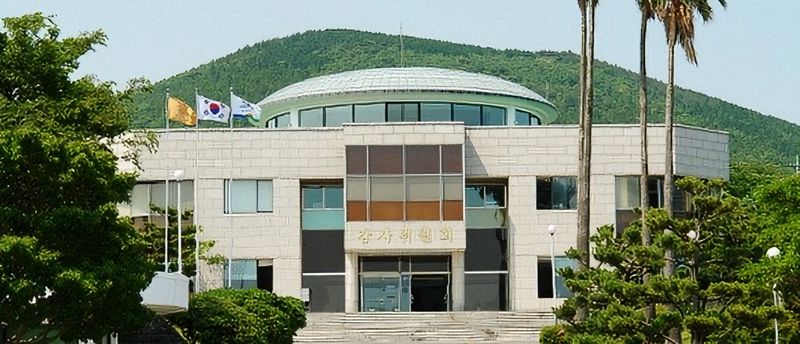
[Financial News, Jeju = Jung Yong-bok] The entire process of subsidies injected into Jeju's agriculture, livestock and fisheries sectors, from business selection to spending, settlement and the post-management of facilities and equipment acquired with public funds, has come under scrutiny. Because agriculture, forestry and fisheries account for more than six times the national share in Jeju's economy, a key focus will be whether limited public funds were allocated to the right recipients and used for their intended purpose.
According to the Jeju Special Self-Governing Province Audit Committee on the 1st, the committee launched a full audit that day into the management and execution of subsidies in the first-sector industries for 2026, targeting Jeju Island, Jeju City and Seogwipo City. The audit will be conducted by Audit Team 2 of the administrative audit division through the 21st.
After a preliminary audit from Aug. 25 to 31, the committee has now moved into the full on-site inspection and document verification stage. The audit covers all work related to subsidies in the agriculture, livestock and fisheries sectors provided since Jan. 1, 2023.
Unlike a comprehensive audit, which reviews an institution's overall organization, personnel and accounting, a special audit focuses on a specific area such as subsidies or contracts. This review will follow the entire process, from the initial budgeting and disbursement of subsidies to asset management after the project ends.
First, the committee will check whether eligibility requirements and evaluation standards were properly applied during the public call and business selection process. It will also examine whether any reviews favored specific applicants or whether businesses that did not meet the requirements were selected.
It will also look into whether subsidy recipients actually paid the self-funding amounts they had promised. Self-funding refers to the portion of total project costs that the business operator must cover directly, and it is a key condition for confirming accountability and the ability to carry out the project.
The audit will also verify whether the necessary administrative procedures, such as permits and approvals, were properly completed during project implementation and whether the subsidies were used for their approved purpose. It will also cover whether spending records match the actual purchases of facilities and equipment, and whether settlement reviews were properly carried out after project completion.
The audit does not end when the project is finished. It will also examine post-management of subsidized assets, including whether buildings constructed with subsidies or machinery and equipment purchased with them were registered in the asset ledger, and whether they were disposed of or used for other purposes without approval.
The significance of this audit is also reflected in Jeju's industrial structure. According to the Jeju Agricultural Statistics System (JASIS), agriculture, forestry and fisheries accounted for 10.3% of total industrial output in Jeju in 2024. That is more than six times the national share of 1.6%.
Although Jeju's agriculture, forestry and fisheries share has fallen sharply from 33.2% in 1985, it remains an important pillar in a regional industrial structure with limited large-scale manufacturing. Against that backdrop, the quality of subsidy selection, execution and management for strengthening the competitiveness of the sector can directly affect policy effectiveness and fairness.
Jeju has also seen cases in which subsidy management in the first sector led to a criminal investigation after an audit. During a 2024 comprehensive audit of Jeju City, the committee found suspected violations of subsidy-related laws in the selection process for a livestock manure joint resource recovery facility subsidy project and requested an investigation by the Jeju Provincial Police Agency. Although separate from this special audit, the case shows how important management is from the very first stage of selecting subsidy recipients.
Similar management gaps have also been found in subsidy audits in other sectors. In a special audit last year on subsidy execution and management in the culture, tourism and sports, as well as land and regional development sectors, conducted on Jeju Island and the two administrative cities, the committee uncovered 21 types of improper practices.
The committee demanded 41 administrative measures in total, including six corrective actions, 22 cautions, one warning and 12 notifications. It also ordered personnel measures for 21 people, including public officials, and financial recovery measures totaling 1.279 million won.
At the time, cases were found in which the results of deliberations by the Local Subsidy Management Committee were not properly reflected in budgeting and project implementation, or subsidies were granted without sufficient execution plans.
The audit also found cases in which the cancellation of grant decisions or the return of subsidies was not properly handled even after a business operator abandoned a project, as well as cases in which settlement reviews were delayed or profits generated during the project were not properly checked.
Attention is now focused on whether similar problems will surface again in this audit of the agriculture, livestock and fisheries sectors. In particular, the key issue is whether structural weaknesses such as fairness in business selection, actual fulfillment of self-funding obligations, repeated or overlapping support, and management of subsidized assets will be identified.
If the audit reveals improper spending or repeated management lapses, it could lead not only to subsidy recovery and disciplinary action against those responsible, but also to improvements in the standards for selecting recipients and in the procedures for spending, settlement and post-management of acquired assets.
An official from the Jeju Special Self-Governing Province Audit Committee said, "Because the first-sector share is large in Jeju, we will focus on whether subsidies were transparently allocated to appropriate businesses and used to genuinely strengthen competitiveness."
[email protected] Jung Yong-bok Reporter