Government designates first interregional regulatory free zones for smart farming and new marine leisure industries
- Input
- 2026-09-01 15:18:28
- Updated
- 2026-09-01 15:18:28
According to the Office for Government Policy Coordination and the Ministry of SMEs and Startups on the 1st, the 19th Regulatory Free Zone Committee met that day and deliberated and approved the designation of interregional regulatory free zones as well as reform measures for the regulatory free zone system.
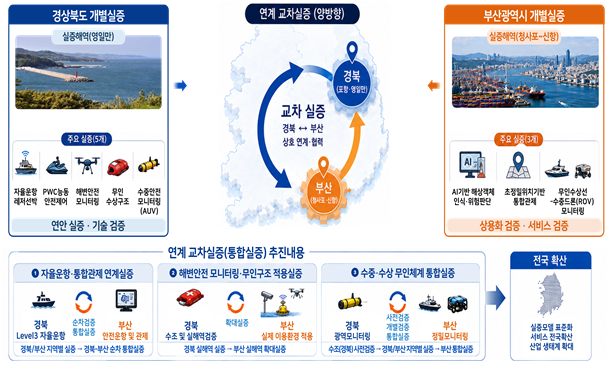
The interregional zones are a system in which two or more local governments cooperate to simultaneously test regulations related to industrial supply-chain value chains. The program was introduced after criticism that existing regulatory free zones, which operate around specific products or services in a single region, have limits in spreading individual demonstration results across the broader industrial supply chain or turning outcomes from one region into national standards.
The ministry plans to designate five interregional regulatory free zones by 2030, starting with two this year.
The smart farming interregional zone centered on Jeonnam-Gwangju will include North Jeolla Province and South Chungcheong Province, where the partners will demonstrate charging and autonomous operation of electric farm machinery using solar-powered direct current electricity.
In the new marine leisure interregional zone, led by Gyeongsangbuk-do and joined by Busan, the partners will test autonomous operation of leisure vessels, marine safety monitoring and unmanned rescue technology in a range of marine environments, from beaches to ports.
A total of 12 regulatory exceptions will be granted to the two zones. The smart farming zone will receive eight exceptions under the authority of the Ministry of Climate, Energy and Environment, MAFRA and the Ministry of Trade and Industry. The new marine leisure zone will be subject to four exceptions under the Ministry of Oceans and Fisheries (MOF) and the Korea Coast Guard (KCG).
The government also prepared reform measures to overhaul the overall regulatory free zone system so that the results of regulatory testing can lead to regulatory improvements and corporate growth.
First, when new zones are designated, the government will work with the relevant regulatory ministries to establish directions for revising laws and regulations. It will also operate a public-private consultative body involving the ministry, regulatory agencies, local governments, experts and participating companies to share progress on demonstrations and the direction of regulatory revisions.
Even after demonstrations are completed, unresolved tasks will be reviewed by experts and regularly submitted to the committee to strengthen the implementation of regulatory reforms.
The government will also reorganize the regulatory exceptions listed under the current Special Act on Regional Development Zones and identify additional exceptions related to new technologies and new industries. It will also identify regulatory exceptions linked to the 5 Poles 3 Special Growth Engine and designate regulatory free zones for new technologies and new businesses suited to regional startup hubs. Promising companies participating in the regulatory free zones will receive support in funding, technology, sales channels and overseas expansion.
[email protected] Kim Hyun-cheol Reporter